Papaya fruit gets all the attention, but in many traditional kitchens, papaya flowers are the part people quietly save for tea, soups, and bitter herbal-style remedies.
That surprises a lot of people. The flowers look delicate, but they have a deep, slightly bitter taste that makes them popular in old-fashioned wellness routines. In traditional use, papaya flowers are often linked with digestion, appetite support, and general body balance, while research on the broader papaya plant shows that Carica papaya contains a wide range of phytochemicals, including phenolics, flavonoids, alkaloids, and other bioactive compounds.
The key thing to understand is this: papaya flowers are best viewed as a traditional supportive ingredient, not a miracle cure. The strongest research on papaya focuses more on the fruit, leaves, and seeds than on the flowers alone, so it is smarter to keep claims modest and practical. (ScienceDirect)
What Papaya Flowers Are Traditionally Used For
Papaya flowers are often used in home remedies for a few simple reasons.
First, they have a natural bitterness. Bitter foods and herbs have long been used in many food traditions when digestion feels sluggish or appetite feels low. Second, they are part of the larger papaya plant, which has a long ethnomedicinal history across many cultures. Reviews of Carica papaya note traditional use of multiple plant parts for digestive and general wellness purposes.
In everyday wellness language, papaya flowers are commonly associated with:
- digestive comfort
- post-meal heaviness
- appetite support
- light herbal nourishment
That does not mean every cup of papaya flower tea will create dramatic results. It means the ingredient has stayed relevant because people find it practical, affordable, and easy to prepare.
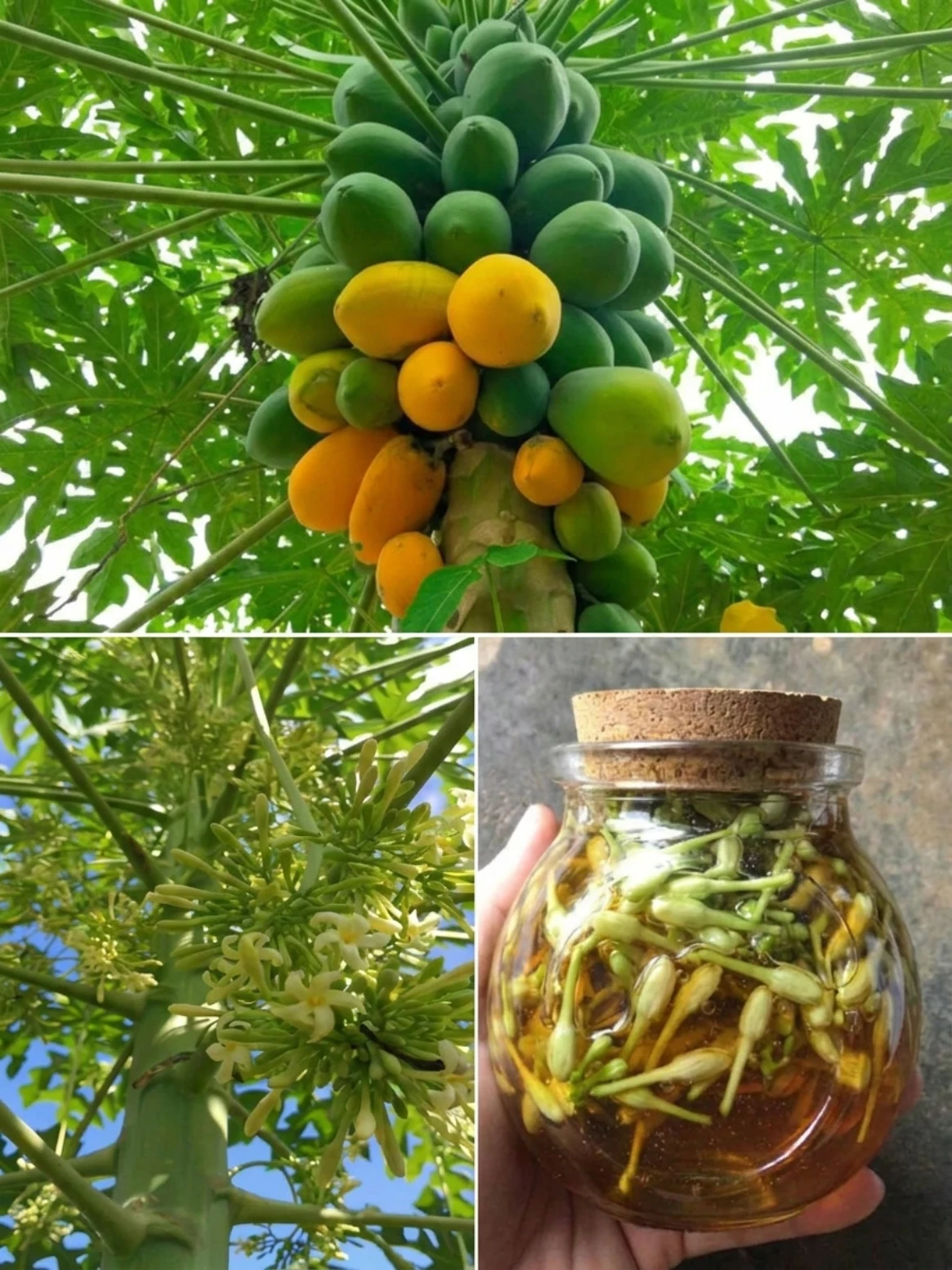
Ingredients
For a simple papaya flower tea or light bitter infusion, use:
- 1 small handful fresh papaya flowers, cleaned well
or 1 to 2 teaspoons dried papaya flowers - 2 cups water
If you want a milder cup, use less flower. Papaya flowers can taste noticeably bitter, so a small amount is often enough at first.
How to Prepare Papaya Flower Tea
This remedy is simple, but the flavor is stronger than most people expect.
Step 1: Clean the flowers
Rinse the papaya flowers well under clean water. If using fresh flowers, remove any damaged parts.
Step 2: Simmer gently
Add the flowers to 2 cups of water and bring to a gentle boil.
Step 3: Steep
Lower the heat and let the flowers simmer for about 8 to 10 minutes.
Step 4: Rest and strain
Turn off the heat, let the liquid sit for another 5 minutes, then strain into a cup.
Drink it warm.
How to Use It
Papaya flower tea is usually taken in small amounts, not as an all-day drink.
A practical way to use it is:
In the morning
A small cup in the morning may suit people who enjoy bitter herbal drinks before breakfast.
After meals
This is one of the most common times people reach for bitter plant infusions, especially when food feels heavy.
A few times per week
Because the taste is quite intense, many people prefer occasional use rather than daily use.
Quick relief timeline
If it helps, the effect is usually subtle. Some people notice a lighter, less heavy feeling within the same day, especially after meals. Broader “wellness” effects are more gradual and depend on the full diet, sleep, stress, and hydration pattern.
Why Papaya Flowers May Feel Helpful
This is where the remedy becomes more interesting.
Papaya as a plant is known to contain multiple biologically active compounds, and reviews describe antioxidant-related phytochemicals across different parts of the plant.
Their bitterness matters
Papaya flowers are naturally bitter, and that bitter profile is one of the main reasons people use them. In traditional food systems, bitter ingredients are often valued when digestion feels slow or appetite feels dull.
They fit the bigger papaya picture
Papaya is widely recognized as a nutraceutical plant with a rich phytochemical profile. Reviews highlight phenolics, flavonoids, carotenoids, and alkaloids among its important compounds.
They are simple to prepare
Another reason this remedy has lasted is practicality. The flowers can be used fresh, cooked, or brewed, which makes them easy to fit into a home routine.
Who May Like Papaya Flowers Most
Papaya flowers may appeal especially to people who:
- enjoy bitter herbal remedies
- want a simple digestion-support tea
- prefer plant-based traditional wellness habits
- are curious about lesser-known parts of edible plants
They are especially interesting for readers who like ingredients that sit between food and remedy.
Safety Notes
This part matters.
Specific research on papaya flowers is still much more limited than the research on other papaya parts, so strong health claims should be avoided.
A few common-sense precautions:
- Start with a small amount if you are new to bitter herbs.
- Do not use papaya flower tea as a substitute for medical care for persistent digestive pain, vomiting, jaundice, or unexplained weight loss.
- People who are pregnant, breastfeeding, or managing chronic illness should be cautious with frequent medicinal-style use of papaya plant remedies.
- Stop if it causes stomach irritation or discomfort.
Final Takeaway
Papaya flowers are one of those traditional ingredients many people overlook until they learn how they are used. Their bitter taste is exactly what makes them stand out in old-style remedies for digestion, appetite, and everyday balance.
They are not a miracle fix, and the science on the flowers themselves is still limited. But as a simple traditional tea, papaya flowers remain one of the more interesting ways people use the papaya plant beyond the fruit.
Related Source Science
Reviews of Carica papaya describe the plant as rich in phenolics, flavonoids, carotenoids, and alkaloids, with long-standing ethnomedicinal use across multiple plant parts. The broader evidence supports papaya as a phytochemical-rich traditional plant, while the most careful conclusion for papaya flowers is that they are a useful traditional ingredient with promising but still limited flower-specific evidence. (ScienceDirect)