Welcome back, garden lovers! As the heat of summer truly sets in, July becomes a crucial month for keeping our perennial gardens looking their best. Far from a time to just sit back and admire, July offers a golden opportunity to refresh your plants, encourage new blooms, and maintain a vibrant, healthy garden. It’s all about strategic trimming, and don’t worry, it’s easier than you think!
Many perennials, after their first glorious flush of blooms, can start to look a little tired. Some might even try to go to seed, signaling the end of their flowering season. But with a little attention and the right snips, you can coax them into producing more flowers, looking tidier, and extending their beauty well into late summer and even fall. Let’s dive into your essential guide for July perennial trimming!
Why Trim Perennials in July? The Benefits You’ll Love
Trimming in July isn’t just about making your garden look neat; it offers several key advantages for your plants:
- Encourages Rebloom: Many perennials will produce a second, smaller flush of flowers if deadheaded (removing spent blooms).
- Maintains Plant Health: Removing dead, diseased, or damaged foliage improves air circulation and prevents pest and disease issues.
- Promotes Bushier Growth: Cutting back leggy stems can encourage your plant to branch out, leading to a denser, more attractive form.
- Prevents Unwanted Self-Seeding: If you don’t want a carpet of seedlings next year, deadheading prevents plants from setting seed.
- Extends the Growing Season: By continuously removing spent flowers, you trick the plant into thinking it still needs to produce more, extending its flowering period.
General Trimming Principles for All Perennials
Before you grab your pruners, here are a few universal rules for successful trimming:
- Use Clean, Sharp Tools: This is paramount! Sharp shears make clean cuts, which heal faster and reduce the risk of disease. Clean them with rubbing alcohol between plants.
- Cut Above a Leaf Node or Bud: Always make your cuts just above a leaf, a side branch, or a new bud. This encourages new growth in the desired direction.
- Remove the ‘3 D’s’: Dead, Diseased, and Damaged plant material should always be your first target.
- Don’t Overdo It: While trimming is good, avoid cutting back more than one-third of the plant’s total growth at one time, especially during hot weather.
Specific Perennial Trimming Guide for July
Let’s look at some popular perennials and what they need in July:
Peonies
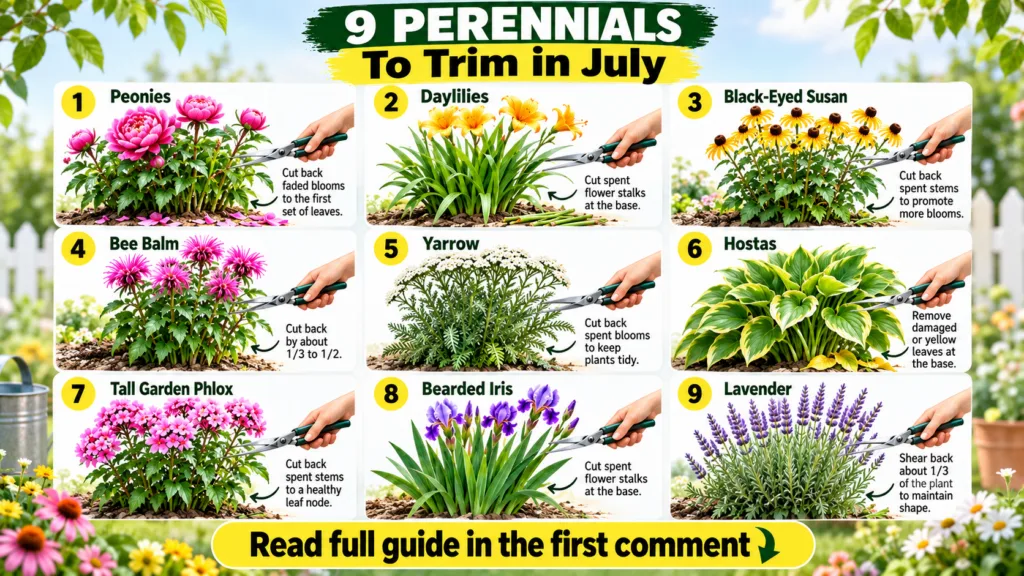
By July, most peonies have finished their spectacular display. Your task is simple: deadhead the spent flowers. Cut the flower stalk back to the first strong leaf or side shoot. This directs the plant’s energy into root development and healthy foliage for next year, rather than seed production. Remove any yellowing or diseased leaves at the base.
Daylilies
Daylilies are continuous bloomers, and regular deadheading is key to keeping new flowers coming. Pinch or snip off the individual spent blooms from the scape (flower stalk) daily or every few days. Once an entire scape has finished flowering, cut it back to the base of the plant.
Black-Eyed Susan (Rudbeckia)
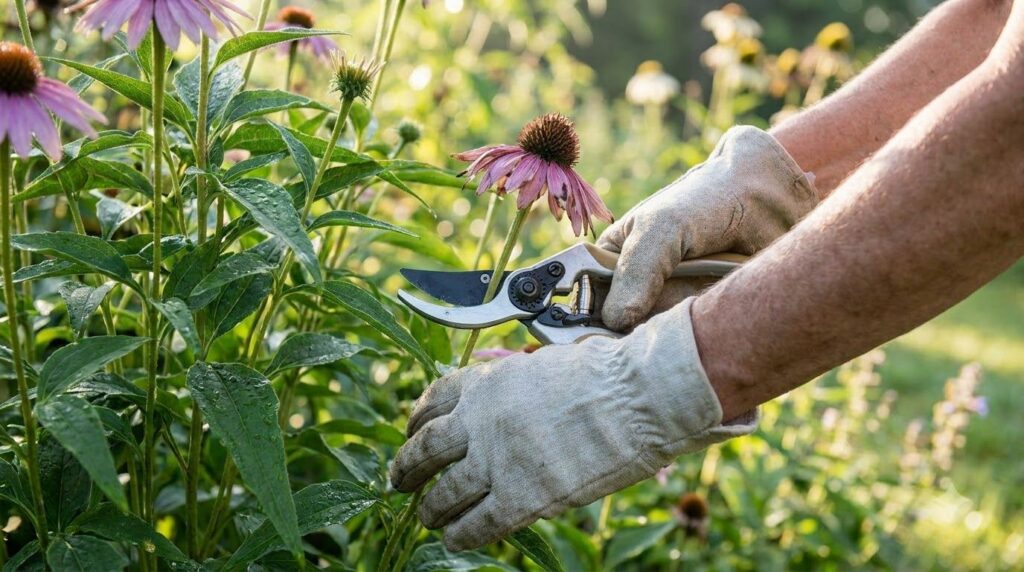
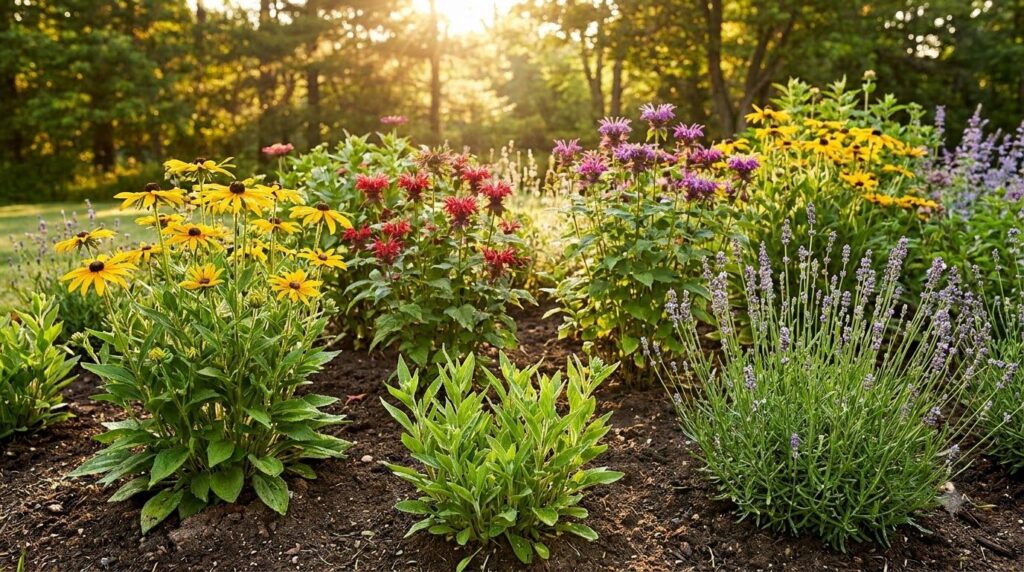
These cheerful yellow blooms benefit greatly from deadheading. Snip off faded flowers at the point where they meet a healthy leaf or a new bud. This encourages the plant to produce more flowers and extends its blooming season late into fall. If plants become leggy, you can cut them back by about a third for a bushier habit.
Bee Balm (Monarda)
Deadhead spent Bee Balm flowers to encourage a second flush of blooms later in the season. You can cut the flower stalks back to a healthy set of leaves or even cut the entire plant back by about a third after its first major bloom. This can also help reduce the risk of powdery mildew.
Yarrow (Achillea)
Yarrow responds well to deadheading for prolonged blooming. Cut the spent flower heads back to a healthy side shoot or leaf. For plants that have become leggy or less vigorous, a more aggressive cutback (by about half) can rejuvenate them and encourage a bushier form and potentially a late-season rebloom.
Hostas
In July, Hostas are typically done flowering. Cut off the spent flower stalks at their base to maintain a neat appearance and direct energy back into the leaves. Also, keep an eye out for any yellowing, damaged, or slug-eaten leaves and remove them to keep the plant looking pristine.
Tall Garden Phlox
Garden Phlox can be susceptible to powdery mildew, and deadheading is crucial for both rebloom and disease prevention. Pinch or cut off faded flower clusters just above a healthy set of leaves. This encourages new blooms and improves air circulation, which helps prevent mildew.
Bearded Iris
By July, Bearded Irises have long finished their bloom. Your main task is to remove any remaining spent flower stalks. Cut them back to the base of the plant. Keep an eye on the foliage for any signs of disease or pests, and remove affected leaves promptly.
Lavender
After the first flush of Lavender blooms, a light trim is beneficial. Cut back the spent flower spikes and about an inch or two of the leafy growth. This encourages the plant to produce a second, smaller flush of flowers and helps maintain a compact, attractive shape. Avoid cutting into the old, woody stems, as this can be detrimental.
Tips for Success
- Observe Your Plants: Each plant is unique. Pay attention to its specific needs and growth habit.
- Water After Trimming: A good drink of water can help plants recover from the stress of trimming, especially in hot weather.
- Compost the Clippings: Unless the plant material is diseased, add your clippings to your compost pile to return nutrients to your garden.
- Don’t Be Afraid: Trimming might feel intimidating at first, but perennials are resilient. A little trim now can lead to much bigger rewards later!
Enjoy Your Vibrant Summer Garden!
With this essential July perennial trimming guide, you’re well-equipped to keep your garden bursting with life and color throughout the summer. A little regular maintenance goes a long way in ensuring your perennials thrive, rewarding you with continuous blooms and a beautiful outdoor space. Happy gardening, and enjoy the beauty you’ve cultivated!