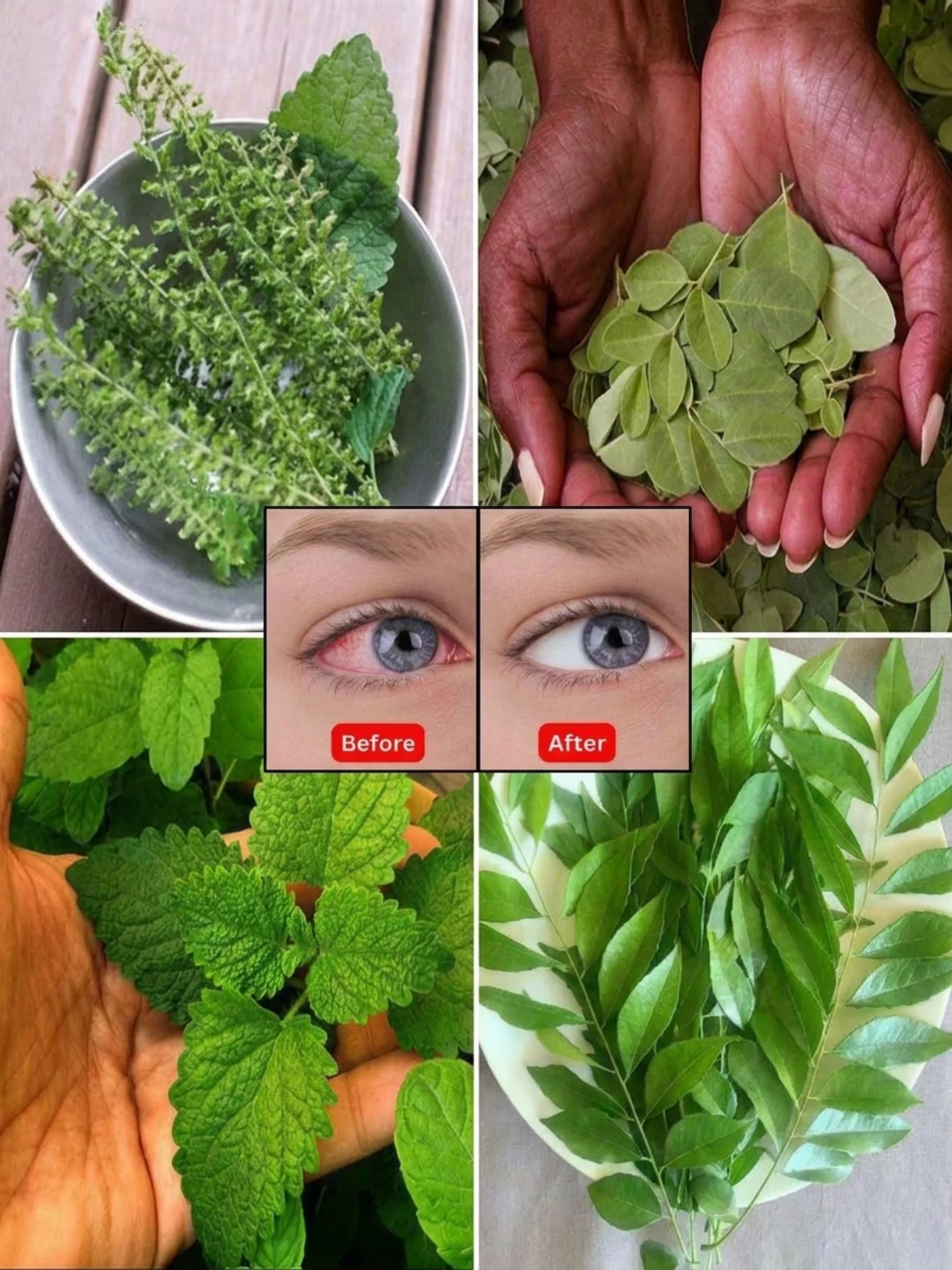
A green herbal blend made from several leaves often gets shared online as a natural fix for red, tired, or blurry eyes.
That is probably why this kind of remedy keeps attracting attention. It looks simple, plant-based, and comforting. But there is one important truth to keep in mind from the start: no homemade leaf drink has been proven to restore eyesight or replace proper eye care. The National Eye Institute recommends focusing on overall healthy habits for eye health, including a nutrient-rich diet, physical activity, and regular eye exams. It also notes that only specific AREDS2 supplements have evidence for certain people with age-related macular degeneration, not random herbal mixtures.
What this type of drink may do is support general wellness. If the leaves are correctly identified, some of them may contribute antioxidants and plant compounds that fit into a healthy diet. But that is very different from claiming they can “clear” the eyes or reverse vision problems.
What This Remedy Appears to Contain
This blend looks like a mix of leafy herbs commonly used in traditional wellness routines. It may include herbs people often identify as:
- holy basil or a similar flowering basil
- moringa leaves
- lemon balm or a related mint-family leaf
- curry leaves
Because plant identification from a picture is never perfect, the safest approach is to confirm every plant before using it. That matters a lot with homemade remedies.
Ingredients
If the leaves are correctly identified and food-safe, a simple traditional-style version would be:
- 1 tablespoon fresh holy basil-type leaves
- 1 tablespoon fresh moringa leaves
- 1 tablespoon fresh lemon balm-type leaves
- 1 small sprig curry leaves
- 2 cups water
Use only clean, unsprayed leaves from a trusted source.
How to Prepare
Step 1: Wash the leaves well
Rinse everything thoroughly to remove dust, insects, and residue.
Step 2: Bruise or tear the leaves
Lightly crush or tear the leaves so more aroma and plant compounds are released into the water.
Step 3: Simmer gently
Add the leaves to 2 cups of water and bring to a light boil. Reduce the heat and simmer for about 8 to 10 minutes.
Step 4: Let it rest
Turn off the heat and let the mixture sit for another 5 minutes.
Step 5: Strain and drink
Strain into a cup and drink warm.
How to Use It
This kind of herbal drink is best used as a small wellness tea, not as a medical treatment.
Best time to take it
Many people would use it:
- in the morning
- after meals
- a few times per week rather than constantly
Quick timeline
If it suits you, the first effects are usually very general: warmth, hydration, and a soothing ritual the same day. It is not realistic to expect a homemade leaf blend to improve blurred vision, floaters, cataracts, glaucoma, or eye disease within days. The National Eye Institute’s guidance on healthy vision emphasizes long-term habits, not quick herbal fixes.
Why People Think It Helps
The main reason people believe in blends like this is that several leafy herbs contain antioxidants and colorful plant compounds.
Moringa, for example, has been studied for nutrients including vitamin A precursors and antioxidants, which helps explain why it gets linked with eye health online. But that does not prove a homemade leaf drink improves vision in people. (PMC)
There is also a broader reason for the confusion. People hear that carotenoids such as lutein and zeaxanthin are relevant to eye health, then assume any green herbal drink must work the same way. The science is more specific than that. The National Eye Institute notes that AREDS2 is a particular supplement formula for a particular eye condition, not proof that any antioxidant-rich drink will protect vision.
So the better way to think about this remedy is simple: it may be a pleasant herbal tea, but it is not an eyesight cure.
Who May Enjoy This Blend Most
This kind of tea may appeal to people who:
- enjoy traditional herbal drinks
- want a caffeine-free wellness routine
- are trying to eat more plant-based foods
- like warm teas for relaxation and hydration
It makes more sense as a supportive habit than as a targeted eye remedy.
Safety Notes
This part matters the most.
Herbs are not automatically harmless. NCCIH warns that herbs and botanical products can cause side effects, contamination issues, and herb-drug interactions, just like other active substances. (NCCIH)
A few practical cautions:
Confirm plant identity first
Do not guess with leaves from the yard or roadside.
Start small
Even common herbs can upset the stomach or trigger sensitivity.
Be careful with medications
NCCIH notes that herb-drug interactions are a real concern.
Do not use this instead of eye care
Get medical attention for eye pain, sudden vision loss, flashes, floaters, worsening redness, or persistent blurred vision. The National Eye Institute recommends regular eye exams and evidence-based care for real eye conditions.
Final Takeaway
This leafy herbal blend may be a calming traditional drink, but it should be talked about honestly. It can fit into a general wellness routine, yet there is no strong evidence that it can restore eyesight or fix vision problems on its own. Eye health is built more reliably through a balanced diet, exercise, regular checkups, and proper treatment when symptoms appear.
Related Source Science
The National Eye Institute emphasizes healthy eating and regular eye care for long-term vision support, while AREDS2 supplements are only relevant for specific patients with age-related macular degeneration. NCCIH also warns that herbal products can carry side effects and interactions, which is why homemade leaf remedies should be treated as supportive, not curative.