Some plants look so delicate that you almost miss them.
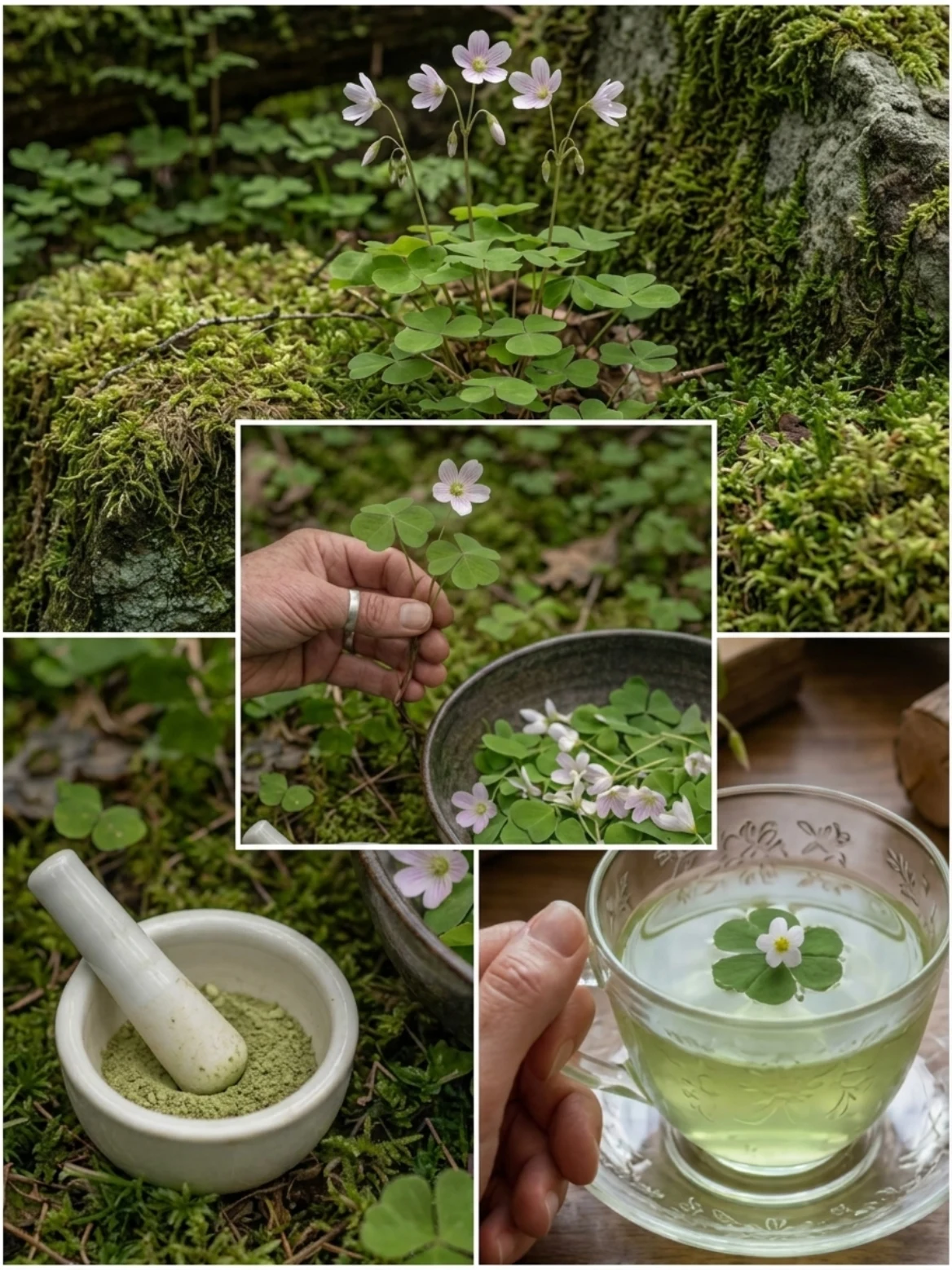
Wood sorrel, from the Oxalis family, is one of those quiet little herbs. It grows low to the ground, has soft clover-like leaves, and carries small pale pink or white flowers that make it look more ornamental than useful. But for a long time, people have noticed something special about it. The leaves have a bright, lemony tartness, and in folk use, they have been added to light teas, cooling drinks, and simple herbal preparations. Plant references describe wood sorrel as edible in small amounts, with that sour flavor coming from its oxalic acid content.
That is also where the caution begins.
Wood sorrel is one of those herbs that feels gentle, but it is not something to use carelessly or in large quantities. It is best understood as a small, occasional traditional herb, not a daily miracle tonic.
What Wood Sorrel Is Traditionally Used For
Wood sorrel has long been valued more for its refreshing, tart taste than for dramatic medicinal claims.
In traditional use, people have turned to it for:
- a light spring tea
- a cooling herbal drink
- mild digestive support
- a fresh, sour note in food and herbal infusions
Some herbal references mention wood sorrel for things like gum comfort, scurvy, and wound-related folk use, but there is no good scientific evidence proving it treats those conditions. That is why it makes more sense to talk about wood sorrel as a modest traditional herb rather than a cure.
Ingredients
For a simple wood sorrel tea, keep it light:
- 1 small handful fresh wood sorrel leaves and flowers
- 1½ to 2 cups hot water
That is enough for one cup. With this herb, less is usually better.

How to Prepare Wood Sorrel Tea
This is one of the easiest herbal teas to make.
Step 1: Gather carefully
Pick only fresh, clean leaves and flowers from a safe area away from roadsides, sprayed ground, or polluted soil.
Step 2: Rinse gently
Wash the herb lightly to remove dust or grit.
Step 3: Pour over hot water
Place the leaves and flowers in a cup or teapot and pour hot water over them.
Step 4: Let it steep
Leave it for about 5 to 8 minutes.
Step 5: Strain and sip
Strain and drink while warm, or let it cool if you prefer a lighter, more refreshing feel.
The flavor is usually soft, green, and pleasantly tart.
How to Use It
This is not the kind of tea most people would drink in large mugs all day.
Wood sorrel works best as an occasional small herbal tea.
Best time to enjoy it
Many people would prefer it:
- in the morning for a fresh, light start
- in the afternoon as a gentle herbal cup
- during warm weather, when sour herbs feel especially refreshing
Quick relief timeline
If it suits you, the first thing you notice is usually the taste and the feeling. It can feel fresh and light right away. Any bigger “benefit” is usually just part of the overall ritual of drinking more water, slowing down, and using small seasonal herbs in a thoughtful way.
Why People Like It
Part of the appeal of wood sorrel is that it feels simple and old-fashioned in the best way.
It is not a trendy powder. It is not a harsh bitter tonic. It is just a small woodland herb with a naturally bright taste.
That tartness comes from oxalic acid, which gives the leaves their signature sour flavor. Plant references repeatedly note that the leaves are fine in small quantities, but should not be eaten or drunk in large amounts because oxalic acid can bind minerals and create problems for some people. Cooking can reduce some of that oxalic acid content.
That is probably why this herb has stayed in the world of small traditional uses rather than becoming an everyday tea herb like mint or chamomile.
Who May Enjoy It Most
Wood sorrel tea may appeal to people who:
- enjoy delicate wild herbs
- like light, tart herbal drinks
- want something different from standard tea
- are interested in small seasonal foraged plants
It is especially attractive to people who enjoy the idea of using what grows quietly in shady corners and mossy places.
Safety Notes
This part matters.
Wood sorrel contains oxalic acid, and that is the main reason it should be used with restraint. WebMD notes that wood sorrel may be unsafe in higher amounts and says its oxalic acid crystals can harm organs, with possible side effects including nausea, diarrhea, increased urination, and skin reactions. WebMD also advises against using it during pregnancy and says people with kidney disease, kidney stones, or stomach and intestinal disorders should avoid it.
Plant references are a little gentler in tone, but they make the same general point: small amounts may be fine, large amounts are not a good idea, especially for people prone to kidney stones, arthritis, gout, hyperacidity, or similar issues.
So the safest approach is simple:
- use small amounts only
- do not make it a heavy daily habit
- avoid it if you have kidney stones or known oxalate issues
- skip it during pregnancy or if you are medically vulnerable unless a professional says otherwise
Final Thoughts
Wood sorrel is one of those plants that feels almost too pretty and too small to matter, yet people have enjoyed it for a long time because of its gentle tartness and fresh spring character.
As a light wood sorrel tea, it can be a lovely little ritual. Just keep it in the category where it belongs: a small seasonal herb, used sparingly, with respect for the fact that natural does not always mean unlimited.
Sometimes the most charming remedies are the ones best enjoyed in the smallest amounts.
Related Source Science
References on Oxalis species consistently note that the leaves contain oxalic acid, which gives wood sorrel its sour taste and explains both its appeal and its limitations. Traditional use exists, but there is no strong scientific evidence for most of the bigger health claims, and higher intake may be risky, especially for people with kidney or stomach concerns.