Food will not fix everything overnight, but it can quietly support the systems your body depends on every day. That is why simple, nutrient-dense foods often matter more than dramatic cleanses, expensive powders, or “miracle” wellness hacks.
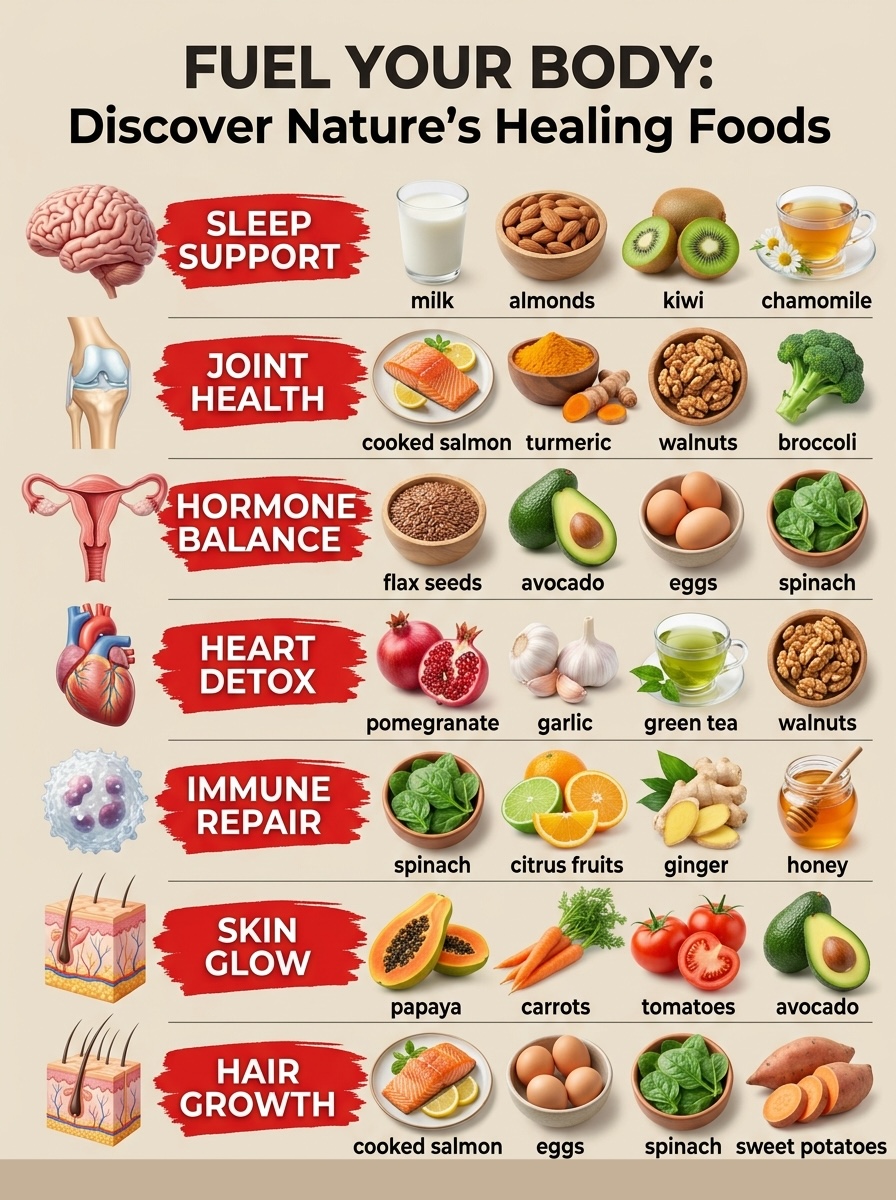
This image highlights a practical idea: certain foods can support specific body functions when they show up regularly in a balanced diet. That does not mean one food cures one problem. It means nutrients, healthy fats, fiber, and plant compounds can help build a stronger foundation over time. A varied diet rich in produce, legumes, nuts, seeds, fish, and minimally processed foods is consistently linked with better long-term health. (The Nutrition Source)
Below is a clearer, more realistic breakdown of every food in the image, plus how to combine them in ways that actually make sense in daily life.
Sleep Support Foods
The image lists milk, almonds, kiwi, and chamomile.
This group works because it combines a little protein, minerals, and calming evening-friendly options. Milk gives protein and can be a gentle bedtime drink. Almonds add healthy fats and some fiber. Kiwi brings fruit, water, and vitamin C. Chamomile is a soothing herbal tea choice that many people like in the evening.
A simple way to use these foods is to keep them light. Think warm milk with a small handful of almonds, or kiwi on the side. Chamomile works best as part of a wind-down routine, not as a magic sleep fix.
Easy combination
Try chamomile tea + kiwi + a few almonds as a light evening snack, or warm milk + sliced kiwi if you want something softer and simpler.
Joint Health Foods
The image includes cooked salmon, turmeric, walnuts, and broccoli.
This is one of the strongest groups nutritionally because it mixes omega-3 fats, colorful plant compounds, and fiber-rich vegetables. Salmon and walnuts are both known sources of omega-3 fats, which are part of a healthy diet pattern. Turmeric adds plant compounds and flavor, while broccoli brings fiber and micronutrients. Harvard’s Nutrition Source notes that omega-3 fats are found in fish and walnuts, and fruits and vegetables contribute beneficial plant compounds to the diet.
Easy combination
Make a plate with cooked salmon + roasted broccoli, then finish with a sprinkle of turmeric in the vegetables and a few walnuts on the side or in a salad.
Hormone Balance Foods
This row shows flax seeds, avocado, eggs, and spinach.
This is a very practical group because it supports steady meals rather than extreme eating. Flax seeds add fiber and plant omega-3 fats. Avocado brings healthy fats. Eggs give protein and choline. Spinach adds fiber and folate. Together, they help build meals that feel more stable and satisfying instead of overly sugary or carb-heavy.
Easy combination
Try eggs with spinach and avocado on toast, then add ground flax seeds to yogurt, oats, or a smoothie later in the day. That works better than trying to force all four into one plate.
Heart Support Foods
The image says heart detox, but a more accurate phrase is heart-supportive foods. The foods shown are pomegranate, garlic, green tea, and walnuts.
This is a helpful reminder that heart-friendly eating usually comes from overall dietary quality, not detox products. Walnuts add healthy fats, green tea can replace sugary drinks, garlic helps add flavor without relying only on salt, and pomegranate brings colorful plant compounds. Harvard notes that antioxidant-rich foods and a variety of fruits and vegetables can support a healthier eating pattern, though antioxidant supplements themselves have not shown the same benefits.
Easy combination
Use garlic in dinner, sip green tea during the day, and have pomegranate with walnuts as a snack or salad topper.
Immune Support Foods
The image lists spinach, citrus fruits, ginger, and honey.
These foods make sense together because they add vitamin C, plant compounds, and everyday meal value. Citrus fruits bring vitamin C, spinach adds folate and fiber, ginger adds strong flavor, and honey can sweeten tea or yogurt in a small amount. No single food “repairs” the immune system, but a nutrient-dense diet supports normal immune function.
Easy combination
Try citrus and spinach in a salad, or make a warm ginger tea with a little honey and have fruit on the side. Keep the honey moderate, since it is still a sweetener.
Skin Glow Foods
This group includes papaya, carrots, tomatoes, and avocado.
This is a strong produce-based lineup. Papaya and carrots bring colorful carotenoids. Tomatoes add lycopene. Avocado adds healthy fats that can make the meal feel more satisfying and may help with absorption of some fat-soluble plant compounds. Harvard emphasizes that different colors of produce offer different beneficial plant chemicals, which is exactly why a varied plate matters.
Easy combination
Make a bright lunch bowl with tomatoes, avocado, and shredded carrots, then have papaya as dessert or a snack.
Hair Growth Support Foods
The final row shows cooked salmon, eggs, spinach, and sweet potatoes.
Again, this is best understood as hair-supportive nutrition, not a guaranteed hair-growth cure. Salmon and eggs provide protein, spinach adds folate and fiber, and sweet potatoes bring colorful carotenoids plus a satisfying carbohydrate. Protein matters because hair is built from protein, and a restrictive diet often shows up first in skin, hair, and nails.
Easy combination
A very practical meal here is cooked salmon + sweet potatoes + spinach, or eggs with spinach in the morning and salmon later in the day.
How to Use This Image in Real Life
The smartest way to use this chart is not to chase one benefit at a time. Instead, rotate these foods through the week:
- Use salmon, eggs, spinach, and broccoli as core meal foods.
- Add walnuts, almonds, avocado, and flax seeds for healthy fats.
- Use kiwi, citrus fruits, papaya, pomegranate, carrots, and tomatoes for colorful plant variety.
- Keep ginger, garlic, turmeric, chamomile, and green tea as easy flavor and drink upgrades.
That way, your diet supports multiple systems at once.
Final Takeaway
The best “healing foods” are usually just real foods used consistently. In this image, that means milk, almonds, kiwi, chamomile, cooked salmon, turmeric, walnuts, broccoli, flax seeds, avocado, eggs, spinach, pomegranate, garlic, green tea, citrus fruits, ginger, honey, papaya, carrots, tomatoes, and sweet potatoes.
The real win is not perfection. It is building meals that combine protein, healthy fats, fiber, and colorful produce often enough that your body actually benefits.
Related source science: plant foods provide a wide range of beneficial compounds, legumes and nuts add fiber and protein, and omega-3 fats from fish and walnuts are recognized parts of healthy eating patterns.