Are you dreaming of a garden that reaches new heights, transforming ordinary walls, fences, and trellises into vibrant tapestries of foliage and flowers? Climbing plants are your secret weapon for adding drama, beauty, and lushness to any outdoor space. From delicate vines to vigorous growers, these plants can create stunning vertical gardens, offering privacy, shade, and a spectacular show of blooms. Let’s explore the magic of climbing plants and discover easy tips to train them for breathtaking results!
Why Choose Climbing Plants for Your Garden?
Climbing plants are more than just pretty faces; they offer a multitude of benefits for gardeners of all levels. Here’s why they’re a fantastic addition:
- Maximize Space: They allow you to garden vertically, making the most of small yards, patios, or balconies.
- Enhance Aesthetics: They can cover unsightly walls, fences, or sheds, turning them into beautiful living features.
- Add Privacy and Shade: Densely growing climbers can create natural screens for privacy or provide welcome shade over pergolas and arbors.
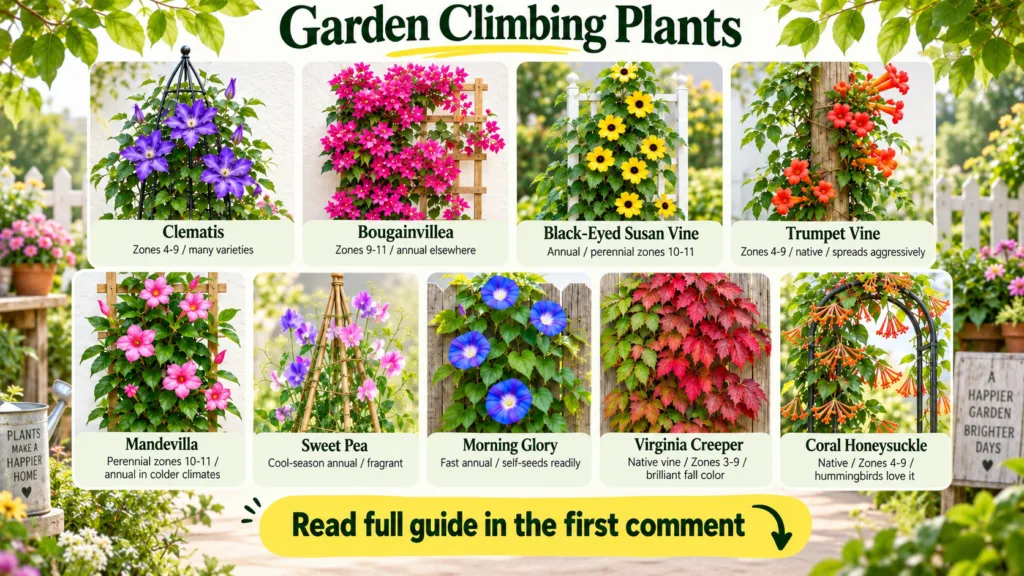
- Attract Pollinators: Many climbing plants, like Coral Honeysuckle and Black-Eyed Susan, produce nectar-rich flowers that attract bees, butterflies, and hummingbirds.
- Variety of Options: With choices ranging from flowering vines like Clematis and Mandevilla to leafy options like Virginia Creeper, there’s a climber for every climate and aesthetic preference.
Choosing the Right Climbing Plant
Before you start planting, consider your garden’s conditions and your desired outcome. Do you need a perennial for long-lasting beauty or an annual for quick, seasonal color? Think about:
- Sunlight: Most flowering climbers thrive in full sun (at least 6 hours daily), but some, like certain Clematis varieties, prefer partial shade.
- Soil: Well-draining soil rich in organic matter is ideal for most climbers.
- Support Structure: Different climbers need different types of support. Twining vines (Morning Glory, Mandevilla) wrap around slender structures, while clinging vines (Virginia Creeper) attach with aerial roots or adhesive pads. Tendril climbers (Sweet Pea) use tiny tendrils to grasp supports.
- Growth Habit: Some climbers are vigorous and need plenty of space (Bougainvillea, Trumpet Vine), while others are more compact.
Easy Training Tips for Beautiful Climbing Plants
Training your climbing plants from a young age is key to their success and your garden’s beauty. Here’s how to guide them:
1. Provide the Right Support
This is arguably the most crucial step. Install your trellis, arbor, or wires before planting. Ensure it’s sturdy enough to support the plant’s mature weight, especially when wet or windy. Consider:
- Trellises: Great for most twining and tendril climbers.
- Arbors/Pergolas: Ideal for creating shaded walkways and showcasing cascading blooms.
- Wires or Fishing Line: Can be discreetly attached to walls for clinging vines.
- Stakes or Poles: Useful for initial guidance for young plants.
2. Gentle Guidance for Young Plants
When your climbing plant is young, it needs a little help finding its way. Gently direct new shoots towards the support structure. For twining vines, you can loosely wrap them around the support. For tendril climbers, ensure the tendrils have something to grasp.
3. Secure with Soft Ties
As the plant grows, you might need to use soft ties to attach stems to the support, especially for plants that don’t naturally cling or twine strongly. Use materials like:
- Fabric strips
- Horticultural tape
- Velcro plant ties
Always tie loosely to avoid girdling the stem as it thickens. Check periodically to ensure the ties aren’t too tight.
4. Pruning for Shape and Vigor
Regular pruning encourages bushier growth, more blooms, and keeps your climber healthy and tidy. The timing and method depend on the specific plant:
- Deadheading: Removing spent flowers encourages more blooms.
- Structural Pruning: In late winter or early spring, remove dead, damaged, or diseased branches. Thin out overcrowded growth to improve air circulation.
- Rejuvenation Pruning: For older, overgrown plants, a more severe prune can revive them.
Always research the specific pruning needs of your chosen climbing plant.
5. Consistent Care
Even with perfect training, your climbing plants need consistent care:
- Watering: Keep the soil consistently moist, especially during dry spells and for young plants.
- Feeding: Apply a balanced fertilizer according to package directions during the growing season.
- Pest and Disease Monitoring: Regularly inspect your plants for signs of pests or diseases and address them promptly.
Embrace the Vertical Beauty
Adding climbing plants to your garden is a rewarding endeavor that can transform any space into a lush, vibrant sanctuary. With a little planning, the right support, and consistent care, you’ll be amazed at how these natural artists can elevate your garden’s aesthetic and provide a stunning display throughout the seasons. So, grab your gardening gloves and start reaching for the sky!