Imagine stepping into your garden, basket in hand, ready to harvest a bounty of fresh, vibrant vegetables. Achieving this dream starts with one crucial, often overlooked, practice: proper plant spacing. It might seem like a small detail, but giving each plant the room it needs to flourish is the ‘secret ingredient’ for healthier growth, stronger yields, and fewer pest and disease issues. Crowded plants compete for vital resources like sunlight, water, and nutrients, leading to stunted growth and disappointment. By understanding and implementing smart spacing techniques, you empower your garden to reach its full potential, transforming your efforts into a truly rewarding harvest.
The Core Principle: Why Space Matters So Much
Proper plant spacing isn’t just about aesthetics; it’s a fundamental aspect of successful gardening. When plants are spaced correctly, they benefit in several key ways:
- Improved Air Circulation: Adequate space allows air to move freely around plants, which helps dry foliage and reduces the risk of fungal diseases like powdery mildew and blight.
- Optimal Nutrient Uptake: Each plant gets its fair share of nutrients from the soil without intense competition, leading to stronger root systems and more vigorous top growth.
- Better Light Penetration: Leaves aren’t overshadowed by neighbors, ensuring every part of the plant receives sufficient sunlight for photosynthesis, which is crucial for fruiting and overall energy production.
- Easier Maintenance: You’ll find it simpler to weed, water, prune, and harvest when plants aren’t tangled together.
While general guidelines exist, remember that spacing can vary slightly depending on the specific cultivar, your local climate, and your gardening goals (e.g., harvesting baby greens versus full-sized heads).
Essential Spacing for Your Edible Garden Favorites
Let’s look at some popular vegetables and their ideal spacing requirements to help you plan your most productive garden yet.
Lettuce (Lactuca sativa)
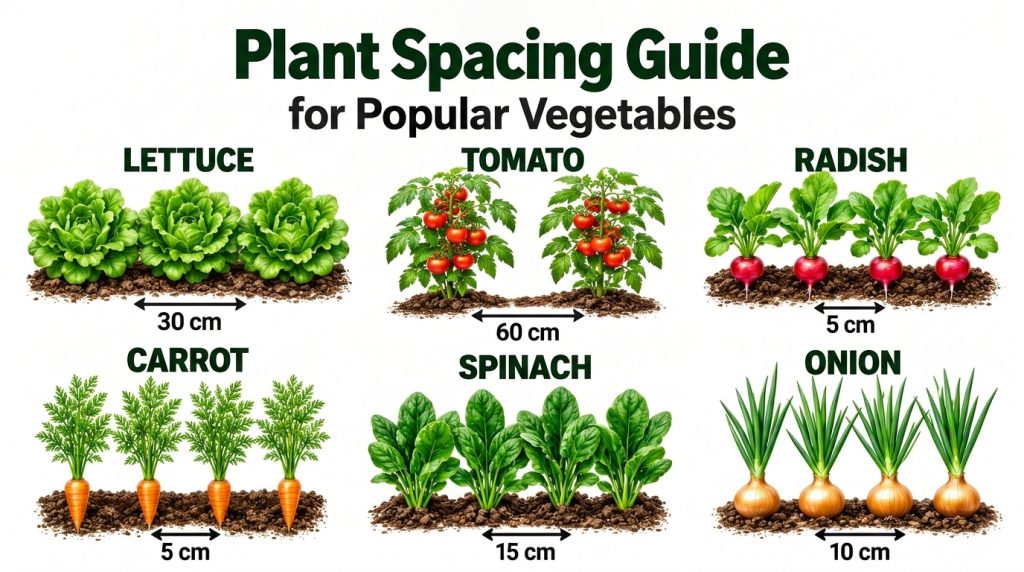
A garden staple for fresh salads, lettuce thrives with good air circulation. For head varieties, aim for about 20 cm (approximately 8 inches) between plants. If you’re growing loose-leaf varieties or harvesting baby greens, you can plant a bit closer, around 10-15 cm (4-6 inches), and simply harvest outer leaves as needed.
- Hardiness: Typically grown as an annual in most USDA Zones.
- Plant type: Annual leafy green.
- Exposure: Full sun to partial shade (prefers some afternoon shade in hot climates).
- Soil: Rich, well-drained loam with consistent moisture.
- Watering: Keep soil consistently moist, but avoid waterlogging.
- Care Tip: Succession plant every 2-3 weeks for a continuous harvest.
Tomato (Solanum lycopersicum)
Tomatoes are heavy feeders and appreciate plenty of space. For most varieties, aim for 60 cm (approximately 24 inches) between plants. Larger, indeterminate heirloom varieties might even benefit from 75-90 cm (30-36 inches) for optimal growth and airflow, especially when trellised or staked. Proper spacing is critical to prevent fungal diseases that thrive in humid, crowded conditions.
- Hardiness: Grown as an annual in most USDA Zones (perennial in Zones 10-11).
- Plant type: Annual fruiting vine.
- Exposure: Full sun (at least 6-8 hours daily).
- Soil: Rich, well-drained, slightly acidic (pH 6.0-6.8).
- Watering: Deep, consistent watering at the base, especially during fruit development.
- Care Tip: Always provide strong support like stakes or cages to keep foliage and fruit off the ground.
Radish (Raphanus sativus)
Fast-growing and satisfying, radishes need enough room for their roots to swell. Plant seeds about 2.5 cm (1 inch) apart and thin to 5 cm (approximately 2 inches) between plants once seedlings emerge. Overcrowding results in small, woody, or underdeveloped roots.
- Hardiness: Grown as an annual.
- Plant type: Annual root vegetable.
- Exposure: Full sun to partial shade.
- Soil: Loose, well-drained, not overly rich.
- Watering: Consistent moisture for quick, tender growth.
- Care Tip: Harvest promptly when roots are mature; leaving them too long makes them pithy.
Carrot (Daucus carota subsp. sativus)
Carrots are another root crop where spacing directly impacts the final harvest. Sow seeds thinly, about 1-2.5 cm (0.5-1 inch) apart, and then thin seedlings to 7-10 cm (approximately 3-4 inches) between plants. This allows their taproots to develop without competing for space, leading to straight, well-formed carrots.
- Hardiness: Grown as an annual.
- Plant type: Biennial grown as an annual root vegetable.
- Exposure: Full sun.
- Soil: Deep, loose, stone-free sandy loam is ideal.
- Watering: Consistent moisture for even root development.
- Care Tip: Thinning is non-negotiable for well-shaped roots; snip weaker seedlings at the soil line to avoid disturbing neighboring roots.
Spinach (Spinacia oleracea)
Similar to lettuce, spinach benefits from proper spacing to prevent bolting (going to seed) prematurely in warm weather and to ensure good leaf development. For full-sized plants, allow 15 cm (approximately 6 inches) between plants. If you’re harvesting baby spinach, you can plant closer, around 5-10 cm (2-4 inches) apart, and snip leaves as they grow.
- Hardiness: Grown as an annual in most climates.
- Plant type: Annual leafy green.
- Exposure: Full sun to partial shade (prefers cooler temperatures).
- Soil: Rich, well-drained, slightly alkaline soil.
- Watering: Keep soil consistently moist.
- Care Tip: Plant in early spring and late summer/fall to avoid summer heat, which can cause bolting.
Onion (Allium cepa)
For large, mature onion bulbs, spacing is crucial. Plant onion sets or seedlings 10 cm (approximately 4 inches) apart. If you’re growing onions for green onions or scallions, you can plant them closer, about 2.5-5 cm (1-2 inches) apart, and harvest them earlier in their growth cycle.
- Hardiness: Biennial grown as an annual.
- Plant type: Biennial grown as an annual bulb vegetable.
- Exposure: Full sun.
- Soil: Loose, well-drained, rich in organic matter.
- Watering: Consistent moisture during early growth, reduce as bulbs mature.
- Care Tip: Choose varieties suited to your region’s day length (long-day for northern regions, short-day for southern regions).
Avoiding Common Spacing Mistakes
Even experienced gardeners can sometimes get plant spacing wrong. Here are a few common pitfalls to avoid:
- Underestimating Mature Size: Always research the mature size of your specific plant variety. A ‘compact’ tomato can still get quite large!
- Fear of Thinning: It feels counterintuitive to remove healthy seedlings, but thinning is vital. Those weaker seedlings you remove are sacrificed for the health and productivity of the remaining plants. Snip them at the soil line rather than pulling, which can disturb the roots of nearby plants.
- Ignoring Airflow: Especially in humid climates, tight spacing is an open invitation for fungal diseases. Prioritize air movement, particularly for plants like tomatoes, squash, and beans.
- Container Crowding: When growing in pots, resist the urge to plant too many individuals. A single tomato plant needs a 5-gallon container minimum, while a single head of lettuce can do well in a 6-8 inch pot.
Regional and Seasonal Considerations
While the spacing measurements provide a great starting point, always consider your local climate. In regions with shorter growing seasons (USDA Zones 3-5), you might plant certain fast-growing crops like radishes or lettuce a bit closer to maximize yield in a limited timeframe. In contrast, in hot, humid areas (USDA Zones 8-10), giving plants extra space, especially those prone to fungal issues like tomatoes, can be even more critical for disease prevention. Always check your local extension office for specific recommendations tailored to your microclimate and soil conditions, and pay attention to soil temperature and frost dates for planting times, rather than just calendar months.
Cultivate Your Bountiful Harvest
Gardening is a journey of continuous learning, and mastering plant spacing is a significant step towards becoming a more confident and capable grower. By giving your plants the room they need to breathe, feed, and soak up the sun, you’re not just planting seeds; you’re nurturing a sustainable, productive ecosystem right in your backyard. Take these tips to your garden, observe how your plants respond, and enjoy the satisfaction of a truly abundant harvest. Happy growing!