Unlock Your Garden’s Potential with Vertical Cucumbers!
Do you dream of abundant cucumber harvests but feel limited by a small garden space? You’re not alone! Many gardeners face this challenge, but there’s a simple, effective solution: vertical gardening. By growing cucumbers upwards, you can dramatically increase your yield, save precious ground space, and even make harvesting a breeze. Let’s dive into some fantastic vertical cucumber trellis ideas that will transform your small garden into a productive powerhouse!
Why Go Vertical with Your Cucumbers?
Before we explore the how-to, let’s understand the fantastic benefits of growing cucumbers vertically:
- Space Saving: The most obvious advantage! Training vines upwards uses far less ground footprint than letting them sprawl.
- Improved Air Circulation: Vertical growth allows for better airflow around the plants, reducing the risk of fungal diseases.
- Reduced Pest Problems: Less contact with the soil means fewer opportunities for ground-dwelling pests to reach your precious produce.
- Cleaner Fruit: Cucumbers hanging freely are less likely to get dirty or damaged by soil and slugs.
- Easier Harvesting: No more bending over or searching through dense foliage for hidden cucumbers!
- Enhanced Aesthetics: A well-trellised cucumber plant can add a beautiful, lush green element to your garden design.
Top Vertical Cucumber Trellis Ideas for Small Spaces
Let’s look at some popular and effective ways to support your vining cucumbers:
1. Bamboo Tripods or Teepees
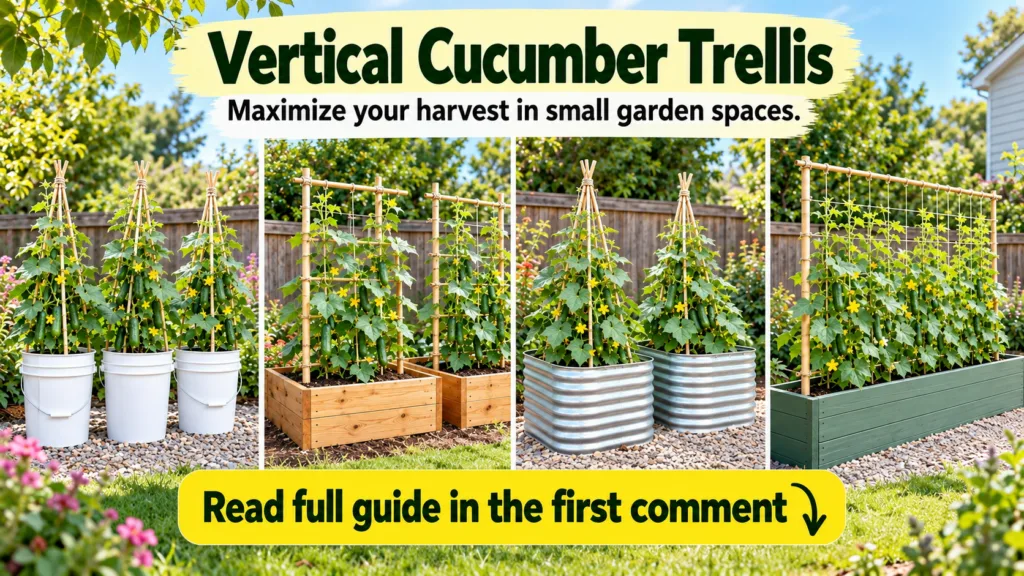
Inspired by the classic Native American teepee, this method is both rustic and highly effective. Ideal for pots, containers, or small raised beds, bamboo tripods provide sturdy support. Simply gather 3-4 long bamboo stakes (or sturdy branches), push them firmly into the soil around your cucumber plant, and tie them together at the top to form a cone. Cucumbers will naturally climb these supports, creating a beautiful green pyramid.
2. Rectangular or A-Frame Trellises
These robust structures are perfect for raised garden beds or directly in the ground, as seen in the examples with wooden raised beds and long green planters. You can construct these from wood, metal, or even strong PVC pipes. An A-frame trellis offers two slanted sides for plants to climb, maximizing vertical space. Rectangular trellises can be placed vertically against a wall or fence, or freestanding if anchored well.
3. Netting or Mesh Trellises
For a more flexible and cost-effective option, garden netting or mesh can be strung between two sturdy posts. Ensure the mesh size is appropriate for cucumber tendrils to grip easily. This method is great for creating a living wall of cucumbers and can be adapted to almost any size or shape of garden.
4. Tomato Cages (Modified)
While designed for tomatoes, tall, sturdy tomato cages can also be repurposed for bushier cucumber varieties or for training vining types if you prune them regularly. Just make sure the cage is tall enough and well-anchored to support the weight of the vines and fruit.
Tips for a Bountiful Vertical Cucumber Harvest
Once you’ve chosen your trellis, here are some essential tips to ensure your vertical cucumbers thrive:
Choose the Right Cucumber Variety
Opt for vining cucumber varieties over bush types when growing vertically. Look for terms like ‘vining,’ ‘pole,’ or ‘climbing’ on seed packets. Varieties like ‘Marketmore,’ ‘Diva,’ or ‘Armenian’ are excellent choices for trellising.
Sunlight and Soil
Cucumbers are sun-lovers, needing at least 6-8 hours of direct sunlight per day. Plant them in well-draining, fertile soil rich in organic matter. Amending your soil with compost before planting will give your cucumbers a great start.
Planting and Training
Plant cucumber seeds or seedlings at the base of your chosen trellis. As the plants grow, gently guide the tendrils onto the support structure. Cucumbers are natural climbers, but a little initial guidance helps them get established. You might need to loosely tie the main stem to the trellis in the early stages.
Watering and Fertilizing
Consistent moisture is key for juicy, non-bitter cucumbers. Water deeply and regularly, especially during dry spells and when fruits are developing. A drip irrigation system or soaker hose works wonderfully for vertical gardens. Feed your plants with a balanced, organic fertilizer every few weeks once they start flowering.
Pruning for Productivity
Pruning isn’t strictly necessary but can improve air circulation and direct the plant’s energy into fruit production. You can prune off some of the lower, older leaves that aren’t getting much light, and remove any yellowing or diseased foliage. Some gardeners also remove male flowers early on to encourage more female flowers (which produce fruit).
Pest and Disease Management
Vertical gardening already helps with air circulation, reducing some fungal issues. Regularly inspect your plants for signs of pests like aphids or cucumber beetles. Address problems early with organic solutions like neem oil or insecticidal soap.
Harvesting Your Hard Work
Harvest cucumbers when they reach their desired size, typically before they get too large and seedy. Regular harvesting encourages the plant to produce more fruit. Snip them from the vine with a sharp knife or pruners, leaving a short stem attached.
Ready to Grow Up?
Vertical cucumber gardening is a game-changer for anyone with limited space who still wants a bountiful harvest. With these trellis ideas and growing tips, you’re well on your way to enjoying fresh, homegrown cucumbers all season long. So, pick your favorite trellis design, get planting, and watch your garden grow upwards!