Did you know that cooking can actually enhance the nutrition of certain foods? While many believe raw is always best, some ingredients truly shine when heated. Cooking can break down tough cell walls, neutralize anti-nutrients, and even increase the bioavailability of essential vitamins and antioxidants.
This article will dive into a fascinating aspect of food science: how heating certain foods can unlock their hidden benefits. You’ll learn which healthy ingredients become even better when cooked and why. Get ready to transform your meals and maximize your nutrient intake!
Understanding these benefits can help you make more informed choices in your kitchen, ensuring you get the most out of every bite. Let’s explore how to improve your meals and maximize nutrition.
Why Cooking Can Enhance Nutrition
The science behind cooking and nutrient absorption is all about “bioavailability.” This term refers to the proportion of a nutrient that is absorbed from the diet and used for normal body functions. For some foods, cooking processes like steaming, roasting, or sautéing can make nutrients more accessible to your body.
Here’s how:
- Breaking Down Cell Walls: Heat can break down the tough outer walls of plant cells, releasing trapped nutrients.
- Reducing Anti-nutrients: Certain compounds, called anti-nutrients (like oxalates or phytic acid), can inhibit nutrient absorption. Cooking can often reduce or eliminate these compounds.
- Transforming Compounds: Heat can change certain compounds into more beneficial forms, making them easier for your body to utilize.
Healthy Foods That Work Better Cooked
Let’s explore specific foods where cooking really makes a difference!
Spinach
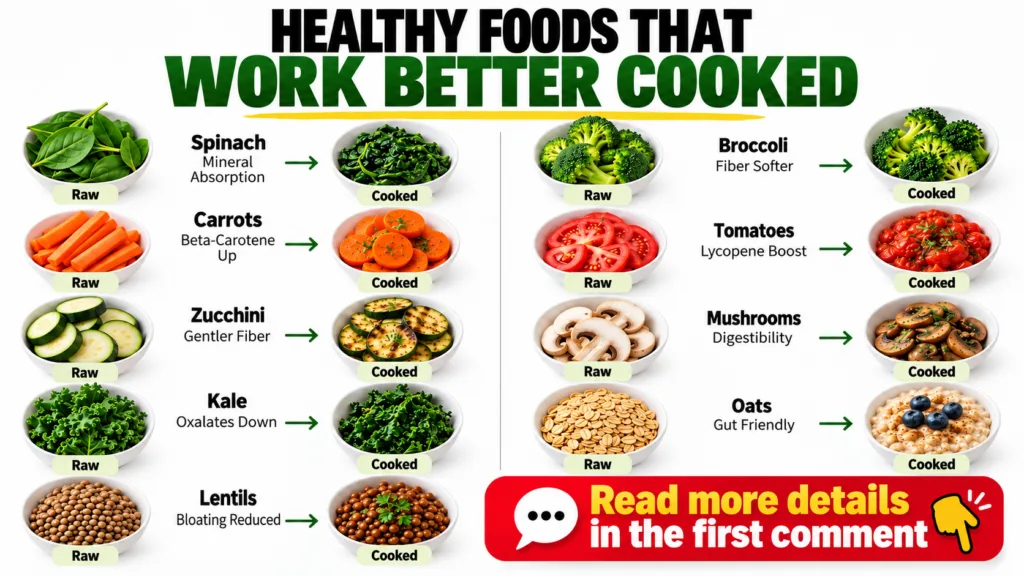
Raw spinach is packed with nutrients, but it also contains oxalic acid. This compound can bind to minerals like iron and calcium, making them less available for absorption. Cooking spinach, even lightly, significantly reduces its oxalic acid content, allowing your body to access more of these vital minerals.
Broccoli
While raw broccoli is great, light cooking — especially steaming — can enhance its nutritional profile. Cooking can make certain beneficial compounds, like carotenoids and some forms of vitamin A, more available. It also softens the tough fibers, making it easier to digest for some individuals.
Carrots
Carrots are famous for their beta-carotene, which our bodies convert into vitamin A. Cooking carrots, particularly with a little fat (like olive oil), can significantly increase the bioavailability of beta-carotene. The heat helps break down the cell walls, and the fat aids in the absorption of this fat-soluble vitamin.
Tomatoes
Tomatoes are a fantastic source of lycopene, a powerful antioxidant linked to various health benefits. Studies suggest that cooking tomatoes, especially for longer periods or with a small amount of oil, dramatically increases the amount of absorbable lycopene. Tomato paste or sauce, for example, often has higher levels of bioavailable lycopene than raw tomatoes.
Zucchini
Zucchini is a versatile and healthy vegetable. While enjoyable raw, cooking zucchini softens its fibers, making it easier to digest for some people. This gentle cooking can also make its vitamins and minerals, such as vitamin C and potassium, more accessible and less likely to cause digestive discomfort.
Mushrooms
Eating certain types of mushrooms raw can be problematic due to natural toxins and indigestible compounds. Cooking mushrooms breaks down tough cell walls made of chitin, releasing more beneficial nutrients like B vitamins, selenium, and potassium. It also neutralizes heat-sensitive toxins that may be present in some varieties.
Kale
Similar to spinach, kale contains oxalic acid, which can interfere with mineral absorption. Lightly cooking kale — steaming, sautéing, or blanching — helps to reduce this compound, making calcium and iron more available. It also softens the tough texture, making it more palatable for many.
Oats
While some people consume “raw” rolled oats (often soaked overnight), oats generally benefit from cooking. Cooking oats (e.g., making oatmeal) breaks down starches, making them easier to digest and absorb. This process also enhances the solubility of beta-glucan, a type of soluble fiber known for its heart-healthy benefits.
Lentils
Lentils, like other legumes, must be cooked before consumption. Raw lentils contain anti-nutrients such as lectins and phytic acid, which can interfere with nutrient absorption and cause digestive upset. Thorough cooking deactivates these compounds, making lentils safe, digestible, and highly nutritious sources of protein, fiber, and various minerals.
Practical Tips for Cooking for Enhanced Nutrition
- Steam Lightly: For vegetables like broccoli and kale, steaming for a short time helps preserve water-soluble vitamins while reducing anti-nutrients.
- Add Healthy Fats: When cooking carrots or tomatoes, a drizzle of olive oil can significantly boost the absorption of fat-soluble vitamins and antioxidants.
- Don’t Overcook: While cooking is beneficial for these foods, overcooking can degrade heat-sensitive nutrients. Aim for tender-crisp vegetables.
- Experiment with Herbs & Spices: Enhance flavor without adding excess salt or unhealthy fats.
- Batch Cook: Prepare larger portions of cooked lentils or tomato sauce to use throughout the week in various meals.
FAQs About Cooked Foods
Is raw food always less nutritious than cooked food?
No, not always. Some foods, like certain fruits and leafy greens, are best eaten raw to preserve heat-sensitive vitamins (like vitamin C). However, as discussed, many foods offer enhanced nutrient availability when cooked.
Does boiling destroy nutrients?
Boiling can cause some water-soluble vitamins (like B vitamins and vitamin C) to leach into the cooking water. Steaming, roasting, or sautéing with minimal water can be better options for preserving these nutrients.Can I still get benefits from eating these foods raw?
Absolutely! All these foods offer health benefits whether raw or cooked. The point is that cooking can *enhance* specific nutrient absorption or make them easier to digest for certain individuals.
How long should I cook these foods?
Cooking times vary by food and desired texture. Generally, aim for “al dente” for vegetables (tender but still firm) and fully cooked for legumes like lentils.
Are canned tomatoes as nutritious as fresh cooked ones?
Yes, often even more so for lycopene! Canned tomatoes are usually cooked during processing, which increases their lycopene content and bioavailability, making them an excellent choice.
What is “al dente”?
“Al dente” is an Italian term meaning “to the tooth.” When cooking vegetables, it refers to them being cooked until they are firm to the bite, not soft or mushy.
Conclusion
The world of nutrition is rich with fascinating insights, and understanding how cooking affects our food is a valuable piece of that puzzle. By consciously choosing to cook certain healthy foods, you can unlock a wealth of hidden nutrients and make your meals even more beneficial for your body.
Remember, a balanced diet includes a variety of both raw and cooked whole foods. Experiment with different cooking methods and enjoy the diverse flavors and health benefits each brings. Here’s to more delicious and nutritious eating!
This content is for educational purposes only and should not be considered medical advice. Consult a qualified healthcare professional for personalized dietary recommendations.