Staying properly hydrated is crucial for every bodily function, from regulating temperature to delivering nutrients to your cells. While plain water is essential, did you know that many delicious foods can also contribute significantly to your daily fluid intake?
This article will guide you through some of the most hydrating fruits and vegetables, breaking down their nutritional benefits and offering practical ways to incorporate them into your diet. Get ready to feel refreshed, energized, and nourished!
Why Hydration Matters for Your Health
Before we dive into the foods, let’s quickly review why staying hydrated is so important. Water makes up about 55-78% of your body weight and is involved in numerous vital processes:
- Temperature Regulation: Helps maintain a normal body temperature through sweating.
- Nutrient Transport: Carries nutrients and oxygen to your cells.
- Waste Removal: Flushes out toxins and waste products.
- Joint Lubrication: Keeps joints cushioned and moving smoothly.
- Organ Function: Supports the proper functioning of organs like your kidneys and brain.
- Energy Levels: Prevents fatigue and helps you feel more alert.
Even mild dehydration can lead to headaches, fatigue, and decreased concentration. Luckily, boosting your hydration can be as enjoyable as it is beneficial!

Top Hydrating Foods Chart
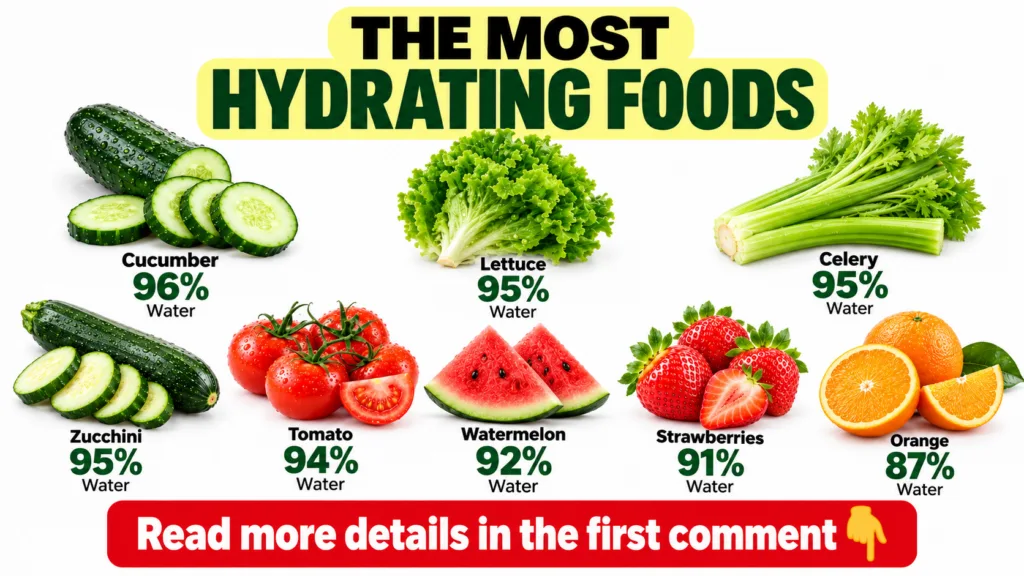
Here’s a look at some of the best foods to help you meet your daily hydration goals, complete with their approximate water content and key nutritional benefits:
| Food | Water Content (%) | Calories (per 100g) | Protein (g) | Carbs (g) | Fat (g) | Fiber (g) | Main Nutrients | Best Benefit |
|---|---|---|---|---|---|---|---|---|
| Cucumber | 95 | 15 | 0.7 | 3.6 | 0.1 | 1.5 | Vit K, C, Potassium | Supports skin & digestion |
| Lettuce | 96 | 14 | 1.4 | 2.9 | 0.2 | 1.3 | Vit K, A, Folate | Digestive health, bone support |
| Celery | 95 | 16 | 0.7 | 3.0 | 0.2 | 1.6 | Vit K, A, C, Folate | Anti-inflammatory, gut health |
| Zucchini | 95 | 17 | 1.2 | 3.1 | 0.3 | 1.0 | Vit C, Potassium, Manganese | Heart health, antioxidant |
| Tomato | 94 | 18 | 0.9 | 3.9 | 0.2 | 1.2 | Vit C, K, Lycopene | Antioxidant, heart health |
| Watermelon | 92 | 30 | 0.6 | 7.6 | 0.2 | 0.4 | Vit C, A, Lycopene | Muscle recovery, refreshing |
| Strawberries | 91 | 32 | 0.7 | 7.7 | 0.3 | 2.0 | Vit C, Manganese, Antioxidants | Immune support, skin health |
| Orange | 87 | 47 | 0.9 | 11.8 | 0.1 | 2.4 | Vit C, Folate, Potassium | Immune boost, energy |
| Bell Pepper (Red) | 92 | 20 | 0.9 | 4.6 | 0.2 | 1.7 | Vit C, B6, A | Immunity, eye health |
| Cantaloupe | 90 | 34 | 0.8 | 8.2 | 0.2 | 0.9 | Vit C, A, Potassium | Vision health, electrolyte |
Nutrition Comparison Highlights
As you can see from the chart, these foods are not just high in water; they are also generally low in calories and fat, making them excellent choices for a healthy diet. Many are rich in essential vitamins like Vitamin C and K, and minerals like potassium, which are important electrolytes that help maintain fluid balance.
- High Water Content: Most of these foods are over 90% water, offering a significant boost to your daily fluid intake.
- Rich in Vitamins and Minerals: They provide a spectrum of micronutrients that support overall health, from immune function to bone health.
- Antioxidant Power: Many, like tomatoes, strawberries, and bell peppers, are packed with antioxidants that protect your cells from damage.
- Good Source of Fiber: While some have lower fiber content (like watermelon), many contribute valuable dietary fiber, aiding digestion and promoting satiety.
Best Ways to Eat Hydrating Foods
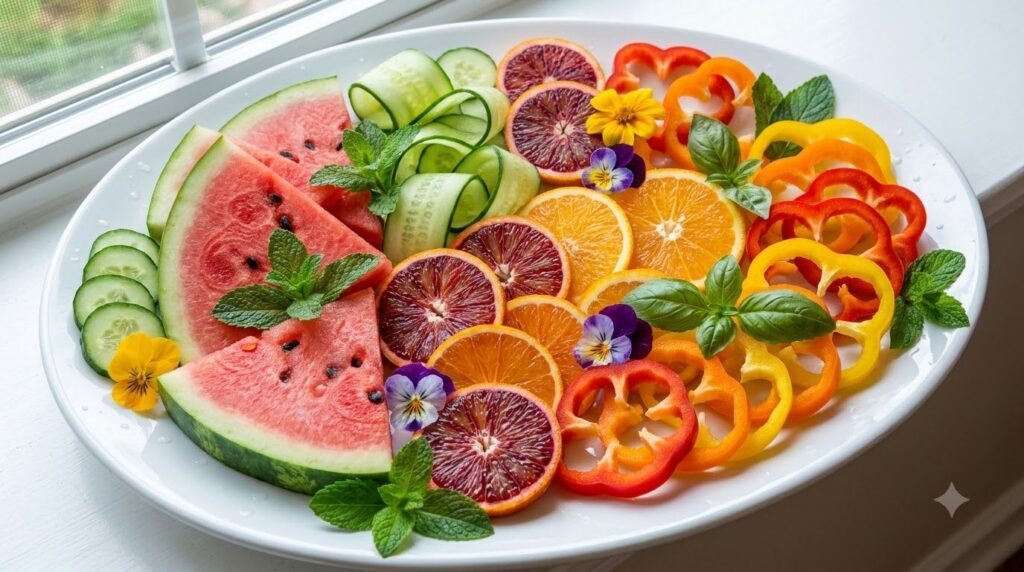
Incorporating these watery wonders into your diet is easy and delicious:
- Snacks: Grab a handful of strawberries, cucumber slices, or a wedge of watermelon for a quick, refreshing snack.
- Salads: Load up your salads with lettuce, tomatoes, bell peppers, and cucumbers.
- Smoothies: Blend spinach (high in water!), berries, and a piece of cantaloupe for a hydrating drink.
- Soups: Zucchini and tomatoes are excellent additions to light, nourishing soups.
- Infused Water: Add cucumber or orange slices to your water bottle for a subtle, refreshing flavor.
- Side Dishes: Sauté zucchini or celery as a healthy side for your main meals.
Who Should Eat More Hydrating Foods?
While everyone can benefit from these foods, some individuals may find them particularly helpful:
- Athletes: To replenish fluids and electrolytes lost during exercise.
- People in Hot Climates: To combat increased fluid loss from sweating.
- Individuals Managing Weight: Their high water and fiber content can promote fullness with fewer calories.
- Those with Digestive Issues: Fiber and water can help support regular bowel movements.
- Anyone Seeking a Healthy Boost: These foods are nutrient-dense and contribute to overall wellness.

Practical Tips for Better Hydration
Beyond eating hydrating foods, here are some simple tips to ensure you stay well-hydrated throughout the day:
- Drink Water Regularly: Don’t wait until you’re thirsty. Sip water consistently throughout the day.
- Keep a Water Bottle Handy: Make it a habit to carry a reusable water bottle and refill it often.
- Listen to Your Body: Pay attention to signs of thirst, dark urine, or fatigue, which can indicate dehydration.
- Limit Sugary Drinks: Sodas and sugary juices can dehydrate you due to their high sugar content.
- Start Your Day with Water: Drink a glass of water first thing in the morning to kickstart your hydration.
- Eat Your Water: Prioritize fruits and vegetables with high water content in your meals and snacks.
FAQs About Hydrating Foods
Q1: Why is hydration important for overall health?
A: Hydration is vital for regulating body temperature, transporting nutrients, removing waste, lubricating joints, and ensuring proper organ function. It impacts your energy levels, mood, and cognitive performance.
Q2: How much water do I really need each day?
A: The general recommendation is about eight 8-ounce glasses of water per day, but individual needs vary based on activity level, climate, health conditions, and diet. Listen to your body and look for signs of thirst.
Q3: Can food truly hydrate me as well as plain water?
A: While food contributes significantly to your daily fluid intake, plain water remains the best source for pure hydration. Hydrating foods offer additional vitamins, minerals, and fiber, making them excellent complements to water.
Q4: Are all fruits and vegetables equally hydrating?
A: No, their water content varies. Foods like cucumber and lettuce are over 95% water, while denser vegetables like potatoes or bananas have lower water percentages. Our chart highlights some of the most hydrating options.
Q5: What are common signs of dehydration?
A: Common signs include thirst, dry mouth, infrequent urination, dark-colored urine, fatigue, headaches, and dizziness.
Q6: Can I get too much water?
A: Yes, overhydration, or hyponatremia, can occur when you drink excessive amounts of water, diluting the sodium in your blood. This is rare but possible, especially for endurance athletes or those with certain medical conditions.
Q7: Are hydrating foods good for weight management?
A: Absolutely! Hydrating foods are often low in calories but high in water and fiber, which can help you feel full and satisfied, potentially leading to reduced overall calorie intake.
Conclusion
Incorporating more hydrating foods into your diet is a simple yet effective way to boost your overall health and well-being. From refreshing watermelon to crisp cucumbers, these nutrient-packed options not only help you stay hydrated but also provide essential vitamins, minerals, and antioxidants.
By making these delicious choices a regular part of your meals and snacks, you can support your body’s vital functions and enjoy increased energy and vitality. So go ahead, eat your water, and feel the difference!
This content is for educational purposes only and should not be considered medical advice. Consult a qualified healthcare professional for personalized dietary recommendations.
Explore More Healthy Eating Content:
- Healthy Smoothie Recipes
- 10 Foods High in Potassium
- Benefits of Eating More Fruits and Vegetables
- Smart Grocery Shopping Tips