Have you been scrolling through beauty forums and seen buzz about a simple, three-ingredient mix for brighter-looking skin and to help reduce the appearance of age spots? This popular DIY blend, featuring baking soda, hydrogen peroxide, and Vaseline, has captured the attention of many looking for easy, at-home beauty solutions. People are trying this intriguing combination for its potential to help create a more even and radiant complexion.
While the internet is full of testimonials, it’s always important to approach DIY beauty with a balanced perspective. Let’s explore what this viral hack entails, the ingredients involved, and what you should know before you consider trying it yourself.
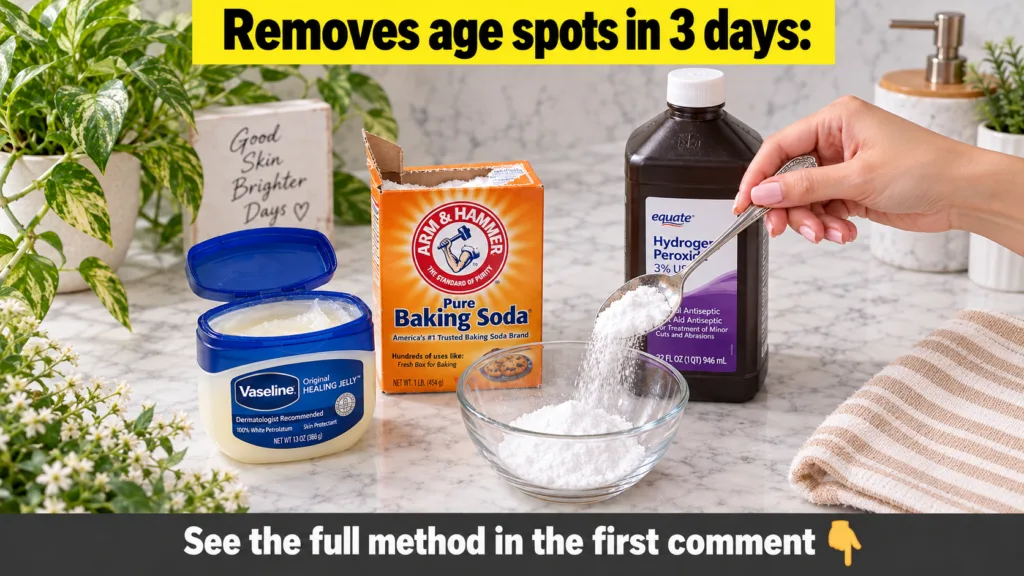
The Ingredients Behind the Buzz
Let’s take a closer look at the common claims and properties of each ingredient in this viral age spot hack:
Baking Soda
-
What people use it for: Often lauded in DIY circles for its exfoliating properties, many people believe baking soda can gently buff away dead skin cells, helping to reveal smoother-looking skin underneath. Some also suggest it helps balance skin pH, though this is a subject of ongoing discussion in professional skincare.
-
What to know: Baking soda is an abrasive ingredient. When used incorrectly or too frequently, it can be harsh on the skin’s natural barrier. Always consider starting with a very small amount and observing your skin’s reaction.
Hydrogen Peroxide
-
What people use it for: In very low concentrations (like 3% hydrogen peroxide, commonly found in drugstores), some people use it as a mild antiseptic or for its perceived brightening effects on skin and nails. For this DIY, its ‘brightening’ potential is what draws attention.
-
What to know: Hydrogen peroxide can be irritating and even damaging to skin, especially in higher concentrations or with prolonged use. It’s not typically recommended by dermatologists for routine facial application due to its potential to cause oxidative stress and dryness. If you consider using it, always opt for the lowest concentration and perform a patch test.
Vaseline (Petroleum Jelly)
-
What people use it for: This well-known product acts as an occlusive barrier, meaning it creates a protective layer on the skin that helps prevent moisture loss. It’s often used to soothe dry, chapped skin and to aid in the healing process by locking in moisture.
-
What to know: Vaseline is generally considered non-comedogenic (meaning it’s unlikely to clog pores) for most people, but its thick consistency might not be suitable for all skin types, especially those prone to acne, as it can trap other ingredients or oils underneath.
How People Prepare This Popular Routine
If you’re curious about how people are trying this specific DIY, here’s a general method you might see online:
-
Prepare the Mix: In a small, clean bowl, combine a small amount of baking soda (e.g., 1 teaspoon) with a few drops of 3% hydrogen peroxide until it forms a paste. Some people then add a tiny dab of Vaseline to the mixture.
-
Patch Test is Key: Before applying to your face, test a tiny amount on an inconspicuous area of your skin (like behind your ear or on your inner arm) and wait 24 hours. Look for any signs of redness, itching, burning, or irritation.
-
Application (if patch test is clear): If your skin shows no adverse reaction, some people recommend dabbing a very small amount of the paste onto the age spots or areas you wish to target. Avoid rubbing or applying to large areas of your face.
-
Leave On Briefly: This is where the ‘3-day secret’ comes in – some users report leaving the mixture on for only a few minutes (e.g., 2-3 minutes) before rinsing thoroughly with lukewarm water. The
