Unlock Bountiful Harvests with Smart Post-Pruning!
Gardening is a journey of patience, care, and continuous learning, and few things are as rewarding as harvesting fresh, homegrown fruit. But the work doesn’t stop once the fruit is picked! Post-harvest pruning is a critical step many gardeners overlook, yet it’s essential for ensuring the health, vigor, and future productivity of your fruit trees. Think of it as nature’s reset button, allowing your trees to recover, redirect energy, and prepare for an even more magnificent yield next season.
Why Post-Harvest Pruning is a Game-Changer
Pruning right after harvest offers a multitude of benefits for your beloved fruit trees:
- Promotes Healing: Wounds from pruning can heal faster when the tree isn’t actively fruiting, reducing the risk of disease.
- Boosts Next Year’s Yield: By removing old or unproductive branches, you encourage new growth that will bear fruit in the following seasons.
- Improves Air Circulation and Sunlight Penetration: A well-pruned tree allows better light and air flow, which reduces fungal diseases and ensures fruit ripens evenly.
- Maintains Tree Shape and Size: Pruning helps manage the tree’s structure, making it easier to harvest and care for in the long run.
- Removes Damaged or Diseased Branches: This prevents potential problems from spreading throughout the tree and keeps it healthy.
Which Fruit Trees Benefit from Immediate Post-Harvest Pruning?
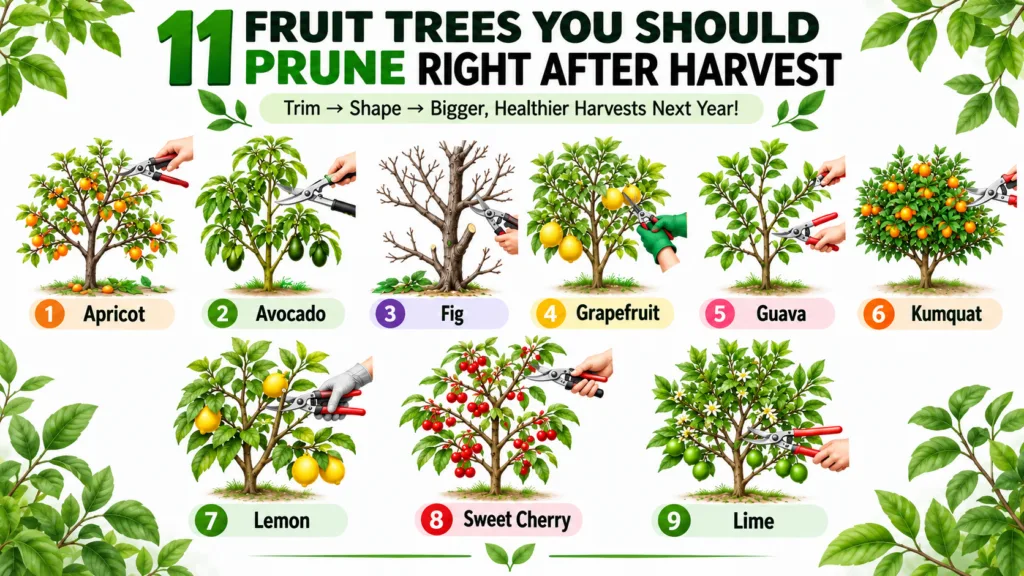
While specific timing can vary slightly by climate and variety, many fruit trees thrive when pruned shortly after they finish bearing fruit. This timing allows the tree to focus its energy on healing and setting new buds for the next season. Some key examples include:
- Apricot: Prune after fruit is picked to encourage new fruit wood.
- Avocado: Light pruning helps shape the tree and remove dead branches.
- Fig: Crucial for maintaining size and promoting vigorous fruiting branches.
- Grapefruit: Helps thin the canopy for better fruit development and air circulation.
- Guava: Prune to encourage bushier growth and more fruit.
- Kumquat: Regular pruning keeps these smaller trees tidy and productive.
- Lemon: Remove suckers and crossing branches to improve light penetration.
- Sweet Cherry: Prune once harvest is complete to shape the tree and promote healthy new growth.
- Lime: Similar to lemons, pruning helps manage growth and improve air circulation.
Always research the specific needs of your fruit tree varieties, as some may prefer dormant pruning or have unique requirements.
Essential Pruning Techniques for Success
Ready to get started? Here are some fundamental techniques to keep in mind:
- Use Clean, Sharp Tools: This is paramount! Clean cuts heal faster and reduce the risk of introducing diseases. Keep your bypass pruners, loppers, and pruning saw sharp and sterilize them between trees (and even between major cuts on diseased branches) with rubbing alcohol.
- Identify What to Remove: Focus on the ‘3 D’s’: Dead, Damaged, or Diseased branches. Also, remove branches that cross or rub against each other, suckers (shoots from the rootstock), and water sprouts (fast-growing vertical shoots).
- Make Proper Cuts: Always cut back to a healthy side branch, bud, or the main trunk. Avoid leaving stubs, as these can become entry points for pests and diseases. Angle your cuts slightly away from a bud to allow water to run off.
- Thinning vs. Heading Cuts: Thinning cuts remove an entire branch back to its origin, improving air circulation. Heading cuts shorten a branch, encouraging bushier growth. Use a combination depending on your goal.
- Don’t Overdo It: Generally, avoid removing more than 20-30% of the tree’s canopy in a single year. Too much pruning can stress the tree.
Post-Pruning Care
After pruning, your trees will appreciate a little extra care:
- Water Thoroughly: Ensure the soil around the tree is adequately moist to support healing and new growth.
- Fertilize (if needed): A balanced fertilizer can help replenish nutrients, but avoid over-fertilizing, especially late in the season, which can promote tender new growth susceptible to frost.
- Monitor for Pests and Diseases: Pruning can sometimes expose new areas, so keep an eye out for any issues.
Embracing post-harvest pruning is a simple yet powerful way to ensure your fruit trees remain vibrant, healthy, and incredibly productive year after year. It’s a fundamental practice that connects you deeper with the natural rhythm of your garden. Happy pruning, and here’s to many more delicious harvests!