Ever wondered if your garden soil could talk? Well, it can! Your soil is constantly sending out signals about its health, fertility, and what your plants truly need. Learning to interpret these whispers and shouts can transform your gardening success, leading to healthier plants, bountiful harvests, and a thriving green space. At Garden – L. Quyên, we believe that understanding your soil is the first step towards a truly beautiful and productive garden.
Ignoring these signs can lead to common gardening woes like wilting plants, stunted growth, and pest problems. But don’t worry, decoding your soil’s language is easier than you think! Let’s explore eight common soil signals and what they mean for your beloved plants.
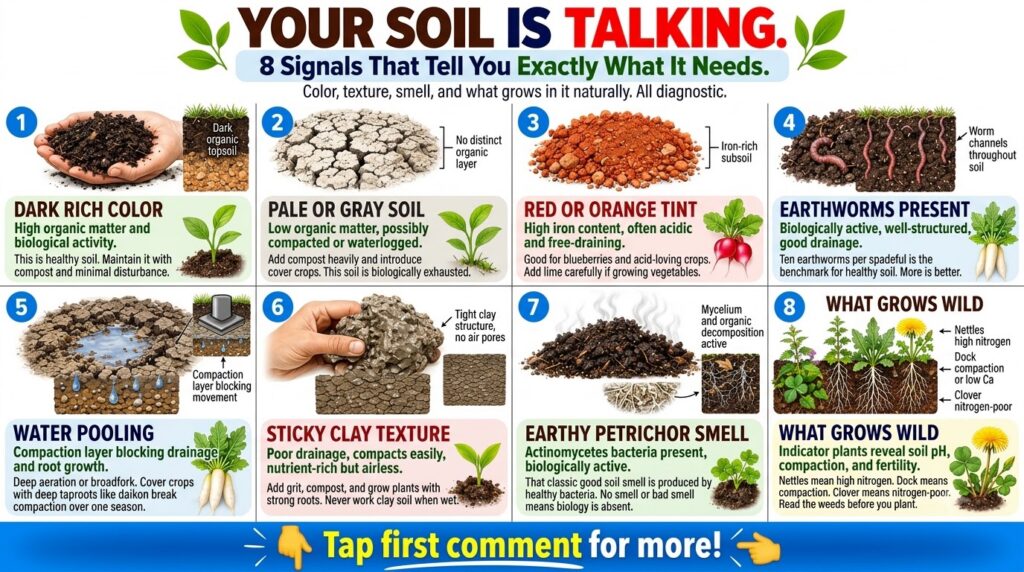
1. Dark, Crumbly Soil: The Dream Soil
The Signal: Your soil is rich, dark brown or black, and easily breaks apart into small, soft crumbs when you pick it up. It might also have a fresh, earthy smell.
What it Means: Congratulations! This is a sign of healthy, fertile soil, often rich in organic matter. It has good aeration, excellent drainage, and retains moisture well, providing an ideal environment for roots to thrive and beneficial microbes to flourish.
Action: Keep up the good work! Continue to add organic matter like compost regularly. Consider companion planting to maintain soil health and biodiversity.
2. Hard, Compacted Soil: A Root’s Worst Nightmare
The Signal: The soil feels hard and dense, making it difficult to dig. Water tends to pool on the surface instead of draining quickly.
What it Means: Compacted soil lacks air pockets, which are crucial for root growth and water absorption. Roots struggle to penetrate, and essential oxygen can’t reach them, leading to nutrient deficiencies and weakened plants.
Action: Improve aeration by gently aerating the soil with a broadfork or garden fork. Incorporate generous amounts of organic matter, like well-rotted compost, to break up the compaction over time. Avoid walking on garden beds.
3. Waterlogged Soil: Too Much of a Good Thing
The Signal: Water stands on the soil surface for long periods after watering or rain. The soil may feel squishy and boggy.
What it Means: This indicates poor drainage, often due to heavy clay content or underlying compaction. Plant roots can drown in waterlogged conditions as they are deprived of oxygen, leading to root rot.
Action: Address drainage issues by adding organic matter to improve soil structure. Consider raised beds for areas with consistently poor drainage. Ensure proper grading to divert excess water away from planting areas.
4. Dry, Sandy Soil: Thirsty and Hungry
The Signal: The soil feels gritty and drains very quickly, often drying out within a day or two after watering. Plants in this soil often look thirsty and may show signs of nutrient deficiency.
What it Means: Sandy soil has large particles, leading to excellent drainage but poor water and nutrient retention. Essential moisture and nutrients quickly leach away, leaving plants parched and undernourished.
Action: Regularly amend with organic matter such as compost or peat moss. This improves water retention and provides a steady supply of nutrients. Mulch heavily to reduce evaporation and regulate soil temperature.
5. Crusty Surface: A Sign of Imbalance
The Signal: The top layer of soil forms a hard, often whitish or grayish crust after drying. It might also feel salty to the touch.
What it Means: A crusty surface can indicate compaction, but a whitish appearance often points to a buildup of salts, especially in arid regions or with improper fertilization. This can hinder seed germination and harm young seedlings.
Action: Gently break up the crust and incorporate organic matter. If salt buildup is suspected, ensure proper, deep watering to leach salts deeper into the soil, and consider reducing synthetic fertilizer use. Use rainwater if possible.
6. Foul Odor: A Warning Sign
The Signal: The soil emits an unpleasant, sour, or rotten-egg-like smell instead of a fresh, earthy aroma.
What it Means: A foul odor suggests anaerobic conditions, meaning there isn’t enough oxygen in the soil. This often occurs in waterlogged or heavily compacted areas where beneficial aerobic microbes cannot thrive, and harmful anaerobic bacteria take over.
Action: Improve drainage and aeration immediately. This might involve loosening compacted areas, adding coarse organic matter, or even temporarily exposing the soil to air. Avoid overwatering.
7. Abundance of Earthworms & Insects: A Healthy Ecosystem
The Signal: You frequently find earthworms, beneficial insects (like ground beetles), and other signs of life when you dig into your soil.
What it Means: This is a fantastic sign! A diverse population of soil organisms indicates a healthy, living soil ecosystem. Earthworms, in particular, aerate the soil, improve drainage, and convert organic matter into plant-available nutrients.
Action: Continue to foster biodiversity by adding organic matter and avoiding harsh chemical pesticides and fertilizers that can harm these beneficial creatures. Embrace no-till or minimal-till gardening practices.
8. White Mold/Fungus: Friend or Foe?
The Signal: You notice white, web-like, or fuzzy growth on the surface or within the soil.
What it Means: This can be tricky! Often, white mycelium (fungal threads) is a sign of beneficial mycorrhizal fungi breaking down organic matter, especially in soil rich with wood chips or decaying leaves. However, it can occasionally indicate a harmful pathogen if accompanied by wilting plants or a decaying odor.
Action: If plants are healthy, it’s likely beneficial fungi – let them be! If plants are struggling, investigate further. Ensure good air circulation around plants and avoid overwatering. Regularly adding fresh compost will encourage a balanced microbial community.
By becoming a keen observer of these eight soil signals, you’ll be well on your way to understanding your garden’s needs more deeply. Happy gardening, and may your soil always speak to you with signs of health and vitality!