Imagine stepping into your garden and plucking a handful of fresh, plump blueberries, still warm from the sun. There’s nothing quite like the taste of homegrown fruit, and blueberries are a perennial favorite for their vibrant flavor and incredible health benefits. Many gardeners, from beginners to seasoned enthusiasts, might think growing blueberries is complicated, but with a few essential tips, you can enjoy a bountiful harvest right in your backyard or even on your patio!
At Garden – L. Quyên, we believe that everyone deserves the joy of cultivating their own food. Today, we’re diving into the wonderful world of blueberries, offering you a complete guide to planting and caring for these delightful berries. Let’s get started on your journey to sweet success!
Why Grow Your Own Blueberries?
Beyond the undeniable satisfaction of eating fruit you’ve grown yourself, homegrown blueberries offer a host of advantages:
- Superior Taste: Store-bought blueberries often don’t compare to the sweet, juicy burst of a freshly picked berry.
- Health Benefits: Blueberries are packed with antioxidants, vitamins, and fiber, making them a fantastic addition to a healthy diet.
- Cost-Effective: Once established, blueberry bushes are productive for many years, saving you money on grocery bills.
- Beautiful Plants: Blueberry bushes are attractive additions to any landscape, with delicate flowers in spring, lush green foliage in summer, and stunning red leaves in fall.
Choosing the Right Blueberry Variety
Not all blueberries are created equal! Selecting the right variety for your climate is key to success. The three main types are:
- Highbush Blueberries: Most common in temperate climates, they grow 6-12 feet tall and produce large berries. Many varieties require cross-pollination from another highbush variety for best yields.
- Lowbush Blueberries: Smaller plants (1-2 feet tall) that spread via rhizomes, producing smaller, intensely flavored berries. Best suited for colder regions.
- Rabbiteye Blueberries: Ideal for warmer climates (Southeastern US), more tolerant of heat and less acidic soil. They grow 6-10 feet tall and generally require another rabbiteye variety for good fruit set.
Check with your local nursery or agricultural extension office to find varieties that thrive in your specific region. Remember to pick at least two different varieties that ripen at similar times to ensure good cross-pollination and a longer harvest season.
Site Selection and Soil Preparation: The Acid Test
Blueberries are famously particular about their soil. They absolutely love acidic soil, with an ideal pH range of 4.5 to 5.5. This is the single most important factor for success!
Sunlight Requirements
Blueberry bushes need full sun to produce abundant fruit. Choose a spot that receives at least 6-8 hours of direct sunlight per day. While they can tolerate some afternoon shade in very hot climates, fruit production may decrease.
Soil is Key
If your soil isn’t naturally acidic, don’t despair! You can amend it:
- Test Your Soil: Start by getting a soil test to determine your current pH level.
- Amend with Organic Matter: Incorporate plenty of acidic organic materials like peat moss, pine bark fines, or composted oak leaves into your planting area. This will help lower the pH and improve drainage.
- Sulfur or Acidifiers: For a quick pH drop, you can use elemental sulfur or an acidic fertilizer designed for blueberries, azaleas, or rhododendrons. Follow product instructions carefully.
- Drainage: Blueberries hate wet feet. Ensure your chosen site has excellent drainage. If your soil is heavy clay, consider planting in raised beds or large containers.
Planting Your Blueberries
Whether you choose to plant in the ground or in containers, the process is straightforward:
Container Planting
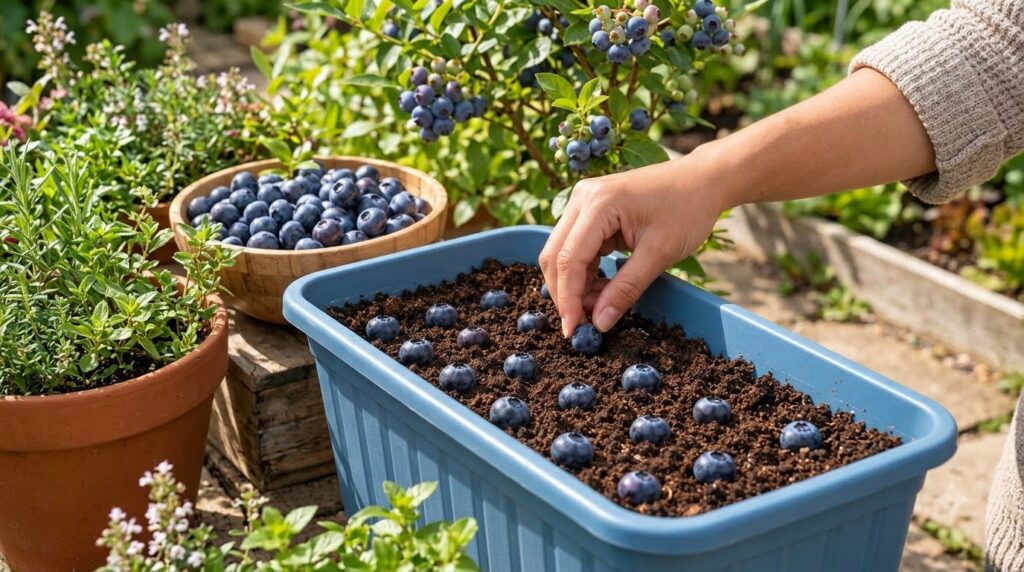
This is an excellent option for those with limited space or non-acidic soil. Use a large pot (at least 15-20 gallons or 18-24 inches in diameter) with good drainage holes.
- Fill the container with a specialized acidic potting mix, often labeled for acid-loving plants, or create your own blend of peat moss, pine bark, and perlite.
- Gently remove the blueberry plant from its nursery pot. Loosen any circling roots at the bottom.
- Place the plant in the new container so that the top of the root ball is level with the surrounding soil.
- Fill with potting mix, gently firming around the base.
- Water thoroughly.
In-Ground Planting
- Dig a hole that is twice as wide as the root ball and just as deep.
- If your soil pH is good, amend the removed soil with organic matter. If not, consider replacing the soil in the planting hole with a prepared acidic blend.
- Carefully remove the plant from its container, gently teasing out any matted roots.
- Place the plant in the hole so that the top of the root ball is level with the ground.
- Backfill with your amended soil, gently firming around the base to remove air pockets.
- Water deeply immediately after planting.
Space plants 4-6 feet apart for highbush and rabbiteye varieties, and 2-3 feet apart for lowbush types.
Ongoing Care for Happy Blueberries
Watering
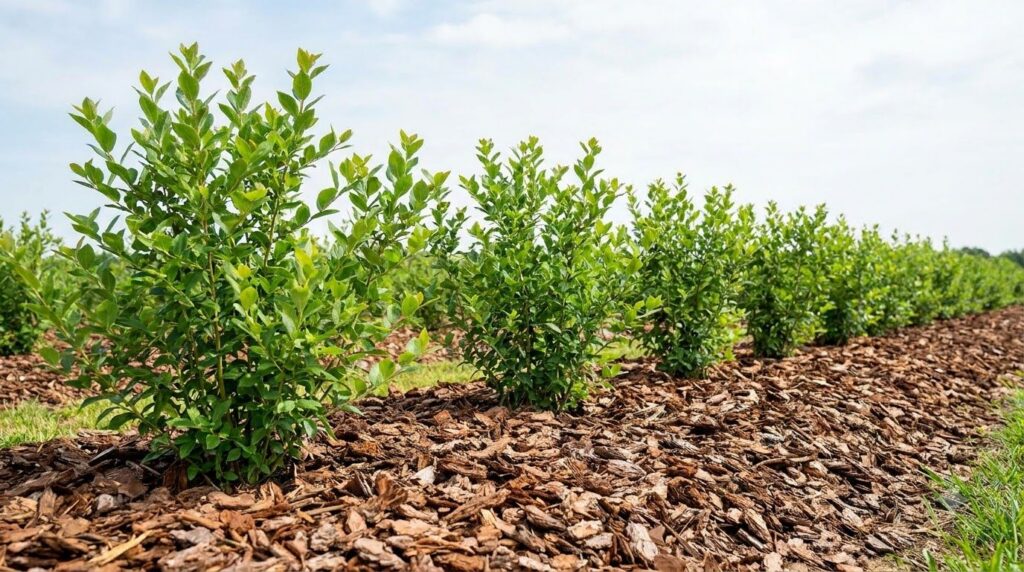
Blueberries need consistent moisture, especially during fruit development. Aim for 1-2 inches of water per week, either from rain or irrigation. Mulch (pine needles, pine bark, or sawdust) around the base of the plants helps retain moisture and suppress weeds, while also contributing to soil acidity.
Fertilizing
Use fertilizers specifically formulated for acid-loving plants, typically in late winter or early spring before new growth appears. Avoid fertilizers high in nitrates, as these can harm blueberries. A balanced organic fertilizer with micronutrients is a great choice.
Pruning
For the first 2-3 years, focus on establishing a strong framework by removing weak or crossing branches. After that, prune annually in late winter to encourage new growth and fruit production. Remove old, unproductive canes at the base, and thin out overcrowded branches.
Pest and Disease Management
Blueberries are relatively trouble-free, but keep an eye out for birds (they love ripe berries as much as we do – consider netting!) and common garden pests. Healthy plants are more resistant to disease, so focus on good cultural practices.
Harvesting Your Sweet Rewards
Blueberries typically ripen in mid-summer, depending on the variety and your climate. Don’t rush to pick them! Let the berries fully color and stay on the bush for a few extra days after they turn blue. This allows them to develop their full sweetness. Gently roll them off the stem with your thumb – if they don’t come off easily, they’re not quite ready.
Enjoying Your Homegrown Bounty
Once you start harvesting, you’ll have an abundance of fresh, delicious blueberries! Enjoy them fresh, in smoothies, baked into pies and muffins, or preserved by freezing for year-round enjoyment. There’s truly nothing more rewarding than enjoying the fruits of your labor.
Growing your own blueberries is a rewarding experience that adds beauty and deliciousness to your garden. With a little care and attention to their specific needs, you’ll be enjoying sweet, juicy berries for years to come. Happy gardening!