The ZZ plant (Zamioculcas zamiifolia) has earned its reputation as a gardening superstar, beloved for its resilience and striking architectural form. Often touted as ‘unkillable,’ it thrives on neglect, making it a perfect choice for busy plant parents or those just starting their green journey. However, even the toughest plants benefit from a little extra love, especially at their foundation: their roots. Healthy roots are the secret to a thriving ZZ plant, ensuring lush foliage and robust growth.
Today, we’re diving deep into the world of ZZ plant root care, focusing on how a homemade nutrient boost can transform your plant from merely surviving to truly flourishing. While ZZ plants are forgiving, providing them with proper nourishment at the root level can unlock their full potential and keep them vibrant for years to come.
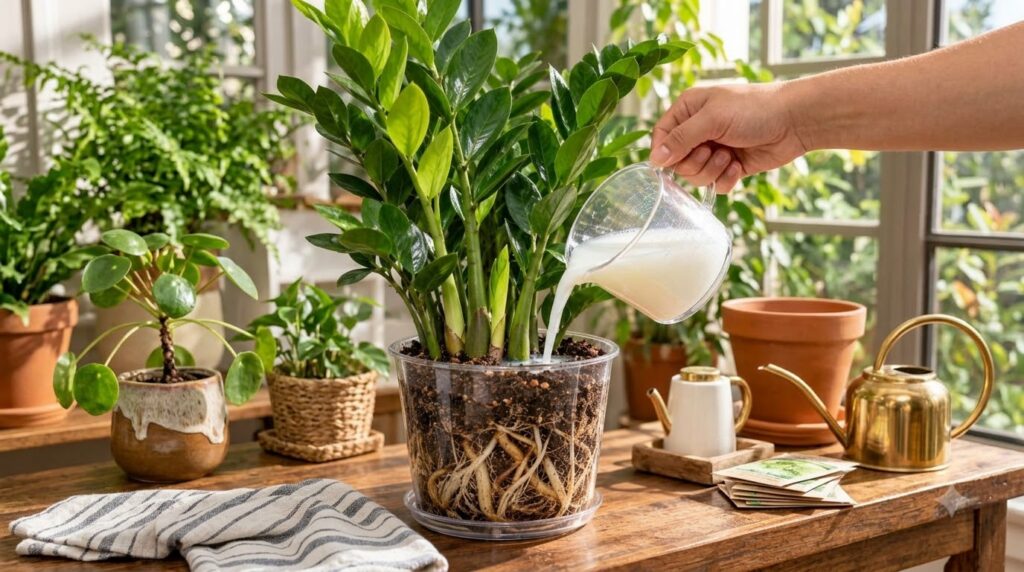
Why Root Health is Paramount for ZZ Plants
For any plant, roots are the unsung heroes, responsible for anchoring the plant, absorbing water, and taking in essential nutrients from the soil. For ZZ plants, this is especially true. Their unique rhizomatous root system acts like underground water reservoirs, allowing them to withstand long periods of drought. However, these rhizomes also make them susceptible to overwatering, which can quickly lead to root rot.
When roots are healthy, they efficiently transport water and nutrients to the rest of the plant, fueling photosynthesis and overall growth. When they’re compromised, the plant struggles, showing signs of distress like yellowing leaves, stunted growth, or even collapse. Focusing on root health is not just about survival; it’s about optimizing your ZZ plant’s ability to thrive.
Signs of Unhealthy ZZ Plant Roots
- Yellowing Leaves: Can indicate overwatering, underwatering, or nutrient deficiency.
- Soft, Mushy Stems: A classic sign of root rot, often due to excessive moisture.
- Stunted Growth: Lack of new growth or very slow growth can point to stressed roots.
- Wilting Despite Watering: If leaves wilt even after watering, it might mean the roots are too damaged to absorb water.
- Foul Odor from Soil: A strong, unpleasant smell often indicates decaying roots.
The Magic of Homemade Nutrient Boosts
While commercial fertilizers are readily available, a homemade nutrient boost offers several advantages. You have control over the ingredients, ensuring your plant receives gentle, natural nourishment without harsh chemicals. It’s also a sustainable and cost-effective way to utilize household items that might otherwise go to waste.
These boosts aren’t about providing a complete NPK (Nitrogen-Phosphorus-Potassium) profile like synthetic fertilizers but rather about enriching the soil microbiome and offering trace elements that promote robust root development and overall plant vitality.
Beneficial Ingredients for Your Homemade Nutrient Boost
While we won’t provide a specific recipe here, understanding the types of ingredients that can benefit your ZZ plant’s roots is key to creating your own effective boost:
- Diluted Compost Tea: Rich in beneficial microbes and micronutrients, compost tea improves soil structure and nutrient availability.
- Banana Peels: Soaked or fermented banana peels release potassium, vital for root strength and overall plant health.
- Eggshells: Crushed eggshells slowly release calcium, which strengthens cell walls and improves nutrient uptake.
- Epsom Salts (Magnesium Sulfate): A diluted solution can provide magnesium, crucial for photosynthesis and nutrient absorption.
- Coffee Grounds: Can add nitrogen and slightly acidify the soil, which some plants appreciate, though use sparingly for ZZ plants.
Always remember to dilute any homemade solutions significantly to avoid shocking your plant. A little goes a long way!
How to Apply Your Nutrient Boost Effectively
Once you have your chosen homemade nutrient boost, proper application is crucial:
- Dilution is Key: Always dilute your solution significantly with water. Strong concentrations can burn roots. A good starting point is a 1:10 ratio (1 part boost to 10 parts water), but adjust based on the potency of your ingredients.
- Watering Schedule: Apply the boost during your regular watering cycle. Water until the solution drains from the bottom, ensuring the roots have absorbed it.
- Frequency: For ZZ plants, which are slow growers, a nutrient boost every 2-3 months during the growing season (spring and summer) is usually sufficient. Reduce frequency or stop entirely in fall and winter.
- Observe Your Plant: Pay close attention to how your ZZ plant responds. If you notice any adverse reactions, adjust the concentration or frequency.

Beyond Nutrients: Holistic ZZ Plant Care
While nutrient boosts are great, they are just one piece of the puzzle. For truly thriving ZZ plants, consider these other essential care tips:
- Proper Watering: The golden rule for ZZ plants is to let the soil dry out completely between waterings. When in doubt, err on the side of underwatering.
- Bright, Indirect Light: While tolerant of low light, ZZ plants flourish in bright, indirect light, which encourages better growth.
- Well-Draining Soil: Use a potting mix that drains quickly to prevent waterlogging and root rot. A mix designed for cacti or succulents works well.
- Temperature and Humidity: ZZ plants prefer average room temperatures and don’t require high humidity.
- Pest Management: Keep an eye out for common houseplant pests like spider mites or mealybugs, though ZZ plants are generally quite pest-resistant.
Conclusion
Your ZZ plant might be known for its low-maintenance nature, but a little extra attention to its roots can go a long way in promoting truly spectacular growth. By understanding the importance of root health and experimenting with homemade nutrient boosts, you can ensure your beloved ZZ plant remains vibrant, strong, and a beautiful focal point in your home. Happy gardening!