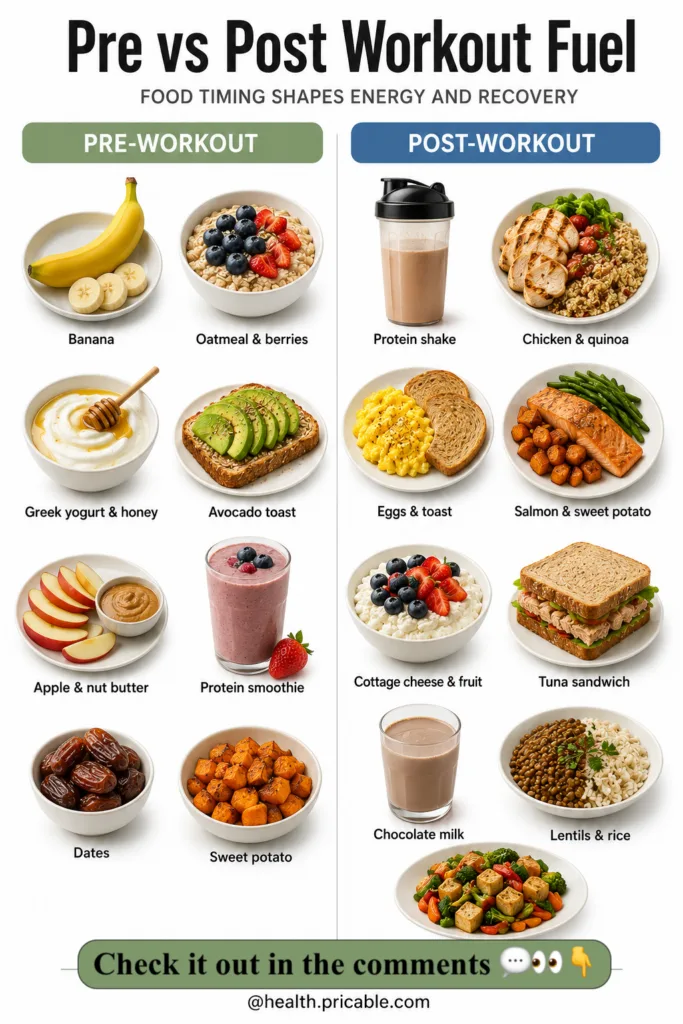
When it comes to nurturing our bodies and maximizing our fitness journey, what we eat before and after a workout plays a pivotal role. It’s not just about showing up; it’s about fueling our bodies for optimal performance and then supporting them for efficient recovery. Think of your body as a high-performance vehicle: you wouldn’t expect it to run on an empty tank, nor would you neglect its maintenance after a long drive. Our infographic, ‘Pre vs Post Workout Fuel,’ clearly illustrates this crucial concept, offering a visual roadmap to intelligent eating around your exercise.
 Understand the optimal timing and types of food for your pre and post-workout needs.
The Power of Proper Fueling: Why It Matters
Many of us focus solely on the workout itself, but the truth is, what you consume outside of your training session significantly impacts your energy levels, endurance, strength, and even how quickly your muscles repair and grow. Strategic nutrition helps:
- Enhance Performance: Providing sustained energy to power through your routine.
- Prevent Fatigue: Keeping blood sugar stable and energy reserves full.
- Optimize Recovery: Repairing muscle tissue and replenishing glycogen stores.
- Reduce Soreness: Aiding in the body’s natural healing processes.
- Support Long-Term Goals: Whether it’s building muscle, losing weight, or improving overall health.
Pre-Workout Fuel: Getting Ready to Perform
The goal of pre-workout nutrition is to provide your body with easily accessible energy, allowing you to sustain your effort and get the most out of your training. This typically means focusing on carbohydrates for energy, with a little protein to prevent muscle breakdown, and keeping fats and fiber relatively low to avoid digestive discomfort during exercise.
What to Eat Before Your Workout:
Aim to consume your pre-workout meal or snack 1-3 hours before your session, depending on its size and your individual digestion. Here are some excellent choices:
- Bananas: A quick source of easily digestible carbohydrates and potassium, great for preventing cramps.
- Oatmeal: Complex carbohydrates provide a slow, steady release of energy, perfect for endurance. Opt for plain oats and add a little fruit for natural sweetness.
- Whole-wheat toast with a thin layer of nut butter: Offers a mix of complex carbs and healthy fats for sustained energy, with a touch of protein.
- Fruit smoothie: Blend fruits like berries or a banana with a liquid base (water, unsweetened almond milk) for quick energy. A spoonful of plant-based protein powder can also be added.
- Greek yogurt with berries: If your stomach can handle dairy, Greek yogurt offers protein and berries provide quick carbs and antioxidants.
Remember, listen to your body. What works for one person might not work for another. Experiment to find what makes you feel energized and comfortable during your workout.
Post-Workout Fuel: The Path to Recovery and Growth
After a workout, your body is in prime condition to absorb nutrients, making it a critical window for recovery. The primary goals of post-workout nutrition are to replenish glycogen stores (your muscle’s energy reserves) and provide protein for muscle repair and growth. This “anabolic window” is typically within 30-60 minutes after exercise, but research suggests that nutrient timing can be more flexible throughout the day as long as overall daily intake is sufficient.
What to Eat After Your Workout:
Focus on a combination of carbohydrates and protein. Carbohydrates help restock energy, while protein provides the building blocks for muscle repair.
- Protein Shake: A convenient way to get a quick dose of protein for muscle repair. Pair it with fruit for carbohydrates.
- Greek Yogurt with Granola and Berries: Combines protein, complex carbohydrates, and antioxidants in one delicious bowl.
- Chicken Breast or Salmon with Sweet Potato and Veggies: A balanced meal offering lean protein, complex carbs, and essential micronutrients.
- Eggs with Whole-Wheat Toast: Eggs are a complete protein source, and toast provides the necessary carbohydrates.
- Cottage Cheese with Fruit: High in casein protein, which is slow-digesting, making it excellent for sustained muscle recovery.
 Refuel your body with a balanced meal to support muscle repair and energy replenishment.
The Unsung Hero: Hydration
Beyond food, don’t underestimate the power of hydration. Water is essential for every bodily function, including nutrient transport, temperature regulation, and joint lubrication. Drink plenty of water before, during, and after your workouts to stay optimally hydrated.
Putting It All Together for Your Wellness Journey
Understanding the principles of pre and post-workout nutrition empowers you to make informed choices that support your active lifestyle. It’s not about strict rules but about developing a mindful approach to fueling your body. Experiment with different foods, pay attention to how your body responds, and gradually integrate these practices into your routine. With consistent, nourishing choices, you’ll feel more energetic, recover more effectively, and move closer to your overall wellness goals.
Your journey to holistic well-being through food is a continuous learning process. Embrace these practical steps, and watch as your strength, endurance, and vitality flourish.