As the vibrant colors of summer begin to gently fade, many gardeners might think their planting days are over until spring. But hold on to your trowels, fellow plant lovers! September isn’t just for admiring the changing leaves; it’s a secret weapon month for preparing your garden for a bountiful winter harvest. Planting certain crops now ensures you’ll be enjoying fresh, homegrown vegetables even as the chill sets in. Imagine harvesting your own garlic, onions, or sweet carrots when most gardens are dormant!
This guide will walk you through nine essential root, bulb, and allium crops that thrive when planted in September, setting you up for delicious harvests throughout the colder months. Let’s dig in!
Why September is Your Secret Weapon for Winter Harvests
September offers a unique set of advantages for planting: the soil is still warm from summer, encouraging root development, but the intense heat has subsided, reducing stress on young plants. Plus, autumn rains often provide natural irrigation, lessening your watering duties. By planting now, these crops establish themselves before the hard frosts arrive, allowing them to mature slowly underground, often developing richer flavors.
Rooting for Success: Essential Root Crops to Plant in September
Root vegetables are incredibly satisfying to grow. They store well and provide hearty meals throughout winter. Here are some top picks:
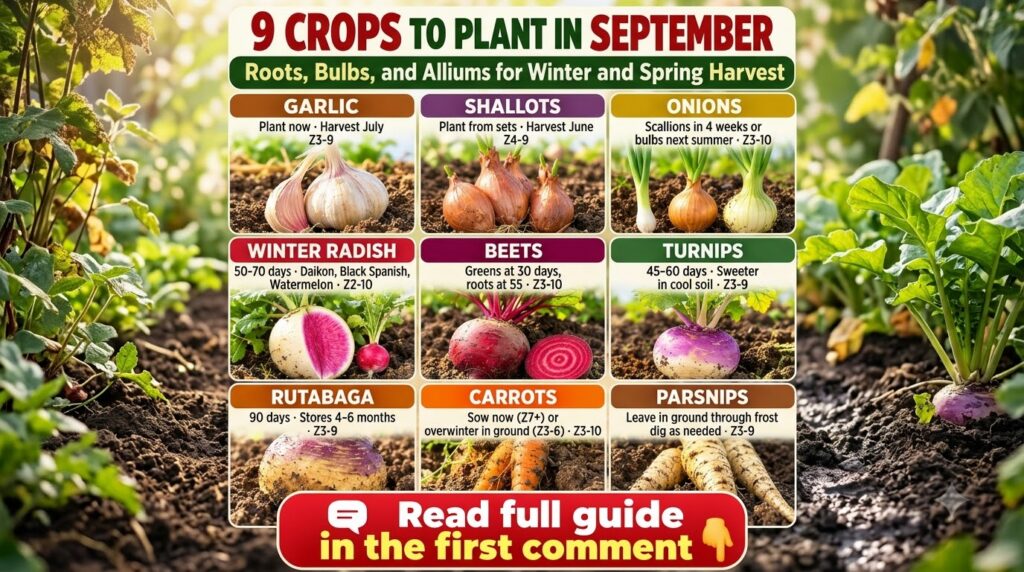
1. Winter Radish
- What they are: Unlike their quick-growing spring cousins, winter radishes are larger, hardier, and often have a milder flavor. Varieties like ‘Black Spanish’ are excellent.
- Planting Tips: Sow seeds directly into well-draining soil, about 1/2 inch deep and 2-4 inches apart. They need consistent moisture to develop properly.
- Harvest Notes: Ready for harvest in late fall to early winter, typically 60-70 days after planting.
2. Beets
- What they are: Delicious root vegetables with edible greens. Winter beets often become sweeter after a light frost.
- Planting Tips: Plant seeds 1/2 inch deep and 2-3 inches apart in rich, loose soil. Keep the soil consistently moist.
- Harvest Notes: Harvest when roots are 1-3 inches in diameter, usually 50-70 days. You can also harvest the greens earlier.
3. Turnips
- What they are: Another dual-purpose crop, offering both tasty roots and greens. Winter turnips are often used in stews and roasts.
- Planting Tips: Sow seeds directly 1/2 inch deep, 4-6 inches apart. They prefer cool weather and moist soil.
- Harvest Notes: Roots are typically ready in 45-60 days. Harvest while small for best flavor.
4. Rutabaga
- What they are: Often confused with turnips, rutabagas are larger, denser, and have a slightly sweeter, nuttier flavor. They are excellent storage crops.
- Planting Tips: Plant seeds 1/2 inch deep and 4-6 inches apart in full sun. They need a long, cool growing season.
- Harvest Notes: Takes longer to mature, around 90-100 days. Harvest after the first light frost for enhanced sweetness.
5. Carrots
- What they are: A garden staple that develops incredible sweetness when grown in cooler temperatures.
- Planting Tips: Sow seeds thinly 1/4 inch deep in deeply dug, stone-free soil. Thin seedlings to 2-4 inches apart once established.
- Harvest Notes: Ready in 70-80 days. Leave them in the ground under a layer of mulch for winter storage and harvest as needed.
6. Parsnips
- What they are: These often-overlooked root vegetables develop an amazing nutty sweetness after exposure to cold temperatures.
- Planting Tips: Plant seeds 1/2 inch deep and 3-6 inches apart. Parsnips are slow to germinate, so be patient!
- Harvest Notes: A long-season crop, maturing in 120-180 days. They are best harvested after a few hard frosts.
Bulb and Allium Bonanza: Garlic, Onions, and Shallots
Planting these in September is key for robust, flavorful bulbs next summer. They need the cold stratification of winter to develop properly.
7. Garlic
- What it is: A must-have for any kitchen, homegrown garlic is incredibly potent and delicious.
- Planting Tips: Break bulbs into individual cloves and plant them root-side down (pointy end up) about 2 inches deep and 4-6 inches apart.
- Harvest Notes: Harvest in late spring to early summer when the lower leaves start to yellow and dry.
8. Shallots
- What they are: Offering a milder, sweeter flavor than onions, shallots are versatile in cooking.
- Planting Tips: Plant individual bulbs 1 inch deep and 4-6 inches apart, similar to garlic.
- Harvest Notes: Ready in mid-summer when the tops begin to yellow and fall over.
9. Onions (Sets or Seeds)
- What they are: From pungent to sweet, onions are a foundational vegetable in countless dishes.
- Planting Tips: For overwintering, plant onion sets 1 inch deep and 4-6 inches apart. If starting from seed, sow thinly and thin later.
- Harvest Notes: Overwintered onions are typically ready in early to mid-summer the following year.
Get Ready to Grow!
September is a fantastic time to extend your gardening season and ensure a continuous supply of fresh, healthy produce. Don’t let the end of summer fool you; your garden still has so much to offer! Choose a few of these crops, prepare your soil, and look forward to the satisfaction of harvesting your own delicious vegetables even in the depths of winter.
Happy planting, and may your winter harvests be abundant!