Unlock the Secret to Long-Lasting Harvests
Remember how our grandparents seemed to have an endless supply of fresh vegetables, even long after harvest season ended? They possessed a simple, yet powerful secret: curing. In today’s fast-paced world, this traditional step often gets overlooked, but it’s a game-changer for extending the freshness and flavor of your homegrown bounty. At Garden – L. Quyên, we believe in embracing timeless gardening wisdom, and curing is one of the best ways to get the most out of your efforts!
Curing is essentially a conditioning process that allows certain vegetables to heal any minor nicks or bruises sustained during harvest, thickens their skins, and reduces moisture content. This creates a protective barrier, preventing spoilage and significantly extending their storage life. It’s a natural form of food preservation that doesn’t require complex equipment, just a little knowledge and patience.
Key Vegetables That Benefit from Curing
While not all vegetables need curing, many of our favorite storage crops thrive with this treatment. Let’s look at some common ones and their specific curing requirements:
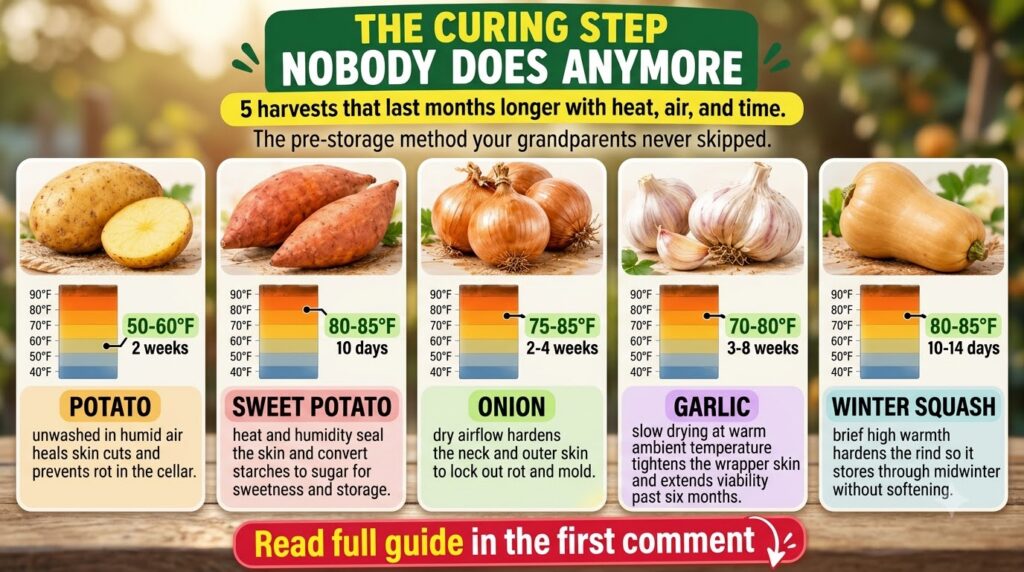
1. Potatoes
- Why cure? Curing helps form a tough skin, heals minor wounds, and converts some starches to sugars, enhancing flavor. It also prevents early sprouting and rot.
- How to cure: After harvesting, brush off excess soil (don’t wash them!). Place potatoes in a dark, humid place with good air circulation, at temperatures between 50-60°F (10-15°C) and 85-95% humidity for 1-2 weeks. After curing, store them in a cool (40-45°F / 4-7°C), dark, and humid place.
2. Sweet Potatoes
- Why cure? Curing is crucial for sweet potatoes. It allows them to convert starches into sugars, developing their characteristic sweetness and flavor, while also healing the skin.
- How to cure: Cure sweet potatoes at a warmer temperature, around 85-90°F (29-32°C) with 85-90% humidity for 5-10 days. After this, store them in a cool (55-60°F / 13-15°C), dark, and moderately humid place.
3. Onions
- Why cure? Curing helps dry the outer papery layers and the neck, sealing off the bulb and preventing moisture from entering, which can lead to rot.
- How to cure: Spread onions in a single layer in a warm (75-80°F / 24-27°C), dry, well-ventilated area for 2-4 weeks. The tops should be completely dry and crinkly. Once cured, store them in a cool (40-50°F / 4-10°C), dry, well-ventilated place, often braided or in mesh bags.
4. Garlic
- Why cure? Similar to onions, curing garlic dries the outer wrappers and necks, ensuring long-term storage without mold or rot.
- How to cure: Hang garlic in bundles or spread in a single layer in a warm (70-80°F / 21-27°C), dry, well-ventilated area for 2-4 weeks. Once fully cured, the wrappers will be dry and papery, and the neck will be firm. Store in a cool (60-65°F / 15-18°C), dark, and dry place with good air circulation.
5. Winter Squash (e.g., Butternut, Acorn, Pumpkin)
- Why cure? Curing hardens the skin of winter squash, making it less susceptible to damage and rot, and improves its storage life. It also allows some varieties to develop richer flavor.
- How to cure: Cure squash in a warm (75-85°F / 24-29°C), moderately humid (70-75%) environment for 10-14 days. After curing, move them to a cool (50-55°F / 10-13°C), dry place.
The Benefits of Embracing This Old-School Technique
Incorporating curing into your harvest routine offers numerous advantages:
- Extended Shelf Life: Dramatically increases how long your vegetables stay fresh, reducing waste.
- Enhanced Flavor: For some crops like sweet potatoes, curing actively develops and intensifies their natural sweetness.
- Reduced Spoilage: By healing wounds and drying outer layers, curing creates a natural defense against fungi and bacteria.
- Cost Savings: Enjoy your homegrown produce for months, reducing the need to buy from the store.
- Sustainable Living: It’s an eco-friendly way to preserve food, connecting you with traditional practices.
Don’t let your hard work in the garden go to waste! Take a cue from our grandparents and give curing a try. You’ll be amazed at how much longer you can enjoy the delicious taste of your home harvest. Happy gardening and happy preserving!