As gardeners, we know the immense joy of harvesting fresh produce – plump tomatoes, crisp lettuce, fragrant herbs, and bountiful berries. But what happens when your garden overflows, and you can’t eat everything before it spoils? The answer lies in ancient traditions: food preservation. Our ancestors mastered the art of extending their harvest, ensuring sustenance through leaner times. Today, these timeless methods offer a wonderful way to reduce food waste, enjoy seasonal flavors year-round, and embrace a more sustainable lifestyle right from your own kitchen.
At Garden – L. Quyên, we believe in empowering you with practical gardening and home tips. Let’s delve into some classic food preservation techniques that are as relevant and rewarding today as they were centuries ago. These methods not only save food but also connect us to a rich heritage of self-sufficiency and delicious homemade goodness.
Why Preserve Your Home Harvest?
- Reduce Food Waste: Make the most of your garden’s bounty and prevent perfectly good produce from ending up in the compost bin.
- Enjoy Seasonal Flavors: Savor the taste of summer tomatoes or autumn apples long after their growing season has passed.
- Save Money: Buying produce in bulk when it’s in season and preserving it can be more cost-effective than purchasing it out of season.
- Control Ingredients: Know exactly what goes into your food by making jams, pickles, and dried snacks free from artificial additives.
- Self-Sufficiency & Skill Building: Connect with traditional practices and gain valuable skills that foster a sense of accomplishment.
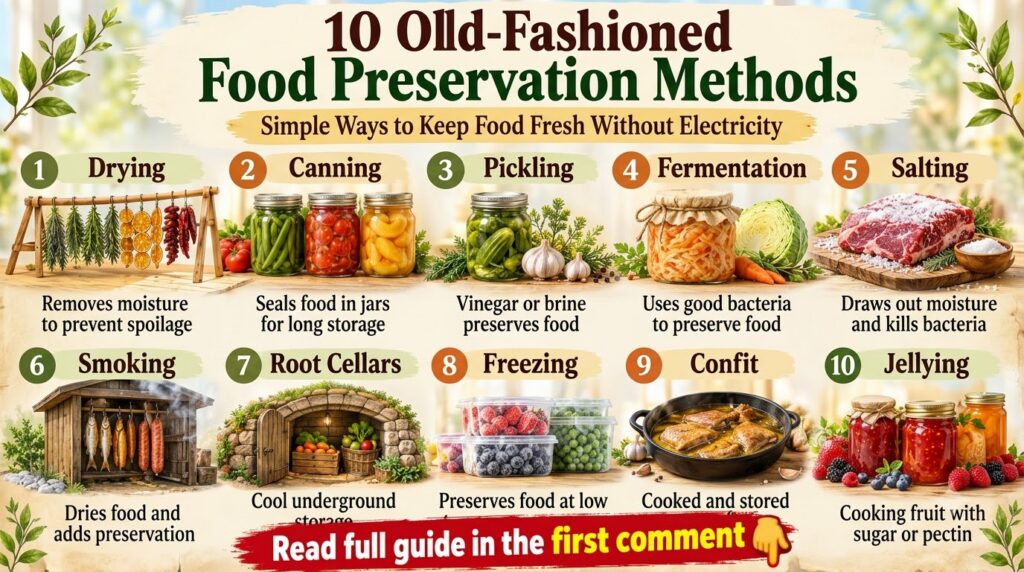
10 Timeless Food Preservation Methods
1. Canning
Canning involves sealing food in jars and heating them to a temperature that destroys microorganisms and creates a vacuum seal. This method is excellent for fruits, vegetables, jams, jellies, and even meats. Water bath canning is ideal for high-acid foods (like tomatoes and most fruits), while pressure canning is essential for low-acid foods (like most vegetables and meats).
2. Drying (Dehydration)
One of the oldest methods, drying removes moisture from food, inhibiting bacterial growth. You can sun-dry, air-dry, or use a food dehydrator for herbs, fruits (like apples and apricots), and vegetables. Dried foods are lightweight, take up minimal space, and make for nutritious snacks or additions to meals.
3. Fermentation
Fermentation uses beneficial bacteria to convert sugars into acids, alcohol, or gases, which preserves food and often enhances its nutritional value and flavor. Think sauerkraut, kimchi, pickles, and kombucha. This method introduces healthy probiotics into your diet and creates uniquely tangy flavors.
4. Pickling
Pickling typically involves preserving food in an acidic solution, most commonly vinegar, often combined with salt and spices. Cucumbers, onions, green beans, and even eggs can be pickled. The acidity creates an inhospitable environment for spoilage organisms, resulting in a crisp, flavorful product.
5. Salting & Curing
Salt has been used for millennia to draw moisture out of food and inhibit microbial growth. This method is traditional for preserving meats (like making jerky or bacon) and fish, as well as some vegetables. Dry salting or brining can extend the shelf life of many foods significantly.
6. Smoking
Smoking not only imparts a delicious flavor but also helps preserve food by drying it and adding antimicrobial compounds from the smoke. Commonly used for fish and meats, smoking can be done with various wood types to create distinct flavor profiles.
7. Root Cellaring / Cool Storage
Before refrigeration, root cellars were essential for storing hardy vegetables and fruits through winter. This method relies on a cool, dark, and humid environment to keep items like potatoes, carrots, apples, and onions fresh for months. Even without a traditional root cellar, a cool, dark basement or unheated pantry can often serve a similar purpose.
8. Jamming & Jellying
Preserving fruits with sugar creates a delicious spread. The high sugar content acts as a preservative by binding water, making it unavailable for microbial growth. Jams (made with crushed fruit) and jellies (made with fruit juice) are delightful ways to capture the essence of summer fruits.
9. Freezing (Modern Cold Storage)
While modern freezers are a relatively recent invention, the concept of preserving food with extreme cold is ancient (think ice houses). Freezing effectively stops microbial growth and enzyme activity, retaining most of the food’s nutrients and flavor. It’s an easy and convenient way to store everything from garden vegetables and fruits to prepared meals.
10. Preserving in Oil
Infusing herbs in oil, or preserving certain foods like sun-dried tomatoes or cheese in oil, can be a flavorful preservation method. It creates an anaerobic environment, which can prevent some spoilage. However, caution is advised, especially with low-acid foods like garlic, due to the risk of botulism. Always ensure proper preparation and storage, often with acidification.
Start Your Preservation Journey Today!
Embracing food preservation is a rewarding journey that connects you to your harvest, your kitchen, and a sustainable way of living. Whether you start with a simple batch of freezer jam, a jar of homemade pickles, or by drying your favorite herbs, each step brings you closer to reducing waste and enjoying the fruits (and vegetables!) of your labor all year long.
Which preservation method are you most excited to try? Share your thoughts and tips with our Garden – L. Quyên community!