Greetings, fellow garden enthusiasts! Are you ready to add a little bit of unconventional magic to your gardening routine? We’ve all heard of traditional gardening wisdom, but sometimes, the most unexpected solutions yield the most amazing results. Today, we’re diving into 12 weird but wonderfully effective garden tricks that will surprise you with their simplicity and impact. Get ready to transform your garden with these ingenious hacks!
1. Boost Your Blooms with Banana Peels
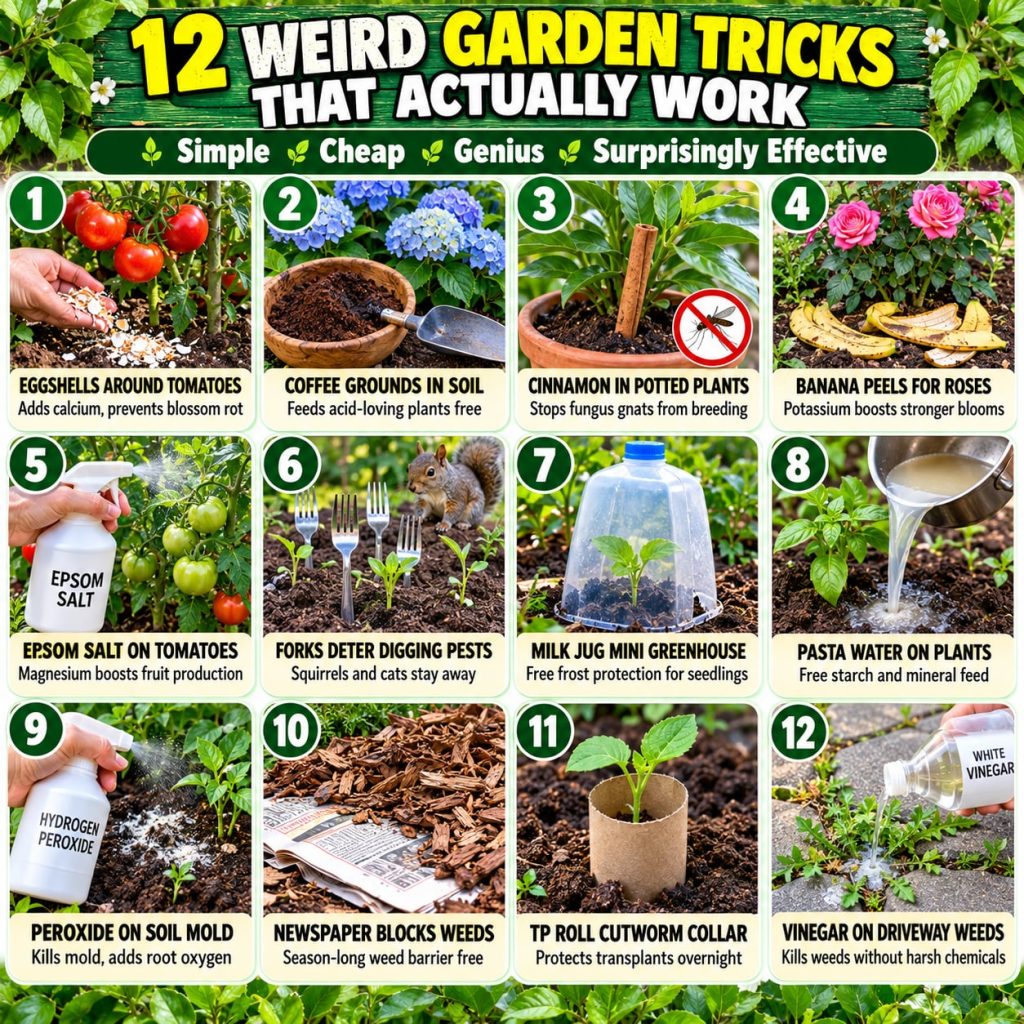
Don’t toss those banana peels! They’re a fantastic source of potassium, phosphorus, and calcium, all vital nutrients for flowering plants. Simply chop them up and bury them an inch or two deep around the base of your roses, tomatoes, or any other fruiting/flowering plant. As they decompose, they’ll release a slow, steady stream of nutrients, encouraging stronger stems and more abundant blooms.
2. Coffee Grounds for Acid Lovers
Do you have hydrangeas, azaleas, or blueberries that seem a bit lackluster? Coffee grounds are your secret weapon! These acidic additions can help lower soil pH, which these plants adore. Sprinkle a thin layer of used coffee grounds around the base of your acid-loving plants a few times a year. Your plants will thank you with vibrant colors and vigorous growth.
3. Eggshells for Calcium Power
Blossom end rot on tomatoes and peppers is a common garden woe, often caused by a calcium deficiency. Save your eggshells, crush them finely, and mix them into the soil when planting. You can also sprinkle them around existing plants. The slow release of calcium will help prevent this frustrating issue and promote stronger plant cell walls.
4. Epsom Salt for Lush Greenery
Epsom salt, or magnesium sulfate, can work wonders for plants suffering from magnesium deficiency, which often appears as yellowing leaves between the veins. Dissolve a tablespoon of Epsom salt in a gallon of water and water your plants with it once a month. It can also be sprinkled around the base of plants like roses and tomatoes for a healthy boost.
5. Deter Pests with Plastic Forks
Are critters nibbling on your seedlings? Stick plastic forks, tines up, into the soil around your vulnerable young plants. The sharp tines create a prickly barrier that discourages small animals like rabbits, squirrels, and birds from digging or munching on your precious greens. It’s a simple, non-toxic, and surprisingly effective deterrent!
6. Newspaper for Weed Suppression
Tired of weeding? Lay down several layers of newspaper around your plants before adding mulch. The newspaper acts as a fantastic weed barrier, suffocating existing weeds and preventing new ones from sprouting. It’s biodegradable, improves soil structure as it breaks down, and drastically reduces your weeding time. Just make sure to use black and white newspaper ink, not glossy pages.
7. Old Stockings as Plant Ties
When staking tall plants like tomatoes or climbing roses, traditional twine can sometimes cut into delicate stems. Old nylon stockings or pantyhose are incredibly gentle, stretchy, and durable. Cut them into strips and use them to tie your plants to stakes or trellises. They provide flexible support without causing damage.
8. Milk for Powdery Mildew
Powdery mildew is a common fungal disease that can plague many garden plants. A simple solution lies in your fridge! Mix one part milk (any kind works, but skim milk is often recommended) with nine parts water in a spray bottle. Spray affected plants weekly on a sunny day. The milk creates an antiseptic effect, and when exposed to sunlight, it can also create beneficial free radicals that kill the fungus.
9. Hydrogen Peroxide for Seed Germination
Want to give your seeds a head start? A diluted hydrogen peroxide solution can help soften seed coats and kill off fungal spores, leading to faster, healthier germination. Mix 1 teaspoon of 3% hydrogen peroxide with 1 cup of water and soak your seeds for a few hours (or overnight for tough seeds) before planting. Rinse them thoroughly before sowing.
10. DIY Drip Irrigation from Water Bottles
Going on vacation or just want to save water? Create a simple drip irrigation system using plastic water bottles. Poke a few small holes in the cap and cut off the bottom of the bottle. Invert the bottle and bury the cap end near the base of your plant, leaving the open bottom exposed. Fill the bottle with water, and it will slowly release moisture directly to the roots, keeping your plants hydrated.
11. Diatomaceous Earth for Pest Control
For a natural and effective way to combat crawling pests like slugs, snails, ants, and earwigs, sprinkle food-grade diatomaceous earth around the base of your plants or directly onto the pests. This fine powder is made from fossilized diatoms and works by dehydrating insects, providing a chemical-free pest control solution.
12. Use Citrus Peels as Seed Starters
Instead of buying plastic seed starting pots, repurpose citrus halves (like oranges or grapefruits) as biodegradable containers. Simply scoop out the fruit, poke a drainage hole in the bottom, fill with potting mix, and plant your seeds. Once the seedlings are ready for transplanting, you can plant the entire citrus peel directly into the ground, where it will decompose and enrich the soil.
Unleash Your Inner Garden Innovator!
These peculiar garden tricks might seem a bit odd at first glance, but they are tried and true methods that have helped countless gardeners achieve healthier, more vibrant plants. By incorporating these simple, often free, and eco-friendly solutions, you can solve common gardening problems and boost your garden’s overall well-being. Which of these weirdly effective tricks will you try first? Share your experiences and any other unusual tips you swear by in the comments below!