Mastering Pruning: Unlocking Your Garden’s Full Potential for Healthier Plants
Gardening is a journey of growth, beauty, and continuous learning. Among the many skills a gardener hones, pruning stands out as one of the most vital for nurturing strong, vibrant plants. It’s not just about trimming; it’s about strategic cuts that promote health, stimulate growth, and encourage abundant blooms and harvests. If you’ve ever felt intimidated by pruning, you’re not alone! But with a little knowledge, you can master this art and unlock your garden’s true potential.
Why Pruning Matters: More Than Just a Trim
Pruning is often misunderstood as merely a way to control size or shape. While it certainly does that, its primary benefits are rooted in plant health and productivity. Here’s why it’s so important:
- Promotes Plant Health: Removing dead, diseased, or damaged branches prevents the spread of pests and diseases, allowing the plant to direct its energy towards healthy growth.
- Encourages Stronger Growth: Strategic cuts can stimulate the plant to produce new shoots, leading to a denser, more robust structure.
- Enhances Flowering and Fruiting: For many plants, pruning at the right time encourages a greater abundance of flowers and a more generous harvest of fruits or vegetables.
- Improves Air Circulation and Light Penetration: Thinning out crowded branches allows better air flow, reducing humidity and the risk of fungal issues, while ensuring all parts of the plant receive adequate sunlight.
- Maintains Desired Shape and Size: Pruning helps maintain the aesthetic appeal of your plants, whether you’re shaping a rose bush, an espaliered fruit tree, or simply keeping a shrub within bounds.
Essential Pruning Tools
Before you make your first cut, ensure you have the right tools. Sharp, clean tools are crucial for making precise cuts that heal quickly and prevent the transmission of diseases.
- Hand Pruners (Bypass Shears): Ideal for smaller branches (up to 3/4 inch thick). Bypass pruners make clean, scissor-like cuts.
- Loppers: With longer handles and greater leverage, loppers can cut branches up to 1 1/2 to 2 inches thick.
- Pruning Saws: For larger branches that are too thick for loppers, a pruning saw is essential.
- Hedge Shears: Best for shaping hedges and shrubs with many small stems.
Always sterilize your tools with rubbing alcohol or a bleach solution before and after use, especially when moving between plants or after cutting diseased material.
Key Pruning Techniques to Master
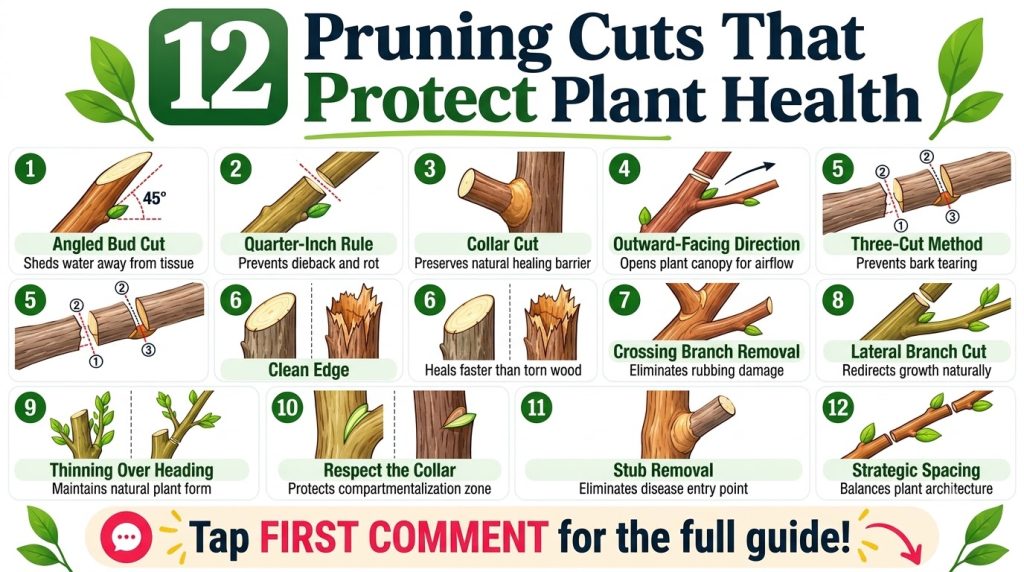
While the infographic highlights 12 specific cuts, understanding a few fundamental principles will guide most of your pruning decisions:
1. Removing Dead, Diseased, or Damaged Wood
This is often the first step in any pruning session. Look for branches that are discolored, brittle, or show signs of decay or pest infestation. Cut back into healthy wood, ensuring you remove all affected parts to prevent further spread.
2. Thinning Cuts
Thinning involves removing an entire branch back to its origin (main stem, another branch, or the ground). This technique opens up the plant’s canopy, improves air circulation, and allows more light to reach inner foliage. It’s excellent for reducing overall density without stimulating excessive new growth.
3. Heading Cuts
Heading cuts involve shortening a branch or stem back to a bud, side branch, or node. This technique stimulates new growth from the bud or side branch below the cut, encouraging a bushier, more compact plant. It’s often used for shaping and controlling size.
4. Proper Angle and Location
Always make your cuts at the correct angle and location to facilitate healing and prevent disease entry. For cuts to a bud, cut about 1/4 inch above an outward-facing bud, sloping away from the bud. When removing a branch back to the main stem, cut outside the branch collar—the swollen area at the base of the branch—to allow the plant to seal the wound effectively.
5. Addressing Crossing and Rubbing Branches
Branches that rub against each other can create open wounds, making the plant vulnerable to pests and diseases. Identify and remove the weaker or poorly placed of the two branches to prevent this damage.
When to Prune: Timing is Everything
The best time to prune depends largely on the type of plant you’re working with:
- Dormant Pruning (Late Winter/Early Spring): Many deciduous trees and shrubs benefit from pruning during their dormant season. This is ideal for major structural changes, as the absence of leaves allows for better visibility of the plant’s form.
- After Flowering: For spring-flowering shrubs and trees (e.g., lilacs, forsythia), prune immediately after they finish blooming. Pruning too early will remove flower buds for the current season.
- Summer Pruning: Generally, summer pruning is lighter and used for shaping, removing water sprouts, or controlling vigorous growth. Avoid heavy pruning in late summer, as new growth might not harden off before winter.
- Evergreens: Most evergreens can be lightly pruned in early spring before new growth starts, or in mid-summer after the first flush of growth.
Tips for Successful Pruning
- Start Small: If you’re new to pruning, begin with smaller, less critical cuts. You can always remove more, but you can’t put it back!
- Have a Plan: Step back and observe your plant before making any cuts. Visualize the desired outcome.
- Prioritize Health: Always remove dead, diseased, or damaged branches first.
- Don’t Over-Prune: Removing too much foliage at once can stress the plant. A general rule is to remove no more than 25-30% of a plant’s total canopy in one season.
- Clean Up: Always remove pruned material from around the base of the plant to prevent disease and pest harborage.
Pruning is an act of care that transforms your garden from merely existing to truly thriving. By understanding these fundamental techniques and investing a little time, you’ll soon be making confident cuts that lead to healthier, more beautiful, and productive plants. Happy gardening!