Most people mow this plant down without a second look. The yellow flower gets the attention, but the leaves and roots are what experienced herbalists keep coming back to, and both are easy to prepare at home.
What It Is
The plant in this guide is the common dandelion (Taraxacum officinale). It grows low to the ground in a rosette of jagged green leaves, produces a single yellow flower on a hollow stem, and has a long, deep taproot. Its leaves have a mildly bitter taste, similar to chicory or arugula, and the roasted root has a coffee-like flavor that makes it popular as a caffeine-free drink.
Before you harvest anything, confirm the identification. Look for a hollow, milky-sap stem, leaves that grow directly from the base, and a flower that closes into a fluffy seed head. Avoid plants from lawns treated with weed killer, roadsides, or areas where dogs roam.
Ingredients
- Young dandelion leaves (about 1 cup loosely packed, picked before the plant flowers)
- Dandelion root (1 tablespoon chopped, roasted)
- Filtered water (2 cups)
- Raw honey or a lemon wedge (optional)
Approximate Measurements
For a single cup of leaf tea, use about 1 teaspoon of dried leaf or 1 tablespoon of finely chopped fresh leaf. For root tea, use about 1 teaspoon of roasted, chopped root per cup of water. These amounts are a starting point, so adjust to taste.
Formula and Recipe
Dandelion leaf tea is light and slightly bitter. Dandelion root tea is darker, earthy, and works well as a coffee alternative. Both are simple to brew in a regular kettle or small pot.
Step-by-Step Method
- Harvest young leaves from an area you know is free of chemicals, then rinse them under cold water to remove soil and insects.
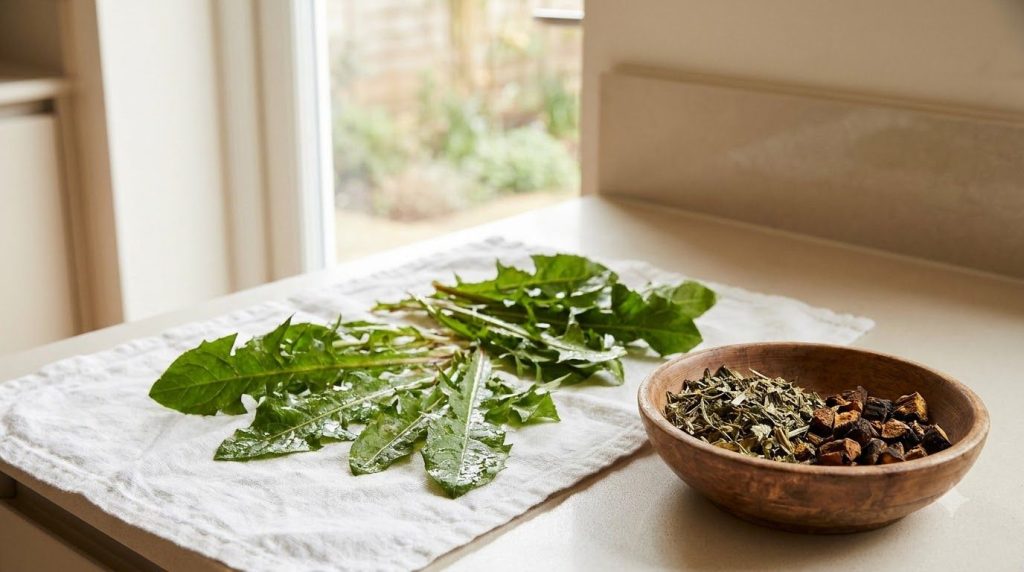
- Pat the leaves dry, then either use them fresh or dry them on a clean towel in a shaded spot with good airflow for 1 to 2 days.
- For the root, dig up a whole plant with a fork, wash it well, slice it thinly, and dry it fully before roasting.
- Roast the root slices in a dry pan or low oven until they turn dark brown and smell nutty. Let them cool, then chop them finely.
- For leaf tea, pour 1 cup of hot water over 1 teaspoon of dried leaf and cover. Steep for 5 to 7 minutes.
- For root tea, add 1 teaspoon of roasted root to 1 cup of water, bring to a gentle simmer, and cook for about 10 minutes. Strain before drinking.
How to Use It
Drink the tea warm or cool it and add a squeeze of lemon. Honey can soften the bitterness. You can also add young fresh leaves to salads, or sauté them with garlic and olive oil like any other leafy green.
How Often to Use It
One cup a day is a reasonable amount for most adults. Many people prefer to drink it for a few days, then take a break for a week before starting again. Stop if you notice stomach discomfort.
Read more: how to identify common wild greens before you harvest them.
How to Buy or Choose Ingredients
If you don’t have a safe lawn to harvest from, buy dried dandelion leaf or root from a reputable herb supplier. Look for clear labeling with the plant name, harvest date, and country of origin. Choose bright green dried leaves and roots that smell fresh rather than musty.
Fresh vs Dried Quick Reference
| Feature | Fresh Leaves | Dried Leaves or Root |
|---|---|---|
| Best use | Salads, sautéed greens | Tea and infusions |
| Flavor | Sharp and bitter | Mellow, earthy when roasted |
| Storage | 2 to 3 days in the fridge | 6 to 12 months in an airtight jar |
| Prep time | 10 minutes | 1 to 2 days to dry |
Storage
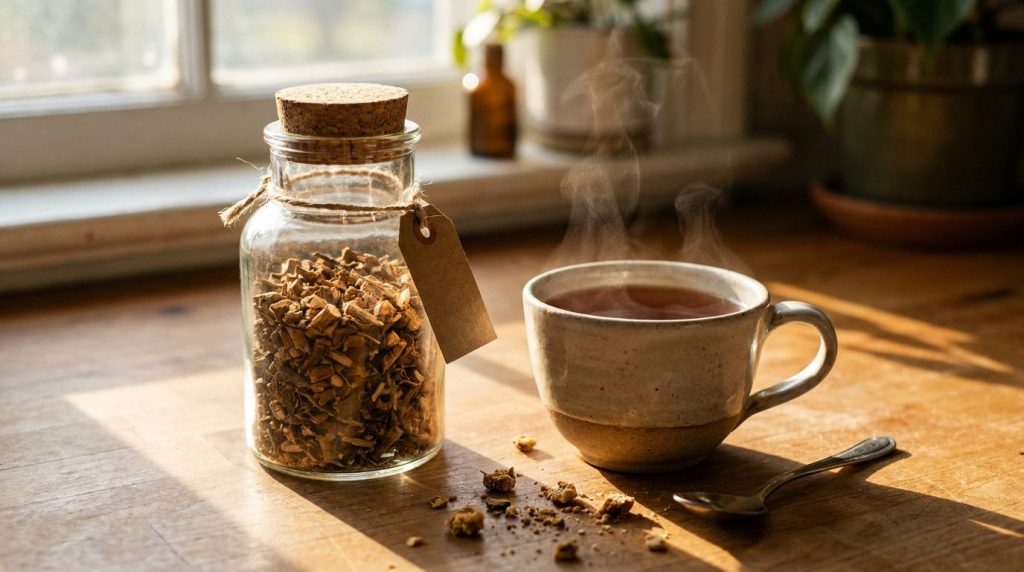
Keep fresh leaves wrapped in a paper towel inside a sealed container in the refrigerator, and use them within 2 to 3 days. Store dried leaf and roasted root in an airtight glass jar away from light and heat. Label the jar with the date.
Practical Tips
Quick Tip: Pick leaves from the morning harvest when the plant is fully hydrated, as they will be crisper and less bitter.
Did You Know? The root is harvested most often in autumn, when the plant has stored more of its energy below ground.
Best Time to Use It: Drink leaf tea in the morning or early afternoon, and avoid large amounts late in the evening if you are sensitive to diuretic effects.
Common Mistakes
- Harvesting from sprayed lawns, roadsides, or areas where animals urinate.
- Boiling leaf tea for a long time, which makes it harsher and more bitter.
- Storing damp leaves in a sealed container, which encourages mold.
- Skipping the drying step for root, leaving it soft and prone to spoiling.
- Drinking large amounts every day without a break.
Cautions and Who Should Avoid It
Dandelion is a food plant, but it is not right for everyone. People who are allergic to plants in the daisy or ragweed family should be careful. Dandelion can have a diuretic effect, so speak with a healthcare professional first if you take diuretic medication, lithium, or blood-thinning medication. Anyone with gallbladder or bile duct problems, or who is pregnant or breastfeeding, should check with a doctor before using it.
Quick Summary
- Best preparation: Dried leaf tea for daily use, roasted root for a coffee-style drink.
- Best use case: A light, bitter tea or a fresh addition to salads and sautéed greens.
- Storage: Fresh leaves for 2 to 3 days in the fridge; dried material for up to a year in an airtight jar.
- When to use: Morning or early afternoon, with food, in moderate amounts.
- What to avoid: Sprayed plants, roadside harvests, damp storage, and long boiling.
Frequently Asked Questions
Can I use fresh or dried dandelion?
Yes. Fresh leaves work well in salads and cooking, while dried leaves and roasted root are better for tea because they keep longer and brew more consistently.
How long does dried dandelion last?
Dried leaf and roasted root usually stay good for 6 to 12 months when kept in an airtight jar away from heat and light.
Can I refrigerate dandelion tea?
Yes. Brewed tea can be refrigerated for up to 24 hours in a sealed container. Reheat gently or serve cold.
Can I freeze dandelion leaves?
You can blanch fresh leaves for about 30 seconds, cool them quickly, pat dry, and freeze them in a sealed bag. They are best used in cooked dishes after freezing.
What part of the plant is best?
Young leaves are best for fresh eating, and roasted root is best for a dark tea. Flowers can be added to salads or infused, but they are less common in tea blends.
Can I reuse the leaves for a second cup?
You can get a lighter second infusion from the same leaves, but the flavor will be weaker and more bitter. Fresh leaves are better for a fuller cup.
When should I avoid it?
Avoid it if you have a plant allergy in the daisy family, gallbladder issues, or if you take medications affected by diuretics. Check with a healthcare professional when in doubt.
Continue with: our guide on safe foraging basics for beginners.
Related guide: learn how to make a simple herbal tea blend at home.
Final Thoughts
The plant you walk past every day can be a practical addition to your kitchen. Identify it carefully, harvest from a clean source, and start with a small cup of tea to see how your body responds.