Welcome, fellow garden enthusiasts! Are you dreaming of a garden bursting with vibrant flowers and thriving, robust plants? The secret to achieving this often lies in a technique that many gardeners find intimidating: pruning. But fear not! Pruning isn’t just about cutting branches; it’s an art that, once mastered, can transform your garden, encouraging healthier growth, more abundant blooms, and better plant structure. Think of it as giving your plants a haircut – a little trim can do wonders!
Many common gardening issues, from sparse flowering to weak growth and disease, can be significantly improved with proper pruning. It helps direct the plant’s energy where it’s needed most, removes problematic parts, and enhances its natural beauty. Let’s dive into the five fundamental basics that will turn you into a pruning pro!
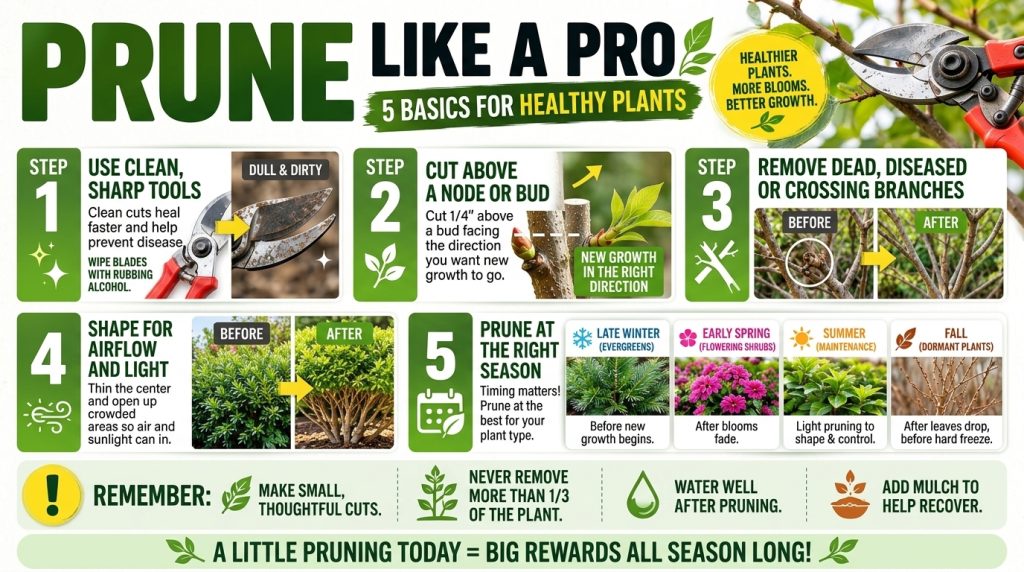
1. The Right Tools and Tool Care
Before you make your first cut, ensure you have the correct tools for the job. Sharp, clean pruning shears (hand pruners) are essential for most small branches and stems. For thicker branches, loppers or a pruning saw might be necessary. Using dull or dirty tools can tear plant tissue, making your plants susceptible to disease. Always clean your tools with rubbing alcohol or a bleach solution before and after each use, especially when moving from one plant to another, to prevent the spread of pathogens.
2. Understanding Your Cuts
Where you cut matters! There are two main types of cuts: thinning cuts and heading cuts.
- Thinning Cuts: These remove an entire branch back to its point of origin (main stem, lateral branch, or ground level). They help improve air circulation and light penetration within the plant.
- Heading Cuts: These shorten a branch or stem back to a bud, a lateral branch, or a node. This encourages bushier growth and can be used to control plant size or shape.
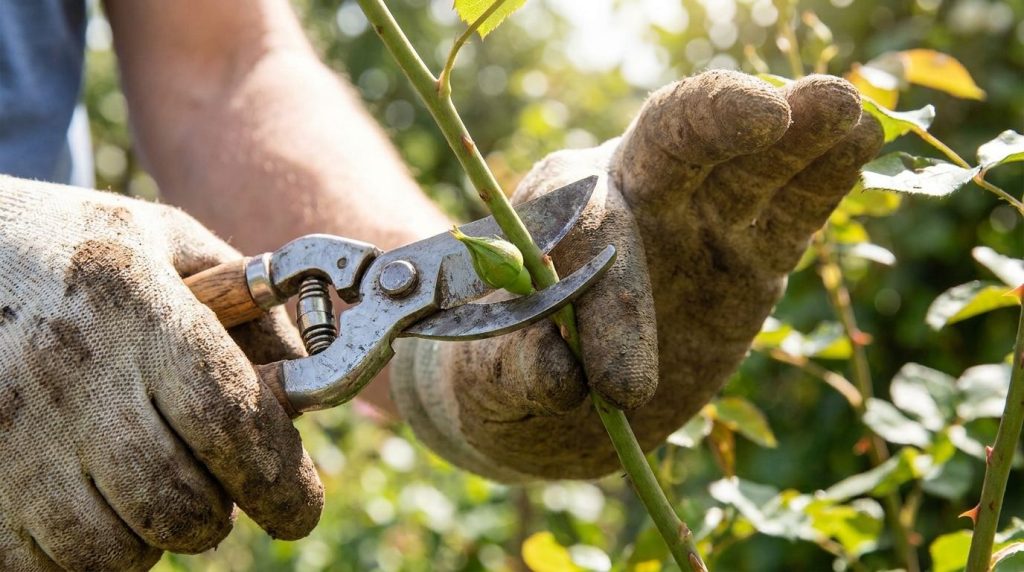
Always make your cuts at a 45-degree angle, about 1/4 inch above an outward-facing bud. This allows water to run off the cut surface, preventing disease, and directs new growth away from the plant’s center.
3. Removing Dead, Diseased, or Damaged Branches (The 3 Ds)
This is arguably the most critical aspect of pruning. Any branch that is dead, showing signs of disease (discoloration, cankers, unusual growths), or damaged (broken, rubbing) should be removed promptly. This prevents diseases from spreading, removes potential entry points for pests, and directs the plant’s energy towards healthy growth. Make sure to cut back into healthy wood.
4. Shaping for Structure and Airflow
Pruning isn’t just for problem-solving; it’s also about guiding your plant’s development. Use pruning to create an open structure that allows for good air circulation throughout the plant, reducing the risk of fungal diseases. Remove crossing branches that rub against each other, as these can create wounds. You can also shape plants to control their size, maintain an appealing aesthetic, or encourage a specific growth habit, like a strong central leader in a tree.
5. Timing is Everything
Knowing when to prune is crucial. Improper timing can stress a plant, reduce flowering, or even kill it. Generally:
- Late Winter/Early Spring: This is ideal for most deciduous trees and shrubs, especially those that flower on new wood (e.g., roses, hydrangeas). Pruning while dormant encourages vigorous spring growth.
- After Flowering: Prune spring-flowering shrubs (e.g., lilacs, forsythia) immediately after their blooms fade. They set their flower buds on old wood, so pruning too early would remove next year’s flowers.
- Summer: Light pruning can be done in summer to remove suckers, water sprouts, or maintain shape. Avoid heavy pruning as it can stress the plant during active growth.
- Autumn: Generally avoid heavy pruning in fall, as it can stimulate new growth that won’t have time to harden before winter, making it vulnerable to frost damage.
Common Pruning Mistakes to Avoid
- Over-Pruning: Removing too much of the plant at once can shock it and inhibit growth. Aim for no more than 25-30% of the plant’s total mass in a single season.
- Leaving Stubs: Don’t leave short stubs of branches after pruning; these can die back and become entry points for pests and diseases.
- Improper Cuts: Always cut at the correct angle above a bud, not too far away or too close.
- Pruning at the Wrong Time: As discussed, timing is vital for the plant’s health and flowering cycle.
Pruning might seem daunting at first, but with these five basic principles, you’ll be well on your way to a healthier, more beautiful garden. Start small, observe how your plants respond, and remember that every snip is an investment in your garden’s future. Happy gardening!