Dreaming of fresh, homegrown vegetables but have limited garden space? Container gardening is your perfect solution! Whether you have a small balcony, a sunny patio, or just a corner in your yard, growing vegetables in pots offers incredible flexibility and satisfaction. But for your plants to truly thrive, there’s one crucial factor you need to master: choosing the right container depth. It’s more important than you might think!
Why Container Depth is a Game-Changer for Your Veggies
The success of your container garden largely depends on giving your plants’ roots enough room to grow. Think of roots as the hidden engine of your plant; they absorb water, nutrients, and anchor the plant firmly. If roots are cramped, they can’t function properly, leading to stunted growth, poor yields, and even plant death.
Different vegetables have different root systems. Some are shallow, happy with just a few inches of soil, while others send deep taproots searching for moisture and stability. Providing the appropriate depth ensures:
- Ample Root Growth: Roots can spread out and penetrate deeply, accessing more nutrients and water.
- Better Water Retention: Deeper pots hold more soil, which retains moisture longer, reducing the frequency of watering.
- Plant Stability: Taller plants or those with heavy yields need deep roots for anchoring against wind and supporting their produce.
- Temperature Regulation: A larger volume of soil helps insulate roots from extreme temperature fluctuations, keeping them happier.
Decoding Container Depths for Thriving Vegetables
Let’s break down the essential container depths and the vegetables that will flourish in them.
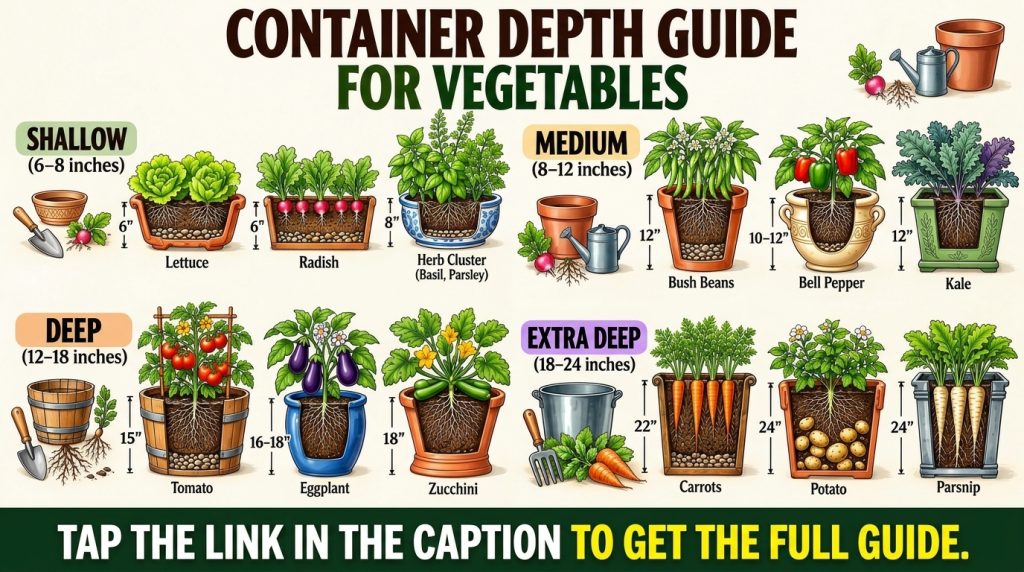
1. Shallow Containers (6-8 inches deep)
Perfect for vegetables with small, compact root systems or those that mature quickly. These are often leafy greens and quick-harvest crops.
- Ideal for: Lettuce, Spinach, Radishes, Green Onions, Most Herbs (like basil, cilantro, mint).
- Why it works: These plants don’t need extensive root exploration and benefit from good drainage, which shallow pots provide.
2. Medium Containers (8-12 inches deep)
This depth range suits a wider variety of popular garden vegetables that need a bit more room for root development and stability.
- Ideal for: Bush Beans, Kale, Swiss Chard, Bell Peppers, Eggplant, small to medium Tomato varieties, Broccoli, Cabbage.
- Why it works: It provides sufficient space for a moderate root ball and supports the growth of larger plants with more substantial foliage and fruit.
3. Deep Containers (12-18 inches deep)
When you’re growing root vegetables or plants that get quite large and produce a lot of fruit, deeper containers are a must.
- Ideal for: Carrots, Beets, larger Tomato varieties (indeterminate), Cucumbers, Zucchini, Peas, Okra.
- Why it works: Root vegetables need depth to prevent stunted or deformed growth. Taller, vining plants benefit from the extra stability and moisture reservoir.
4. Extra Deep Containers (18+ inches deep)
These are for the real space hogs or those requiring specialized growing conditions, often mimicking traditional garden bed depths.
- Ideal for: Potatoes, Sweet Potatoes, Corn, Winter Squash, Pumpkins.
- Why it works: Potatoes need room to form tubers, and sweet potatoes develop extensive root systems. Corn and large vining squashes require significant anchorage and nutrient access for their substantial growth.
Essential Tips for Successful Container Gardening
Beyond depth, a few other practices will ensure your container vegetables thrive:
- Drainage Holes are Non-Negotiable: Every container MUST have drainage holes to prevent waterlogging and root rot.
- Use Quality Potting Mix: Don’t use garden soil; it’s too heavy and can compact. Opt for a lightweight, well-draining potting mix specifically designed for containers.
- Consistent Watering: Containers dry out faster than garden beds. Check soil moisture daily and water thoroughly until water drains from the bottom.
- Sunlight is Key: Most vegetables need at least 6-8 hours of direct sunlight per day. Choose a sunny spot for your containers.
- Fertilize Regularly: Container plants rely solely on the nutrients you provide in the potting mix and through fertilization. Use a balanced liquid fertilizer as recommended for your chosen vegetables.
Armed with this guide, you’re ready to select the perfect homes for your vegetable plants and enjoy a bountiful harvest right from your own container garden. Happy planting!