Welcome, fellow garden enthusiasts! If you’re looking for one of the simplest yet most effective ways to boost your garden’s health, retain moisture, and keep those pesky weeds at bay, then mulch is your best friend. But with so many options out there, how do you choose the right one? Let’s dive into the wonderful world of mulch and discover how to make the best choice for your green space.
Why Mulch is a Gardener’s Secret Weapon
Mulch isn’t just about making your garden beds look neat. It’s a powerhouse of benefits that can transform your gardening experience:
- Weed Suppression: A good layer of mulch blocks sunlight, preventing weed seeds from germinating and growing.
- Moisture Retention: Mulch acts as a blanket, reducing water evaporation from the soil, meaning you’ll need to water less frequently.
- Temperature Regulation: It insulates the soil, keeping it cooler in summer and warmer in winter, protecting plant roots from extreme temperatures.
- Soil Improvement: Organic mulches break down over time, enriching the soil with valuable nutrients and improving its structure.
- Erosion Control: Mulch helps prevent soil erosion, especially on slopes.
Understanding Different Types of Mulch
Mulches generally fall into two main categories: organic and inorganic.
Organic Mulches
These are derived from natural materials and decompose over time, adding nutrients to your soil. They are generally preferred for most garden beds.
- Wood Chips and Bark: Excellent for pathways, around trees and shrubs. They last a long time but can tie up nitrogen as they decompose, so keep them away from young plants.
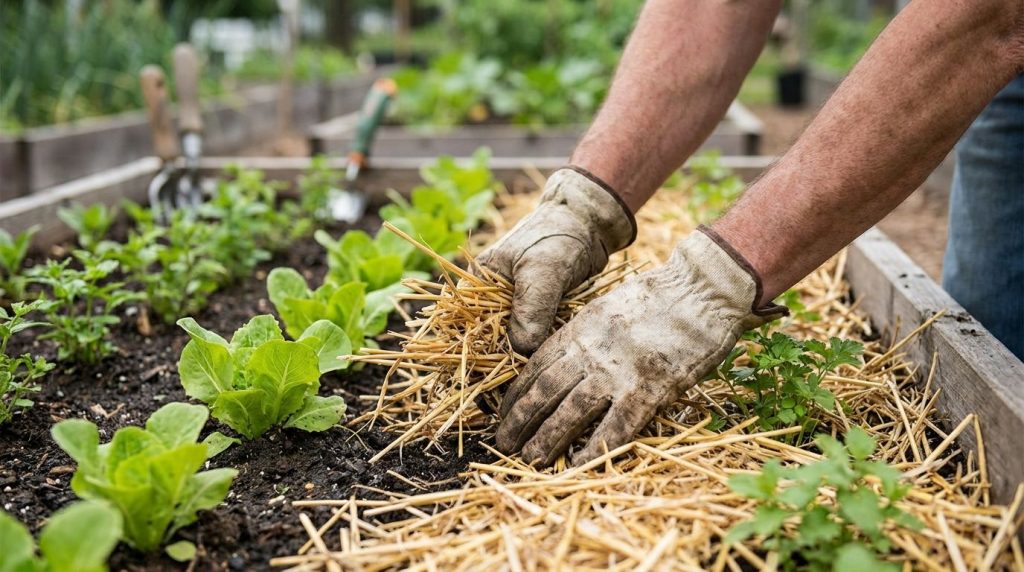
- Straw: Ideal for vegetable gardens, especially around fruiting plants like strawberries or tomatoes. It’s light, improves soil, and breaks down quickly.
- Leaves: Free and abundant in autumn! Shredded leaves are fantastic for enriching soil and suppressing weeds.
- Compost: A rich, nutrient-dense mulch that feeds your plants as it protects. Perfect for vegetable beds and perennial flowers.
- Grass Clippings: Use thinly to avoid matting and odor. They add nitrogen but ensure they haven’t been treated with herbicides.
Inorganic Mulches
These do not break down and typically do not add nutrients to the soil. They are often used for aesthetic purposes or in specific situations.
- Landscape Fabric (Weed Barrier): Good for long-term weed control beneath decorative stones or pathways. It allows water and air through but can sometimes impede nutrient absorption.
- Stones or Gravel: Best for rock gardens, succulents, or areas where heat retention is desired. They don’t improve soil but offer excellent drainage and aesthetics.
- Rubber Mulch: Made from recycled tires. It’s long-lasting and doesn’t decompose, but its suitability for edible gardens is often debated due to potential chemical leaching.
Navigating Mulch & Food Safety: Safe, Problematic, and Unsafe
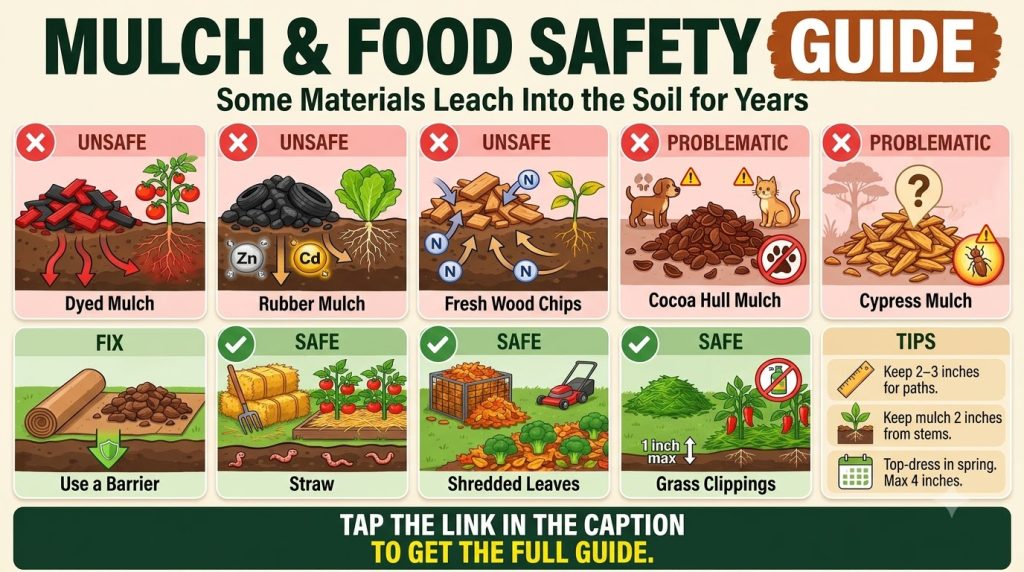
As our infographic highlights, choosing mulch isn’t just about function; it’s also about safety, especially if you’re growing edible plants. Different mulches have different implications for your garden’s health and the food you grow.
Safe Mulches for Edible Gardens
These are your go-to choices for vegetable beds, herb gardens, and fruit trees. They break down to improve soil health and pose no risk to your harvest.
- Straw (untreated): Excellent for vegetables.
- Aged Wood Chips (from known sources, untreated): Great for pathways or around larger perennial edibles.
- Compost: The ultimate soil enhancer and mulch for any edible garden.
- Shredded Leaves: Organic, free, and nutritious.
Problematic Mulches
These mulches require caution or are better suited for non-edible areas. They might pose risks under certain conditions or for specific plant types.
- Fresh Wood Chips: Can deplete soil nitrogen as they decompose, potentially harming young plants. Best to age them first or use around mature trees and shrubs.
- Dyed Mulch: While often considered safe if the dyes are non-toxic, the source of the wood can be questionable (e.g., recycled construction waste). It’s best to research the manufacturer and avoid it for edible gardens.
- Grass Clippings (from treated lawns): Avoid if the lawn has been treated with herbicides, as these chemicals can leach into your garden soil.
Unsafe Mulches
These mulches should be avoided, especially in areas where food is grown, due to potential contamination or harm to plants and soil.
- Construction Debris/Treated Wood: Often contains chemicals, preservatives, or heavy metals that can contaminate your soil and plants.
- Rubber Mulch: While some manufacturers claim it’s safe, there are concerns about chemicals leaching into the soil, especially in edible gardens or areas with high heat exposure.
- Diseased Plant Material: Can spread diseases to healthy plants in your garden.
Tips for Applying Mulch Effectively
- Weed First: Remove all existing weeds before applying mulch to get the most benefit.
- Water the Bed: Water the soil thoroughly before mulching to lock in moisture.
- Apply the Right Depth: Aim for 2-4 inches of mulch. Too little won’t be effective, and too much can suffocate plants or encourage pests.
- Keep it Away from Stems: Create a ‘doughnut’ around the base of plants and tree trunks, leaving a few inches of space. Piling mulch against stems can lead to rot and pest problems.
- Replenish as Needed: Organic mulches will decompose, so plan to top them up annually or bi-annually.
Conclusion: Mulch Your Way to a Thriving Garden
Choosing the right mulch is a simple decision that can have a profound impact on the health and beauty of your garden. By understanding the different types and prioritizing safe options, especially for your edible plants, you’ll create a thriving, low-maintenance paradise. Happy mulching, and happy gardening!