Imagine a garden where you plant once, and then harvest delicious, fresh vegetables year after year with minimal effort! Sounds like a dream, right? Well, it’s not a dream for those who discover the magic of perennial vegetables. At Garden – L. Quyên, we’re all about making gardening easier and more rewarding, and perennial vegetables are truly a game-changer for any home gardener.
If you’re tired of annual replanting or simply want to maximize your garden’s output with less work, then this guide is for you. Let’s dive into the wonderful world of plants that keep on giving!
What Are Perennial Vegetables?
Unlike annuals, which complete their life cycle in one growing season and need to be replanted each year, perennial vegetables live for multiple years. They establish a strong root system and return season after season, often growing larger and more productive with time. Think of them as the long-term residents of your garden, providing continuous harvests without the need for constant re-seeding or transplanting.
The Amazing Benefits of Growing Perennial Vegetables
Embracing perennial vegetables in your garden brings a host of advantages that seasoned and novice gardeners alike will appreciate:
-
Time-Saving and Effortless
This is perhaps the biggest draw! Once established, perennial vegetables require significantly less work than annuals. No need to prepare beds, sow seeds, or transplant seedlings every spring. They simply emerge when the conditions are right, ready to provide a fresh harvest.
-
Cost-Effective
By planting once and harvesting for years, you save money on seeds, starter plants, and even fertilizer in the long run. Many perennials are robust and need less intervention once mature.
-
Improved Soil Health and Reduced Erosion
Perennial plants develop extensive root systems that help stabilize the soil, prevent erosion, and contribute to healthier soil structure over time. This also means less soil disturbance from annual tilling, preserving beneficial microbes and organic matter.
-
Extended Harvest Seasons
Many perennial vegetables are among the first to emerge in spring or continue producing well into the fall, extending your harvest season beyond what many annuals can offer.
-
Increased Biodiversity and Pest Resistance
A diverse garden with perennials can attract beneficial insects and create a more balanced ecosystem, naturally helping to manage pests and diseases.
Popular Perennial Vegetables to Get Started With
Ready to add some long-lasting goodness to your garden? Here are a few fantastic perennial vegetables that are relatively easy to grow:
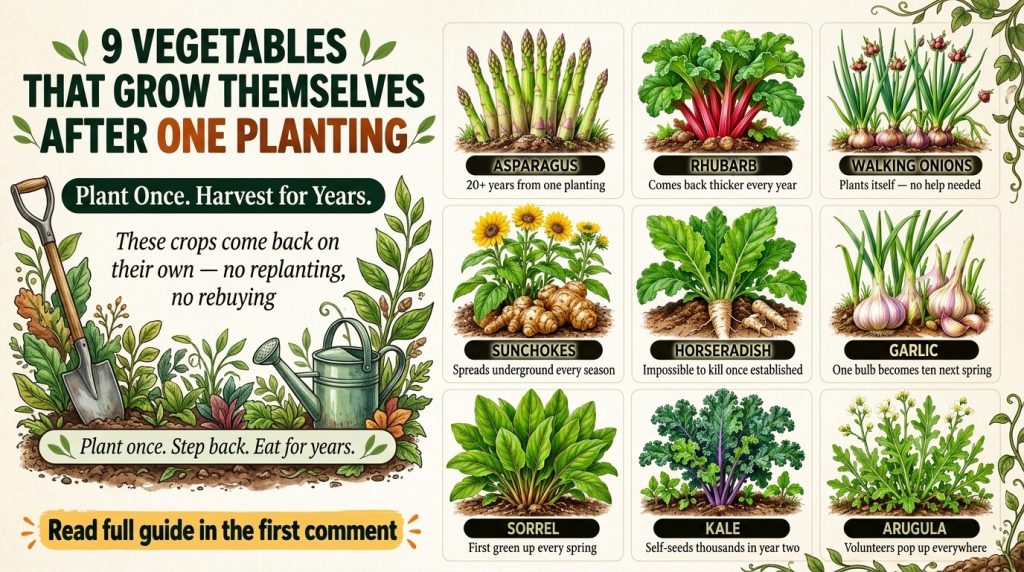
Asparagus
A true spring delicacy! Asparagus spears are a highly anticipated first harvest of the season. Plant crowns once, and with proper care, you can enjoy these tender shoots for 15-20 years or even longer. They prefer full sun and well-drained soil.
Rhubarb
Known for its tart stalks, rhubarb is perfect for pies, crumbles, and jams. It’s incredibly hardy and can produce for decades. Plant it in a sunny spot with rich, moist soil, and remember that only the stalks are edible – the leaves are poisonous.
Artichokes
These majestic plants produce delicious edible flower buds. While some varieties are grown as annuals in colder climates, many can be overwintered as perennials in zones 7 and warmer. They need plenty of sun and rich, well-drained soil.
Sorrel
A tangy, lemony green that’s excellent in salads, soups, or as a fresh herb. Sorrel is a very easy-to-grow perennial herb that produces abundant leaves from spring to fall. It tolerates partial shade and a range of soil conditions.
Jerusalem Artichokes (Sunchokes)
These sunflower relatives produce edible tubers with a slightly nutty flavor. They are incredibly vigorous and can become invasive if not contained, so plant them where they have room to spread or in a dedicated raised bed. A fantastic alternative to potatoes!
Perennial Herbs
Don’t forget many of your favorite herbs are perennials too! Mint, chives, oregano, thyme, sage, and lavender will return year after year, providing flavor and beauty to your garden.
Getting Started with Perennial Vegetables
- Choose Wisely: Select perennials that are suited to your climate zone and local conditions.
- Prepare the Site: As they will be there for a long time, ensure the soil is well-amended with compost and has good drainage. Most prefer full sun.
- Plant with Care: Follow specific planting instructions for each perennial, as some are planted from crowns (like asparagus), others from roots or divisions.
- Be Patient: Many perennials, like asparagus, require a year or two to establish before you start harvesting to allow the plant to build strength.
- Maintenance: While low-effort, they still benefit from occasional feeding, watering during dry spells, and dividing every few years to maintain vigor.
Harvest Your Own Home Harvest for Years to Come!
Incorporating perennial vegetables into your garden is a smart, sustainable way to enjoy fresh produce with less work. It’s a testament to the enduring power of nature and a fantastic step towards a more self-sufficient and rewarding gardening journey. Imagine stepping out into your garden and plucking fresh asparagus spears or tangy sorrel leaves, knowing you only planted them once!
Ready to start your perennial garden adventure? We’d love to hear which ones you’re excited to try! Happy gardening!