Master Your Garden’s Planting Schedule for Bountiful Harvests!
There’s nothing quite as satisfying as stepping into your garden and harvesting fresh, homegrown vegetables. But have you ever wondered why some crops thrive while others struggle, even with the same care? Often, the secret lies in one crucial factor: timing! Planting your vegetables at the optimal moment relative to your local last frost date can make all the difference between a sparse patch and a truly bountiful harvest.
Understanding your garden’s planting schedule is like having a superpower. It helps you protect tender seedlings from unexpected cold snaps, gives heat-loving plants the warmth they crave, and ensures your crops have the best start possible. Let’s dive into a simple guide to help you master your garden’s planting schedule and enjoy a season full of delicious produce!
Step 1: Know Your Last Frost Date
Before you can plan anything, you need to know your average last frost date. This is the estimated date in spring after which the probability of a frost occurring drops significantly. You can usually find this information by searching online for “last frost date + [your city/region]”. This date will be your anchor for all your planting decisions.
Planting Windows: A Guide to Optimal Timing
6-8 Weeks Before Last Frost: Get a Head Start Indoors!
For many gardeners, the earliest seeds are sown indoors, giving tender plants a safe, warm environment to sprout and grow strong before facing the unpredictable outdoors. This window is perfect for crops that need a long growing season or those that are particularly sensitive to cold.
- Broccoli: These brassicas love cool weather, but their seedlings need protection from late frosts. Starting them indoors ensures sturdy plants ready for transplanting.
- Cabbage: Similar to broccoli, cabbage benefits from an early indoor start to establish good root systems.
- Kale: A superfood leafy green, kale can be started indoors to get a jump on the season.
Tip: Ensure your seedlings receive plenty of light to prevent them from becoming leggy. Grow lights are a fantastic investment!
4-6 Weeks Before Last Frost: Early Birds for Outdoor Planting
As the weather slowly warms, some hardy vegetables can be directly sown or transplanted outdoors in this window. These plants are more tolerant of cooler temperatures and light frosts.
- Lettuce: Many varieties of lettuce thrive in cool weather, making them perfect for early spring planting. You can sow seeds directly into the garden bed.
- Chard: A versatile and colorful leafy green, chard can withstand some cooler temperatures and is excellent for direct sowing.
- Celery: While it can be a bit challenging, starting celery from seed indoors a bit earlier or transplanting carefully now can yield great results.
Tip: Consider using row covers for extra protection if an unexpected cold snap is predicted.
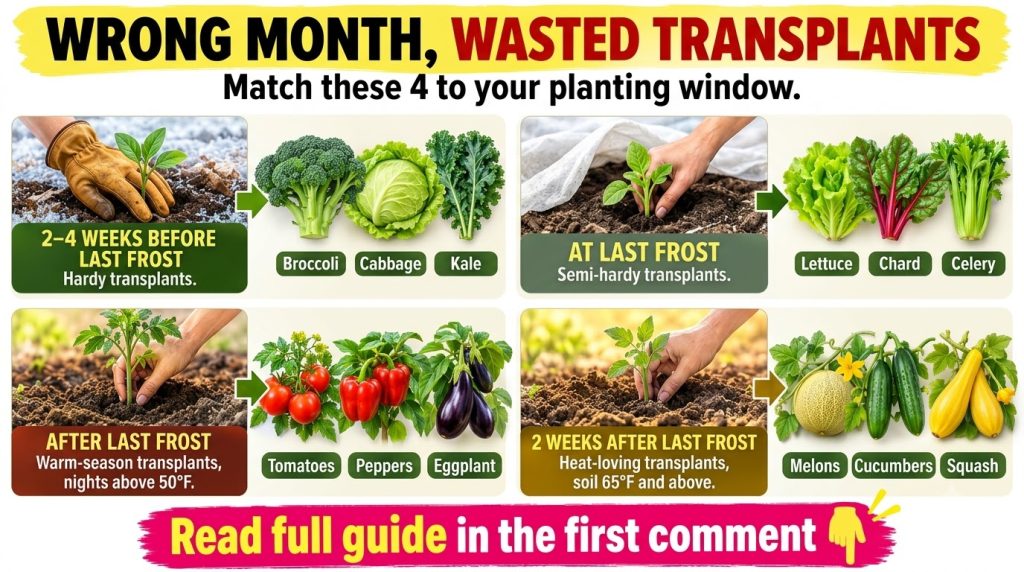
2-4 Weeks Before Last Frost: Hardy & Semi-Hardy Options
With the last frost date approaching, more options become available for direct sowing or transplanting. These plants can handle a bit of chill, but might prefer slightly warmer soil.
- Tomatoes: While very sensitive to frost, starting tomatoes indoors earlier and transplanting them now (if night temperatures are consistently above 45°F/7°C) allows them to establish before the summer heat. Be ready to cover them if frost threatens!
- Peppers: Like tomatoes, peppers are heat-lovers but can be transplanted during this period if careful attention is paid to nightly temperatures.
- Eggplant: Another member of the nightshade family, eggplant also prefers warmth but can get a head start if protected.
Tip: Harden off your indoor-started plants for a week or two before transplanting to help them adjust to outdoor conditions.
After Last Frost (or Soil Consistently Warm): The Heat Lovers!
Once all danger of frost has passed and the soil has truly warmed up, it’s time for the true heat-loving vegetables to shine! These plants will suffer or die if exposed to cold temperatures.
- Melons: Watermelons, cantaloupes, and other melons need consistent warmth to grow and produce sweet fruit.
- Cucumbers: These fast-growing vining plants love the heat and will produce abundantly when planted at the right time.
- Squash: Both summer and winter squash varieties thrive in warm soil and full sun.
Tip: For crops like melons and squash, consider planting them in raised beds or mounded hills to help the soil warm up faster.
Happy Planting!
Remember, gardening is a journey of learning and discovery. While these guidelines provide an excellent starting point, observing your own microclimate, soil conditions, and plant responses will further refine your planting schedule. Don’t be afraid to experiment a little and learn from each season.
We hope this guide helps you feel more confident about planning your garden. Get ready to enjoy the most delicious, home-grown vegetables you’ve ever tasted! Happy gardening!