A healthy garden starts with healthy soil. Often referred to as the ‘heart of the garden,’ your soil is a complex ecosystem teeming with life, providing essential nutrients and structure for your plants to thrive. But what happens when the soil itself starts to struggle? Just like a living organism, soil can show signs of distress, indicating it’s ‘dying.’ Recognizing these signs early is crucial for the health and vitality of your garden. Let’s explore six key indicators that your garden soil might be in trouble and, more importantly, how you can bring it back to life.
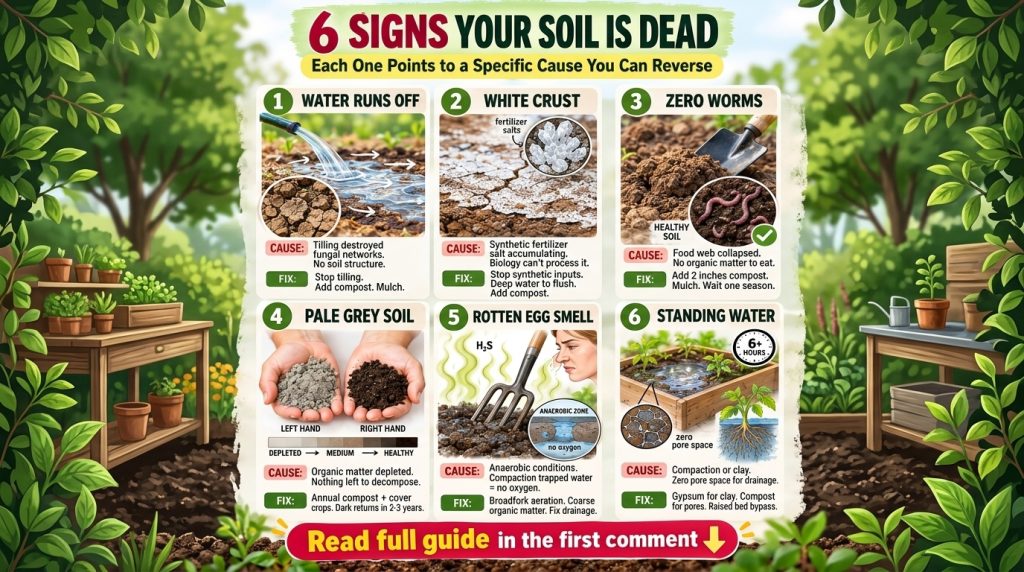
1. Water Sits on Top or Runs Off Immediately
Have you noticed that when you water your plants, the water either pools on the surface for a long time or immediately runs off without penetrating the soil? This is a classic sign of compacted or hydrophobic (water-repelling) soil. Healthy soil has a good crumb structure, allowing water to percolate easily and reach plant roots. When soil is compacted, the air spaces disappear, making it difficult for water, air, and roots to move through.
How to Revive It:
- Aerate: Use a garden fork or broadfork to gently loosen compacted areas, especially in lawns or heavily trafficked beds.
- Add Organic Matter: Incorporate plenty of compost, well-rotted manure, or leaf mold. Organic matter improves soil structure, creating channels for water and air.
- Avoid Compaction: Try not to walk on your garden beds, especially when the soil is wet. Use pathways or raised beds to minimize foot traffic.
2. Hard, Crumbly, or Rock-Hard Texture
When you try to dig into your garden beds, does it feel like you’re trying to break through concrete? Or perhaps the soil is very sandy and falls apart too easily, failing to hold any moisture or nutrients? This indicates poor soil structure. Healthy soil should feel loose, crumbly, and slightly moist, with a good balance of sand, silt, and clay, and plenty of organic material that binds it together.
How to Revive It:
- Amend with Organic Matter: Again, compost is your best friend! It helps sandy soil retain moisture and nutrients, and breaks up heavy clay soil to improve drainage and aeration.
- Cover Cropping: Plant cover crops (like clover or vetch) in off-seasons. Their roots break up hard soil and, when tilled under, add organic matter.
- Minimize Tilling: While sometimes necessary, excessive tilling can destroy soil structure. Opt for no-till or minimal-till practices when possible.
3. White or Grey Crust on the Surface
Observing a white or grey, powdery crust on the surface of your soil, particularly in drier climates or areas with alkaline water, is often a sign of excessive salt buildup. This can happen from over-fertilizing, using water with high mineral content, or inadequate drainage. High salt levels can prevent plants from absorbing water and nutrients, leading to stunted growth and leaf burn.
How to Revive It:
- Flush the Soil: If possible, thoroughly drench the area with plain, distilled, or rainwater to leach out the salts. Ensure good drainage to prevent re-accumulation.
- Use Low-Salt Fertilizers: Choose fertilizers specifically formulated for low salt content or opt for organic amendments like compost that release nutrients slowly.
- Improve Drainage: Address any underlying drainage issues that might be contributing to salt accumulation.
4. Foul Odor or Lack of Earthy Smell
Healthy soil has a distinctive, pleasant, earthy smell – the scent of microbial life thriving. If your soil smells sour, rotten, or like sulfur, it could be anaerobic, meaning it lacks oxygen, often due to waterlogging or severe compaction. Conversely, if your soil has no smell at all, it might indicate a severe lack of microbial activity and organic matter.
How to Revive It:
- Improve Drainage and Aeration: Loosen compacted soil and ensure proper drainage to introduce oxygen.
- Add Compost: Introduce beneficial microorganisms and organic matter through compost to restore the soil’s natural microbial balance.
- Avoid Overwatering: Ensure you are not consistently saturating your soil, which can lead to anaerobic conditions.
5. Few to No Earthworms or Beneficial Insects
Earthworms are nature’s tiny tillers and a fantastic indicator of soil health. They aerate the soil, improve drainage, and convert organic matter into nutrient-rich castings. A lack of earthworms, along with a scarcity of other beneficial insects like ground beetles, suggests that your soil environment isn’t hospitable. This could be due to pesticide use, lack of organic matter, or poor soil structure.
How to Revive It:
- Stop Using Chemical Pesticides: These can harm beneficial soil life. Embrace organic pest control methods.
- Increase Organic Matter: Provide a food source for earthworms and microbes by regularly adding compost, mulches, and cover crops.
- Maintain Consistent Moisture: Earthworms prefer moist, but not waterlogged, conditions.
6. Plants are Stunted, Yellowing, or Constantly Struggling
While plant problems can stem from many causes (pests, diseases, watering issues), if your plants consistently look unhealthy – stunted growth, yellowing leaves (chlorosis), poor flowering, or failing to thrive despite adequate water and sunlight – the root cause might be your soil. This usually indicates nutrient deficiencies, an imbalanced pH, or toxins in the soil.
How to Revive It:
- Soil Test: The most effective first step! A soil test will tell you your soil’s pH, nutrient levels, and organic matter content, guiding your amendment strategy.
- Adjust pH: Based on your soil test, you might need to add lime to raise pH or sulfur to lower it.
- Add Balanced Organic Fertilizers: Once pH is balanced, use organic fertilizers to provide missing nutrients.
- Mulch: A layer of organic mulch helps regulate soil temperature, retain moisture, and slowly adds organic matter as it breaks down.
Bring Your Soil Back to Life!
Your garden soil is a dynamic living system that requires care and attention. By learning to recognize these six crucial signs of distress, you’re empowered to take proactive steps to revive it. Incorporating organic matter, minimizing compaction, and avoiding harsh chemicals are fundamental practices that will transform your ‘dying’ soil into a vibrant, life-sustaining foundation for all your garden dreams. Happy gardening!