Most people focus on the more common autumn fruits like apples and pears, completely overlooking the true golden secret that hides in plain sight: the quince. This often-underestimated fruit, with its unique fragrance and firm texture, holds incredible potential for a comforting and beneficial homemade tonic. But there’s a specific method to unlock its best qualities, and one small preparation mistake can diminish its full power.
Forget vague herbal teas; we’re diving into a hands-on guide for making a potent quince tonic, a traditional preparation that can warm you from the inside out and bring a touch of golden autumn wellness into your home. This isn’t just about a delicious drink; it’s about harnessing the subtle magic of a fruit often deemed too hard or too tart for everyday consumption.
What is a Quince Tonic?
A quince tonic is a concentrated liquid extract made by macerating quince fruit, typically with sugar, to draw out its beneficial compounds and flavors. While not a medicinal remedy in the conventional sense, it’s a time-honored preparation used in various cultures for its comforting properties, particularly during colder months. The process usually involves combining chopped quince with sugar, allowing time for the fruit’s juices to mingle with the sugar, creating a rich syrup or cordial. This preparation is distinct from a jam or jelly, as it focuses on the liquid extract rather than the cooked fruit pulp.
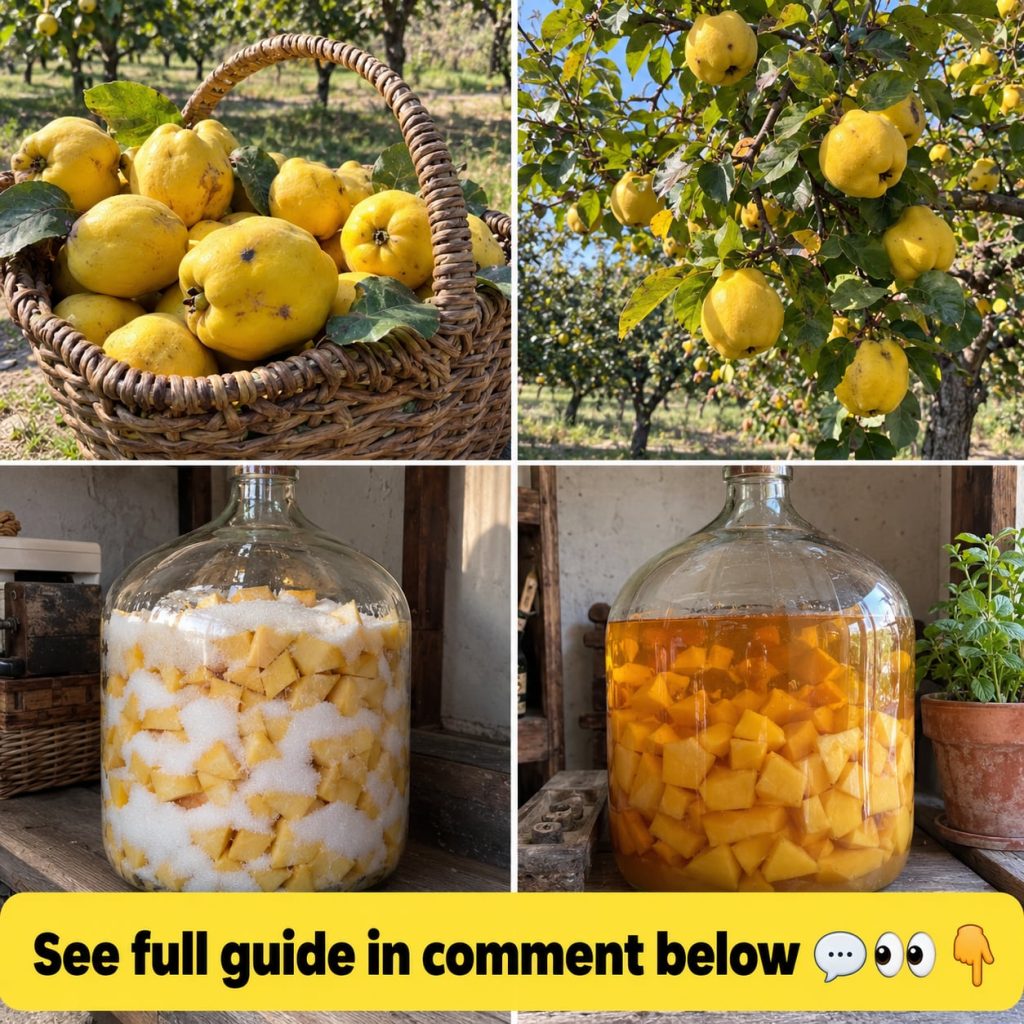 The journey of quinces from harvest to the first stages of a homemade tonic.
Ingredients for a Simple Quince Tonic
Crafting this golden tonic requires just a few simple ingredients, with the star being the quince itself. The quality of your fruit will significantly impact the final taste and efficacy of your tonic.
- Ripe Quinces: Choose firm, bright yellow quinces with a strong, sweet fragrance. Avoid any with soft spots or blemishes.
- Granulated Sugar: White granulated sugar is typically used for its purity, which allows the quince flavor to shine. You can adjust the amount based on your preference and the sweetness of the fruit.
- Optional: Fresh Lemon Juice: A splash of lemon juice can brighten the flavor and help preserve the tonic.
- Optional: Spices: Cinnamon sticks, star anise, or a few cloves can add depth, but start with the pure quince flavor first.
Approximate Measurements
For a manageable first batch, these measurements work well:
- 2-3 medium-sized quinces (about 2-3 pounds or 1 kg)
- 2 cups (400g) granulated sugar
- 1/4 cup (60ml) fresh lemon juice (optional)
- 1-2 small cinnamon sticks or 1 star anise (optional)
These ratios can be scaled up or down, maintaining approximately a 1:1 ratio of chopped quince to sugar by volume or slightly less sugar by weight.
Quick Tip: Choosing Your Quinces
Don’t be afraid of the slight fuzz on quinces; it’s natural. Look for fruits that feel heavy for their size and have a uniform golden-yellow color. A greenish tinge means they are not fully ripe and will lack the characteristic aroma and flavor.
Formula / Recipe: Homemade Quince Tonic
This recipe focuses on a maceration technique, allowing the quince and sugar to create a rich, flavorful syrup over time.
Step-by-Step Method
- Wash and Prepare Quinces: Thoroughly wash the quinces to remove any fuzz or dirt. You don’t need to peel them, as the skin contains beneficial compounds and adds to the color, but you may if desired. Quarter the quinces and remove the tough core and seeds.
- Chop the Fruit: Cut the cored quince into small, uniform cubes, roughly 1/2 to 1 inch (1-2.5 cm) in size. Smaller pieces will macerate more quickly.
- Layer in a Jar: In a clean, sterilized glass jar (like a large Mason jar or even a carboy, as seen in traditional preparations), create alternating layers of chopped quince and granulated sugar. Start with a layer of sugar at the bottom, then a layer of quince, then sugar again, and so on. If using lemon juice, sprinkle it over the quince layers.
- Add Spices (Optional): If you’re adding cinnamon sticks or star anise, tuck them in between the layers of quince and sugar.
- Seal and Macerate: Once all ingredients are layered, close the jar tightly. Place the jar in a cool, dark place, away from direct sunlight.
- Shake Daily: For the first week, gently shake or invert the jar once a day to help dissolve the sugar and ensure even maceration. After the first week, shaking every few days is sufficient.
- Wait Patiently: Allow the mixture to macerate for at least 3-4 weeks, or even longer (up to 2 months) for a more concentrated flavor. You’ll notice the sugar dissolving and a beautiful golden liquid forming as the quince juices are drawn out.
- Strain the Tonic: Once the maceration is complete, strain the liquid through a fine-mesh sieve lined with cheesecloth into a clean bottle or jar. Gently press the quince pieces to extract as much liquid as possible, but avoid mashing them, which can make the tonic cloudy.
- Store: Discard the solids or repurpose them (they can be used in baked goods or composted). Bottle the golden quince tonic.
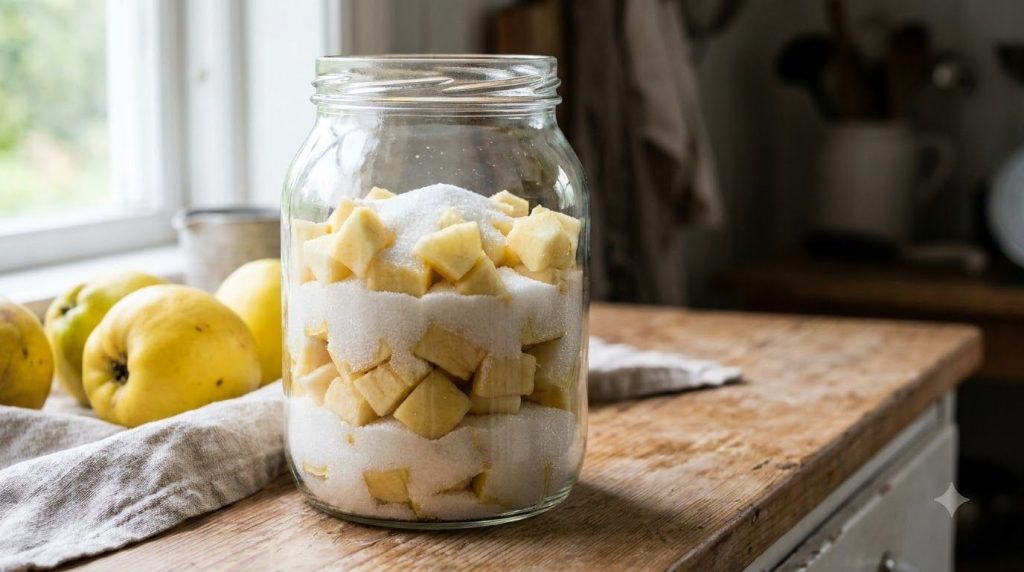 Carefully layering quince and sugar for optimal maceration.
How to Use Your Quince Tonic
This concentrated tonic is versatile:
- Warm Drink: Add 1-2 tablespoons to a cup of hot water for a comforting, fragrant beverage.
- Cooling Drink: Mix with sparkling water or plain water and ice for a refreshing spritzer.
- Flavor Enhancer: Drizzle over yogurt, oatmeal, pancakes, or ice cream.
- Baking: Incorporate into glazes for cakes or as a sweetener in fruit pies.
- Cocktails/Mocktails: Use as a unique syrup base for autumn-themed drinks.
How Often to Use
There are no strict rules for frequency. Enjoy your quince tonic as often as you like, whether daily as a comforting drink or occasionally as a special treat. Due to its sugar content, moderation is key.
How to Buy / How to Choose Ingredients
Finding good quinces can sometimes be a challenge, as they aren’t as widely available as other fruits. Look for them at:
- Farmers’ Markets: Often the best place for fresh, seasonal quinces.
- Specialty Grocery Stores: Larger stores or those with a good produce section may carry them in autumn.
- Asian or Middle Eastern Markets: Quinces are popular in many cuisines, so these markets are often a reliable source.
When selecting sugar, organic cane sugar can be a good choice, but standard granulated sugar works perfectly well.
Fresh vs. Stored Quinces
FeatureFresh QuincesStored Quinces (short-term)AvailabilityAutumn (Sept-Nov)Slightly longer into winterAromaStrongest, most fragrantSlightly mutedTextureVery firm, unblemishedMay soften slightlyBest ForTonic, raw preparationsCooking, baking, short-term tonicYieldOptimal juice extractionGood, but may vary
Storage
Once strained, store your homemade quince tonic in a clean, airtight glass bottle or jar in the refrigerator. Properly stored, it should last for up to 3-4 months. Ensure the lid is always tightly sealed to prevent spoilage.
Practical Tips
- Sterilization is Key: Always use thoroughly cleaned and sterilized jars and utensils to prevent mold or bacterial growth, especially during the long maceration period.
- Don’t Rush It: The longer the maceration, the deeper the flavor. Patience is truly a virtue here.
- Taste Test: Before straining, taste a small amount of the liquid. If you prefer a sweeter tonic, you can add a little more sugar and let it sit for a few more days.
- Repurpose the Pulp: The macerated quince pulp, though less flavorful than fresh, can still be used. It’s often soft enough to be added to compotes, baked goods, or even a slow-cooked oatmeal.
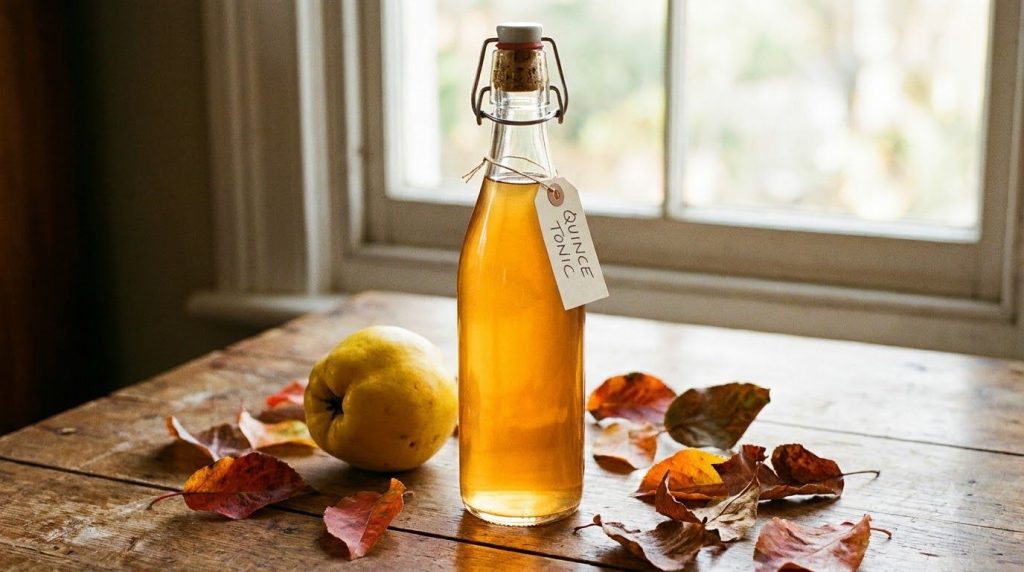 Your homemade quince tonic, ready to be enjoyed.
Common Mistakes
- Using Unripe Quinces: Green or hard quinces won’t develop the full fragrant flavor you need for a good tonic. Wait for them to turn golden yellow and emit a strong aroma.
- Insufficient Sterilization: This is a primary cause of mold. Make sure your jars and lids are properly sterilized before adding ingredients.
- Not Shaking the Jar: Skipping the daily shake in the initial days can lead to sugar clumping at the bottom, hindering proper maceration.
- Straining Too Early: Resist the urge to strain before the recommended maceration time. The magic happens during this waiting period.
- Improper Storage: Leaving the strained tonic at room temperature will drastically reduce its shelf life. Always refrigerate.
Cautions / Who Should Avoid It
Quince tonic, being a natural preparation, is generally safe for most people. However, consider these points:
- Sugar Content: Individuals managing blood sugar levels (e.g., diabetics) should be mindful of the high sugar content and consume in moderation, or explore sugar-free alternatives if possible (though the maceration process relies on sugar).
- Allergies: While rare, some individuals may have allergies to quince or other fruits. Discontinue use if any adverse reactions occur.
- Pregnancy/Breastfeeding: As with any new food or herbal preparation, it’s wise to consult a healthcare professional if you are pregnant or breastfeeding.
- Medication Interactions: While unlikely, if you are on specific medications, it’s always best to check with your doctor before regularly consuming new remedies.
Quick Summary
Making a quince tonic is a rewarding autumn project. Best prepared by layering chopped, ripe quince with granulated sugar in a sterilized jar, then macerating in a cool, dark place for 3-4 weeks. Once strained, the golden liquid makes a versatile, comforting drink. Store in the refrigerator for up to 3-4 months. Avoid unripe fruit and ensure proper sterilization for the best results.
FAQ
- Can I use brown sugar instead of white sugar? You can, but brown sugar will impart a molasses-like flavor, altering the pure quince taste. White granulated sugar is generally preferred for clarity of flavor.
- How long does the maceration process take? At least 3-4 weeks is recommended, but 6-8 weeks can yield a deeper, more complex flavor.
- What if mold forms in my jar? Unfortunately, if mold appears, the entire batch must be discarded due to potential contamination. This is why sterilization is so critical.
- Can I reuse the quince pulp after straining? Yes, the pulp can be used in baked goods, compotes, or even fruit leathers, though it will have lost much of its original flavor intensity.
- Can I add water to the maceration? No, the beauty of this tonic is that the sugar draws out the fruit’s natural juices. Adding water can dilute the flavor and potentially increase the risk of spoilage.
- Is there a way to make this sugar-free? Maceration with sugar is traditional. You could try with a sugar substitute or honey, but the texture and shelf life might differ, and proper preservation would need additional research.
Conclusion
Don’t let the unassuming quince pass you by this season. With a little patience and a few simple steps, you can transform this fragrant autumn fruit into a delightful and comforting tonic. This golden elixir is more than just a drink; it’s a small act of self-care, a connection to traditional methods, and a truly unique way to savor the flavors of fall. Bring the golden secret of the quince into your home and enjoy the simple pleasure of a homemade remedy.