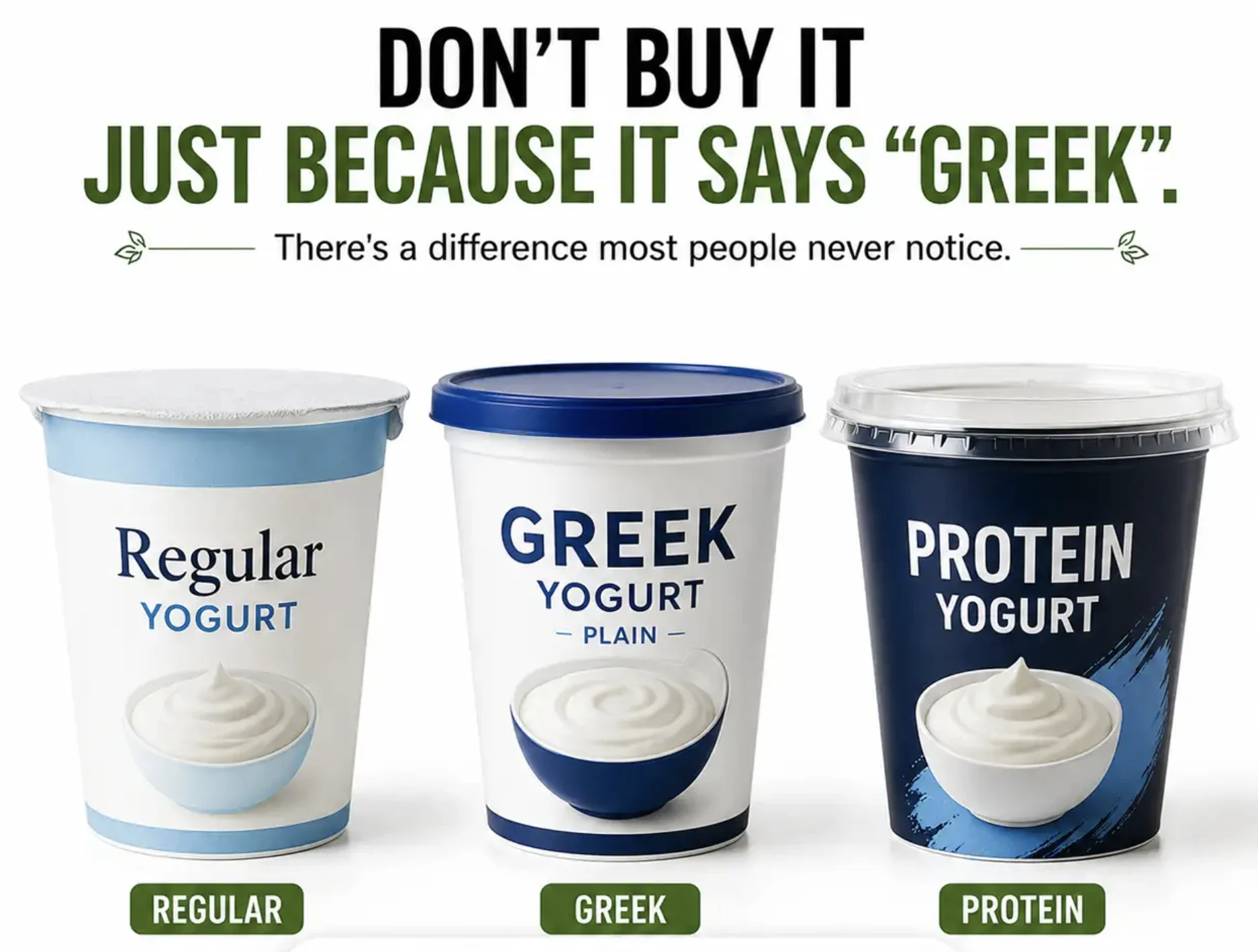
Walking through the dairy aisle can feel surprisingly confusing. Labels like “Greek yogurt,” “protein yogurt,” and “high-protein cultured dairy” often promise similar health benefits, but they aren’t all nutritionally equivalent. While all three products can fit into a healthy diet, choosing the right one depends on your goals—whether that’s increasing protein, managing calories, supporting digestion, or simply enjoying a satisfying snack.
Here’s what actually separates regular yogurt, Greek yogurt, and protein yogurt, and how to choose the best option for your lifestyle.
What Is Regular Yogurt?
Regular yogurt is made by fermenting milk with live bacterial cultures. It has a thinner consistency because most of the liquid whey remains after fermentation.
Typical Nutrition (170g / 6 oz serving)
- Calories: 120–170
- Protein: 5–8g
- Carbohydrates: 10–18g
- Fat: Depends on whether it’s whole, low-fat, or fat-free
Best For
- Everyday breakfasts
- Smoothies
- Families with children
- People who enjoy a lighter texture
Because it naturally contains more lactose than strained yogurts, regular yogurt may taste slightly sweeter without added sugar.
What Makes Greek Yogurt Different?
Greek yogurt starts as regular yogurt but undergoes an additional straining process that removes much of the whey. This creates a thicker texture while concentrating the protein.
Typical Nutrition (170g / 6 oz serving)
- Calories: 90–150
- Protein: 15–20g
- Carbohydrates: 5–8g
- Fat: Varies by milk type
Benefits
- Higher protein per serving
- Thick and creamy texture
- Often lower in sugar
- Helps promote fullness
Because of its high protein content, plain Greek yogurt is a popular choice for breakfast, meal prep, and post-workout snacks.
What Is Protein Yogurt?
Protein yogurt is designed specifically to provide even more protein than traditional Greek yogurt. Manufacturers may increase protein by adding milk protein concentrate, ultrafiltered milk, whey protein, or other dairy proteins.
Typical Nutrition (170g / 6 oz serving)
- Calories: 100–170
- Protein: 20–25g
- Carbohydrates: 4–8g
- Fat: Usually low
Protein yogurt is often marketed toward active individuals, but anyone looking for a higher-protein snack may find it useful.
Side-by-Side Comparison
| Feature | Regular Yogurt | Greek Yogurt | Protein Yogurt |
|---|---|---|---|
| Texture | Light and creamy | Thick | Thick and dense |
| Protein | 5–8g | 15–20g | 20–25g |
| Sugar | Moderate | Usually lower | Usually lower |
| Fullness | Moderate | High | Very high |
| Best Use | Everyday meals | Balanced nutrition | High-protein diets |
How to Read the Label
The word “Greek” on the package doesn’t automatically mean the yogurt is the healthiest choice. Different brands can vary widely in protein, sugar, and added ingredients.
Before buying, check:
- Protein per serving
- Added sugar
- Total ingredients
- Calories
- Serving size
A plain yogurt with fewer ingredients is often a better option than a flavored yogurt with several teaspoons of added sugar.
Choosing the Right Yogurt for Your Goals
If You Want More Protein
Choose:
- Plain Greek yogurt
- Protein yogurt
Aim for at least 15 grams of protein per serving.
If You’re Managing Weight
Higher-protein yogurts may help increase satiety, making them a filling snack or breakfast. Pair yogurt with fresh fruit or nuts for additional fiber and healthy fats.
If You Enjoy Smoothies
Regular yogurt blends more easily because of its thinner consistency.
If You’re Looking for a Dessert Alternative
Plain Greek yogurt topped with berries, cinnamon, and a drizzle of honey can satisfy a sweet craving while providing more protein than many desserts.
Healthy Ways to Enjoy Yogurt
High-Protein Breakfast Bowl
Ingredients
- 170g plain Greek yogurt
- ½ cup blueberries (75g)
- ½ cup strawberries, sliced (75g)
- 1 tbsp chia seeds (12g)
- 15g chopped almonds
- 1 tsp honey (optional)
Instructions
- Spoon the yogurt into a bowl.
- Top with the berries.
- Sprinkle over the chia seeds and almonds.
- Drizzle with honey if desired.
- Serve immediately.
Approximate nutrition:
- Calories: 320
- Protein: 22g
Quick Post-Workout Snack
Ingredients
- 170g protein yogurt
- ½ banana, sliced (60g)
- 1 tbsp peanut butter (16g)
Instructions
- Add the yogurt to a bowl.
- Arrange the banana slices on top.
- Finish with peanut butter.
- Enjoy within 30 minutes after exercise if desired.
Approximate nutrition:
- Calories: 300
- Protein: 25g
Overnight Yogurt Oats
Ingredients
- ½ cup rolled oats (45g)
- 150g plain Greek yogurt
- 60ml milk
- 1 tsp chia seeds (5g)
- ½ tsp vanilla extract
- ½ cup mixed berries (75g)
Instructions
- Combine the oats, yogurt, milk, chia seeds, and vanilla in a jar.
- Stir thoroughly.
- Refrigerate overnight for at least 6 hours.
- Top with berries before serving.
Approximate nutrition:
- Calories: 340
- Protein: 20g
Common Shopping Mistakes
Many flavored yogurts contain as much added sugar as a dessert. Instead of focusing on marketing claims like “Greek” or “high protein,” compare the nutrition facts panel.
Look for products that provide:
- High protein
- Minimal added sugar
- Live and active cultures
- Simple ingredient lists
Final Thoughts
Regular yogurt, Greek yogurt, and protein yogurt all have a place in a healthy eating pattern, but they serve different purposes. Regular yogurt offers a lighter texture, Greek yogurt naturally provides more protein through straining, and protein yogurt is formulated for those seeking the highest protein content. Rather than choosing based on the word “Greek” alone, compare the nutrition label and select the option that best matches your personal health goals, taste preferences, and daily protein needs.
Nutrition values are approximate and vary by brand. If you have allergies, kidney disease, lactose intolerance, or specific dietary requirements, consult a healthcare professional or registered dietitian before making significant dietary changes.