Restore Your Kitchen Cabinets: The Gentle Yet Powerful White Vinegar & Dish Soap Hack
Years of kitchen grime, grease, and fingerprints can leave your cabinets looking dull and dirty, hiding their original beauty. You might think you need harsh chemicals for a deep clean, but what if we told you a simple, gentle yet incredibly powerful solution is likely already in your pantry? This budget-friendly, DIY cleaning hack will bring your kitchen cabinets back to life, revealing their true shine without any harsh scrubbing or damage.
Our secret weapon? A dynamic duo of white vinegar and dish soap!
Why This Gentle Yet Powerful Duo Works Wonders
This cleaning combination is effective because each ingredient tackles a different aspect of kitchen grime, working in synergy to lift dirt, cut through grease, and leave surfaces sparkling.
The Power of White Vinegar
White vinegar is a natural acid, making it an excellent degreaser and disinfectant. Its acetic acid content can break down sticky residues, dissolve mineral deposits, and neutralize odors. For wood cabinets, its mild acidity is effective at cutting through cooking oils and splatters without being overly harsh on finishes (when diluted and used correctly).
The Role of Dish Soap
Dish soap, particularly varieties designed to cut grease, is a surfactant. This means it reduces the surface tension of water and helps oil and water mix. It excels at breaking down greasy films, food splatters, and general kitchen muck. The soap lifts the dirt and grease, allowing them to be easily wiped away.
What You’ll Need
Gathering your supplies before you start will make the process much smoother.
- 1 cup white vinegar
- 1 tablespoon liquid dish soap (grease-cutting formula works best)
- 2 cups warm water
- A spray bottle (optional, but highly recommended for even application)
- Soft sponge or microfiber cloth (for cleaning)
- Clean, dry microfiber cloths (for wiping and drying)
- A small bucket or bowl
Step-by-Step Guide to Sparkling Cabinets
Follow these simple steps to restore the beauty of your kitchen cabinets:
- Prepare Your Area: Clear your countertops of any items that might get in the way. If possible, remove handles and knobs for a more thorough clean, or clean around them carefully.
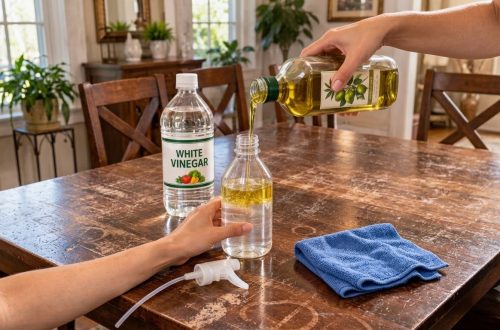
- Mix Your Solution: In your spray bottle or small bucket, combine 1 cup of white vinegar, 1 tablespoon of dish soap, and 2 cups of warm water. Gently swirl or shake the bottle to mix the ingredients without creating excessive suds.
- Test in an Inconspicuous Spot: Before cleaning your entire cabinet, always test the solution on a small, hidden area (like the inside of a cabinet door) to ensure it doesn’t harm the finish. Wait a few minutes, then wipe clean. If no discoloration or damage occurs, you’re good to go.
- Apply the Solution: If using a spray bottle, lightly mist a small section of a cabinet door or frame. If using a bucket, dampen your sponge or microfiber cloth with the solution, wringing out any excess so it’s not dripping.
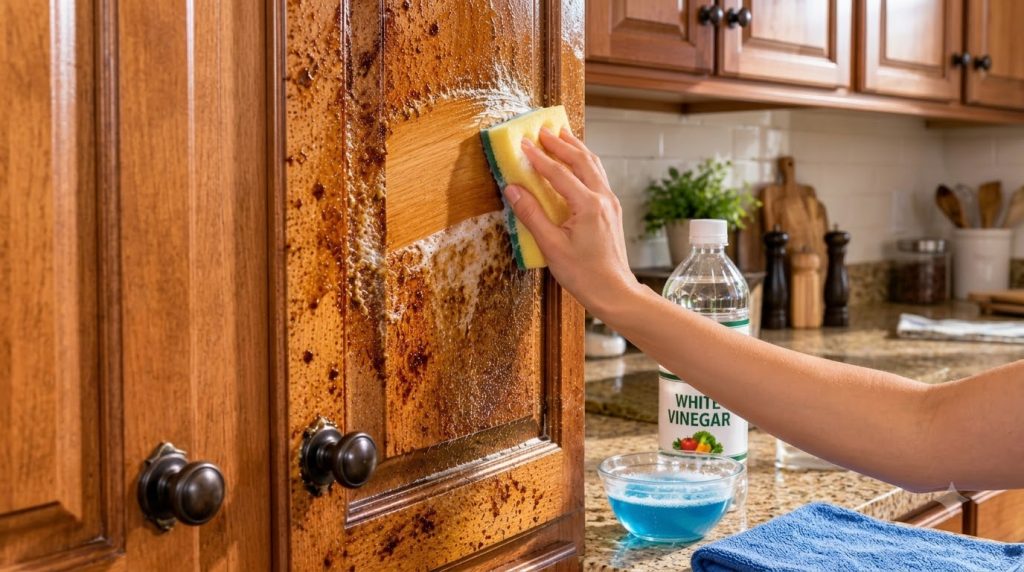
- Gently Clean: Using your damp sponge or cloth, gently wipe down the cabinet surface in small sections. Pay extra attention to areas with heavy grease buildup, like around stove hoods and handles. For stubborn grime, let the solution sit for 1-2 minutes before wiping.
- Rinse and Wipe: Dampen a separate, clean microfiber cloth with plain warm water and wipe down the cleaned section to remove any soap residue. This is crucial to prevent streaks.
- Dry Thoroughly: Immediately follow with a dry microfiber cloth to thoroughly dry the surface. This prevents water spots and protects your cabinet finish, especially if they are wood.
- Repeat: Continue this process, working in small sections, until all your cabinets are clean and sparkling.
Tips for Best Results & Preventing Future Buildup
- Don’t Over-Wet: Excess moisture can damage wood cabinets. Always wring out your cloth well and dry thoroughly.
- Regular Maintenance: A quick wipe-down with a damp cloth and mild dish soap solution once a week can prevent heavy grime from accumulating.
- Ventilation is Key: Use your range hood fan while cooking to minimize grease and steam buildup on cabinets.
- Mind Your Materials: This solution is generally safe for most sealed wood, laminate, and painted cabinets. Avoid using it on unsealed or waxed wood surfaces without testing first, as vinegar can strip some waxes.
Safety First!
While this solution uses common household ingredients, it’s always wise to take simple precautions. Wear gloves if you have sensitive skin, and ensure your kitchen is well-ventilated during cleaning. Always follow the testing advice to protect your specific cabinet finish.
With this simple yet effective white vinegar and dish soap hack, your kitchen cabinets will be gleaming in no time, making your entire kitchen feel refreshed. What’s your go-to cabinet cleaning solution? Share your best tips in the comments below!