Watering Woes? Discover Common Mistakes Stressing Your Plants!
Ah, the joy of a lush, thriving garden! But sometimes, even with the best intentions, our beloved plants start looking a little sad. Often, the culprit isn’t a mysterious disease or a sudden pest invasion, but rather a simple, yet crucial, element: water. Proper watering is an art, and mastering it can transform your garden. If your greens are looking droopy, yellowing, or just generally unhappy, you might be making one of these common watering mistakes. Don’t worry, we’re here to help you turn those watering woes into gardening wins!
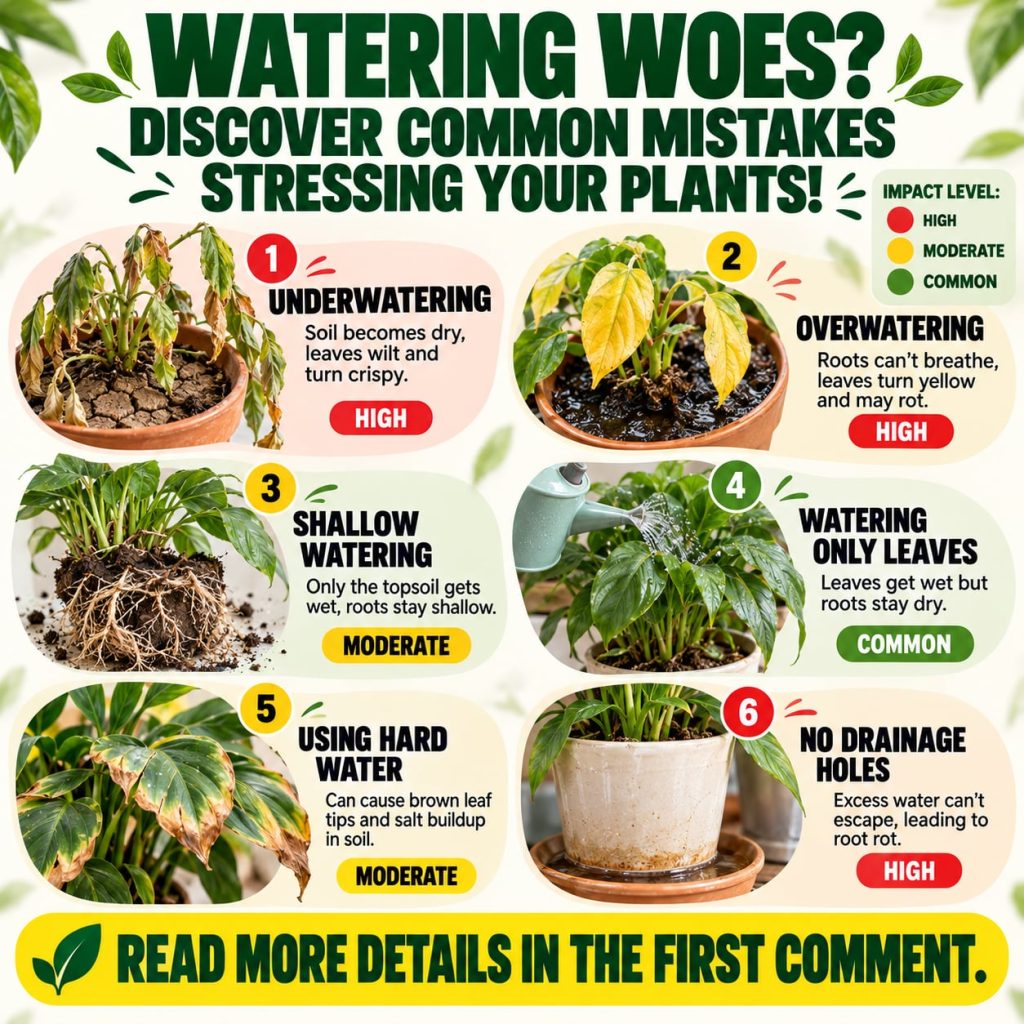
Mistake #1: The Dreaded Overwatering
It’s easy to think more water equals happier plants, but this couldn’t be further from the truth. Overwatering is one of the most common reasons plants fail. When plants receive too much water, their roots sit in soggy soil, depriving them of oxygen. This leads to root rot, a fungal disease that literally suffocates and decays the roots, preventing them from absorbing water and nutrients.
- Signs of Overwatering: Yellowing leaves, droopy but soft leaves, stunted growth, moldy soil surface, tiny gnats flying around.
- How to Fix It: Always check the soil moisture before watering. Stick your finger about an inch or two into the soil; if it feels damp, wait. Ensure your pots have drainage holes, and empty any saucers beneath them after watering. Let the topsoil dry out completely between waterings for most plants.
Mistake #2: The Overlooked Underwatering
On the flip side, underwatering can be just as detrimental. While less common for indoor plants than overwatering, it’s a frequent issue for outdoor plants during dry spells or if you’re inconsistent with your watering schedule. Plants need water to transport nutrients and maintain their turgor (firmness).
- Signs of Underwatering: Wilting, crispy or brittle leaves, stunted growth, dry and hard soil pulling away from the pot edges.
- How to Fix It: Establish a regular watering routine, but always check soil moisture first. When you do water, water deeply until water drains from the bottom of the pot. This encourages roots to grow deeper, making the plant more resilient.
Mistake #3: Shallow, Frequent Watering
This mistake is a sneaky one. You might be watering regularly, but if you’re only giving your plants a little sip each time, you’re encouraging shallow root growth. Roots will stay near the surface where the water is readily available, making the plant less stable and more vulnerable to drought.
- Signs of Shallow Watering: Plants quickly wilt between waterings, smaller overall plant size, less robust growth.
- How to Fix It: Water deeply and thoroughly, allowing the water to penetrate the entire root ball. This promotes strong, deep root systems that can access more water and nutrients from the soil.
Mistake #4: Watering at the Wrong Time of Day
Timing matters! Watering in the middle of a hot, sunny day means much of your precious water will evaporate before it reaches the roots. Watering too late in the evening, especially for plants prone to fungal issues, can leave foliage wet overnight, creating an ideal environment for diseases to thrive.
- How to Fix It: The best time to water is in the early morning. This gives the plants ample time to drink before the sun gets too intense, and any excess moisture on the leaves has time to evaporate during the day.
Mistake #5: Ignoring Soil Type and Plant-Specific Needs
Not all plants are created equal, and neither are all soils. A cactus needs far less water than a fern, and sandy soil drains much faster than clay soil. What works for one plant in one spot might harm another.
- How to Fix It: Research your specific plants! Understand their native habitats and preferred growing conditions. Amend your soil to suit your plants’ needs – adding organic matter can improve drainage in clay soils and water retention in sandy soils. Always feel the soil and observe your plants; they will tell you what they need.
Your Thriving Garden Awaits!
By understanding these common watering mistakes and making a few simple adjustments, you can ensure your plants get exactly what they need to flourish. Pay attention to your soil, observe your plants, and remember that consistency and moderation are key. Happy gardening!