Hey there, fellow garden enthusiasts! Have you ever looked at your banana plants and wondered how to make them even happier and more productive? Well, today, we’re diving into a wonderful garden secret that’s been passed down through generations: companion planting. It’s like inviting the best neighbors to live beside your bananas, each bringing their unique gifts to create a thriving, vibrant ecosystem.
Companion planting isn’t just a fancy term; it’s a time-tested strategy where you grow different plants near each other to help them all flourish. For bananas, this means healthier plants, fewer pests, richer soil, and often, a more bountiful harvest. Think of it as nature’s way of working together!
 Discovering the ideal green companions for your banana plants can transform your garden!
Why Companion Planting is a Game-Changer for Bananas
Bananas are hungry plants that appreciate consistent moisture and rich, well-draining soil. They also tend to create a jungle-like environment once they get going. Introducing the right companions can:
- Improve Soil Health: Some plants add nutrients, break up compacted soil, or contribute organic matter.
- Deter Pests: Certain companions release compounds that confuse or repel unwanted insects, reducing the need for chemical interventions.
- Attract Beneficial Insects: Flowering companions can invite pollinators and predatory insects that keep harmful pests in check.
- Provide Shade and Wind Protection: Taller companions can offer a bit of shelter to young banana plants.
- Suppress Weeds: Ground cover plants can help keep pesky weeds from competing for resources.
Our Top Banana Companions and Their Garden Gifts
Let’s explore some fantastic plants that love to grow alongside your banana patch, each offering a special benefit:
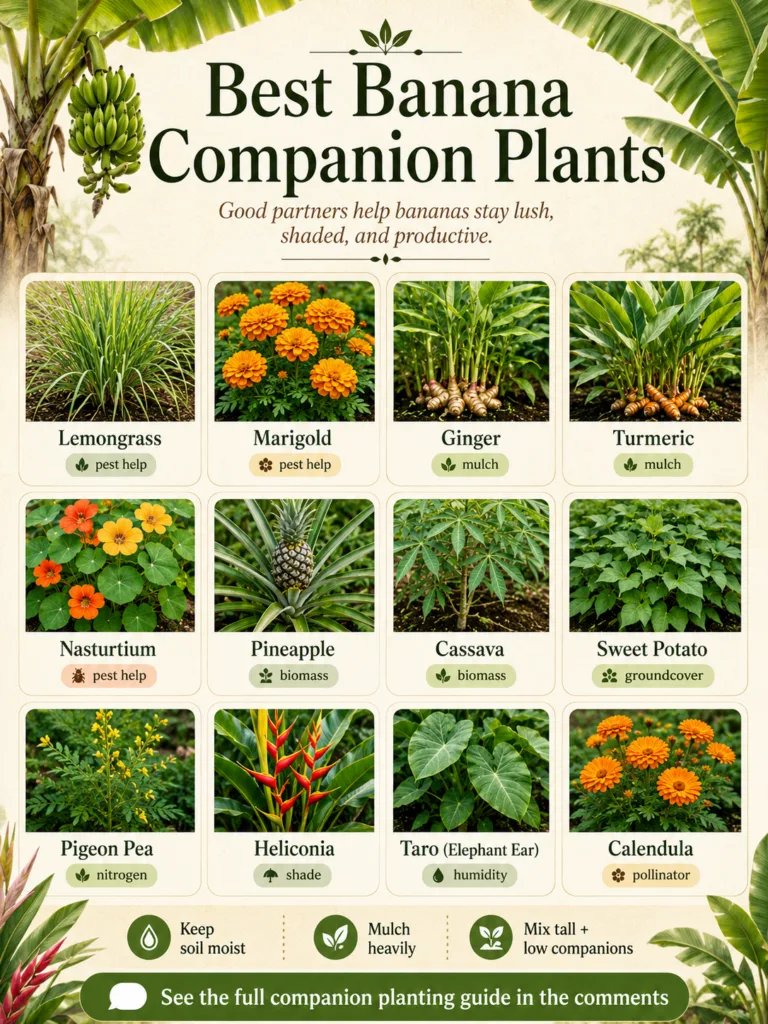
1. Lemongrass (Pest Help)
This aromatic herb is more than just for cooking; its strong scent is a fantastic natural deterrent for many common garden pests. Planting a border of lemongrass around your bananas can create a fragrant barrier that insects prefer to avoid. Plus, it’s a beautiful ornamental!
 Lemongrass not only smells wonderful but also helps keep unwanted guests away from your bananas.
2. Marigold (Pest Help)
Marigolds are famous for their pest-repelling abilities, particularly against nematodes that can harm banana roots. Their bright, cheerful blooms also attract beneficial insects like hoverflies, which prey on aphids. Plant them liberally around your banana plants for a splash of color and powerful protection.
3. Ginger (Biomass & Soil Health)
Ginger thrives in similar warm, humid conditions as bananas. Its shallow root system won’t compete with deeper banana roots, and its leaves add valuable organic matter to the soil as they decompose, enriching the earth right where your bananas need it most.
4. Turmeric (Biomass & Soil Health)
Just like ginger, turmeric is a fantastic understory plant. It contributes to soil structure and adds nutrients, acting as a living mulch that helps keep the soil around your bananas cool and moist. You get a harvest of delicious rhizomes too!
5. Nasturtium (Pest Help / Trap Crop)
These pretty, edible flowers are more than just a culinary delight. Nasturtiums are excellent trap crops for aphids, luring them away from your main plants. They’re also known to deter other pests like squash bugs and whiteflies. Plant them at the edges of your banana patch.
6. Pineapple (Mulch & Ground Cover)
Pineapples are natural partners for bananas in tropical settings. They have shallow root systems and their broad leaves create a living mulch, suppressing weeds and conserving soil moisture. As they grow, they also contribute organic matter back into the soil, slowly releasing nutrients.
7. Cassava (Biomass & Soil Health)
Cassava is a powerhouse when it comes to biomass. Its deep roots help break up hard soil and bring up nutrients from lower layers. The large leaves, when mulched, contribute significant organic material, enhancing soil fertility and structure for your bananas.
8. Sweet Potato (Ground Cover & Weed Suppression)
Sweet potato vines are excellent at sprawling, providing dense ground cover that effectively smothers weeds. This not only saves you weeding time but also helps retain soil moisture, a critical need for bananas, especially in warmer climates.
9. Pigeon Pea (Nitrogen Fixer / Biomass)
Pigeon peas are legumes, which means they’re fantastic nitrogen fixers. They pull nitrogen from the air and make it available in the soil, naturally fertilizing your banana plants. When pruned, their leaves and branches provide excellent ‘chop and drop’ mulch, adding valuable organic matter.
10. Heliconia (Shade & Aesthetics)
If you’re looking to add a touch of exotic beauty while offering a practical benefit, Heliconia is your plant. Taller varieties can provide some welcome dappled shade for young banana plants, protecting them from intense sun, and their vibrant blooms are simply stunning.
11. Taro (Elephant Ear) (Mulch & Shade)
Taro, or Elephant Ear, with its enormous leaves, is a natural choice for creating a lush understory. These big leaves act as a living mulch, shading the soil, reducing water evaporation, and suppressing weeds. As the outer leaves die back, they add rich organic matter.
12. Calendula (Pollinator & Pest Help)
Similar to marigolds, calendula adds bright color and serves a dual purpose. Its cheerful blooms attract beneficial insects like ladybugs, which are natural predators of aphids and other soft-bodied pests. Calendula also has mild pest-repelling properties.
 A diverse banana patch is a healthy and resilient banana patch!
General Companion Planting Wisdom for Your Banana Patch
Beyond choosing the right plants, here are a few universal tips to help your companion planting efforts truly shine:
Keep the Soil Moist
Bananas are thirsty plants, and their companions will also benefit from consistent moisture. Regular watering, especially during dry spells, is key. Think about setting up a simple drip irrigation system or using good old-fashioned watering cans to keep everything happy.
Mulch Heavily
This is one of the easiest and most impactful things you can do for your banana patch. A thick layer of organic mulch (like wood chips, straw, or chopped leaves) around your banana plants and their companions will:
- Conserve soil moisture, meaning less watering for you.
- Suppress weeds, so your plants aren’t competing for nutrients.
- Gradually break down, adding valuable organic matter and nutrients to the soil.
- Regulate soil temperature, keeping roots cool in summer and warm in winter.
Mix Tall and Low Companions
Diversity is strength! By layering your plants – with bananas as your tall giants, then mid-height companions like pigeon peas or heliconia, and finally low-growing ground covers like sweet potatoes or pineapples – you create a multi-story garden. This maximizes space, creates varied microclimates, and supports a wider range of biodiversity, making your whole system more resilient.
Bringing It All Together
Creating a thriving banana patch using companion planting is a rewarding journey. It’s about observing your garden, understanding the needs of your plants, and fostering a cooperative environment where everything works together. You’re not just growing bananas; you’re cultivating a mini-ecosystem that’s healthier, more productive, and simply more beautiful.
So, why not give some of these companion planting ideas a try? Start small, observe how your plants respond, and gradually expand your banana guild. You’ll be amazed at the positive changes you see in your garden, and you’ll feel a deeper connection to the incredible processes happening right beneath your fingertips.
Happy planting, friends!