Hello, fellow garden enthusiasts! Have you ever dreamt of a garden that keeps giving, season after season? Imagine stepping outside your door and plucking fresh, ripe fruit for months on end. It’s not just a dream for tropical paradises; many fruit trees, especially those suited for warmer climates, are incredibly generous and will produce beautiful harvests for an extended period, sometimes multiple times a year!
Choosing the right fruit trees can transform your yard into a continuous edible landscape, providing a steady supply of delicious, homegrown produce. This isn’t just about saving money at the grocery store; it’s about savoring the freshest flavors, connecting with nature, and building a more self-sufficient home. Let’s explore nine fantastic fruit trees known for their long and bountiful harvests, perfect for making your garden a hub of continuous edible joy!
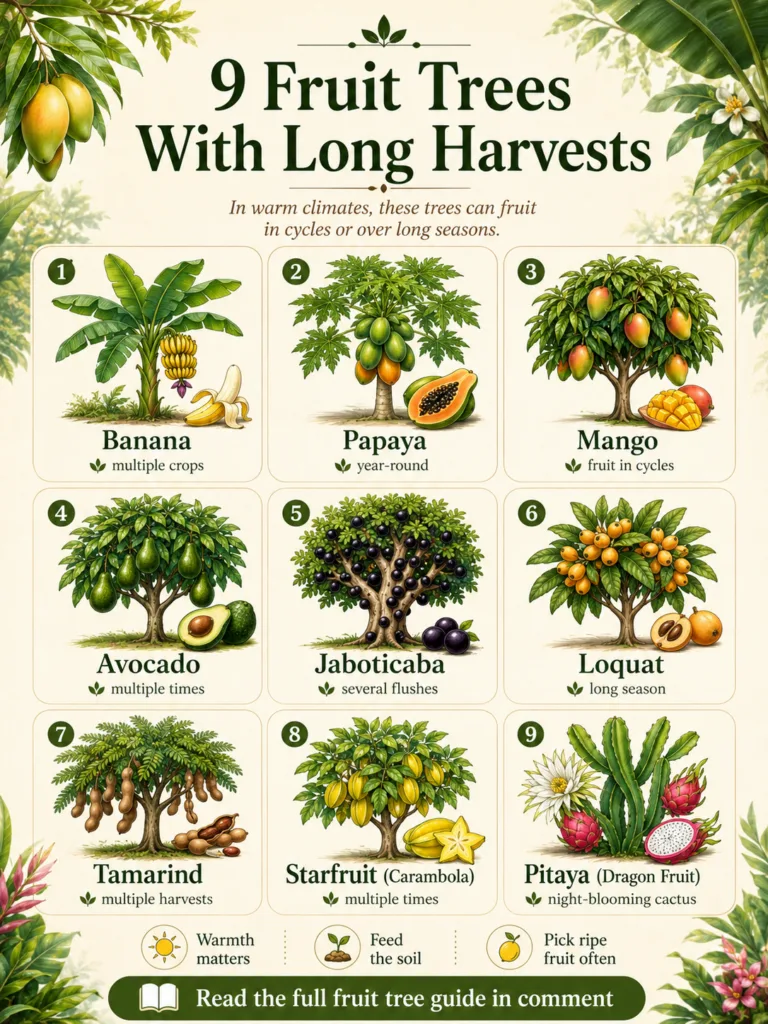 Discover these incredible fruit trees that keep on giving, making your garden a true source of abundance.
Our Top 9 Picks for Continuous Fruit Production
1. Banana
Ah, the banana! While a single plant produces one stalk of fruit, the beauty of bananas lies in their rapid succession. A ‘banana tree’ is actually a giant herb, and it continuously sends up new ‘suckers’ from its underground rhizome. Once the main plant fruits and is harvested, a new sucker quickly takes its place, ensuring a continuous supply of bananas for years. They thrive in warm, humid environments (USDA Zones 9-11) and love rich, well-drained soil and plenty of water. Keep an eye on new suckers to ensure healthy replacements are always coming up.
2. Papaya
Papayas are incredibly fast growers and prolific producers. Once they start fruiting, which can be within a year of planting, they often continue to bear fruit year-round in ideal warm conditions (USDA Zones 9-11). Their sweet, tropical fruits grow directly from the trunk. Papayas prefer full sun, well-drained soil, and consistent moisture. They’re relatively short-lived compared to other fruit trees, but their quick production cycle makes them a fantastic choice for continuous harvests.
3. Mango
The king of tropical fruits! While mangoes typically have a distinct fruiting season, a mature tree can produce hundreds, if not thousands, of fruits, giving you a substantial harvest that lasts for weeks. In very warm climates (USDA Zones 9-11), some varieties might even have multiple smaller flushes of fruit. Mango trees are long-lived and become more productive with age. They need plenty of sun, good drainage, and protection from frost when young.
4. Avocado
Avocados are another fantastic choice for sustained production. Once established, a healthy avocado tree (USDA Zones 9-11, depending on variety) will reliably produce fruit for many years, often yielding a generous crop over several months. Different varieties have different ripening times, so planting a few different types can extend your harvest even further. They need well-drained soil and consistent watering, especially during dry spells.
5. Jaboticaba
This unique Brazilian grape tree (USDA Zones 9-11) is a true marvel! Unlike most fruit trees, jaboticabas bear their fruits directly on the trunk and main branches. Even better, they can have multiple flushes of fruit throughout the year, often after periods of rain, giving you several opportunities to harvest their delicious, grape-like berries. They prefer rich, slightly acidic soil and consistent moisture.
6. Loquat
Loquats are delightful trees (USDA Zones 8-10) that offer their sweet, tangy fruits in late winter or early spring, a time when most other fruit trees are just waking up. This makes them incredibly valuable for extending your fresh fruit season. They are hardy, adaptable, and relatively low maintenance, preferring full sun and well-drained soil. A mature loquat tree can produce hundreds of fruits, providing a prolonged harvest.
7. Tamarind
The tamarind tree (USDA Zones 10-11) is a long-lived, stately tree that produces an abundance of pods containing a sweet and sour pulp. Once it starts producing, it continues to do so reliably for decades. While the harvest might be concentrated, the sheer volume of pods allows for a prolonged enjoyment, as the fruits can be stored or processed into various culinary delights. Tamarinds are drought-tolerant once established and prefer full sun.
8. Starfruit (Carambola)
Starfruit trees (USDA Zones 9-11) are beautiful and highly productive, often yielding multiple harvests throughout the year in warm climates. The distinctive star-shaped fruits are sweet and juicy, perfect for fresh eating or garnishes. They thrive in full sun with consistent moisture and protection from strong winds. Regular pruning helps maintain their shape and encourages fruit production.
9. Pitaya (Dragon Fruit)
Last but certainly not least, dragon fruit (pitaya) is a climbing cactus that offers several flushes of exotic, vibrant fruit during its growing season (USDA Zones 9-11). Its large, beautiful flowers bloom at night and are followed by stunning fruits. Dragon fruit needs strong support to climb, plenty of sun, and well-drained soil. While a cactus, it appreciates regular watering during dry periods and can benefit from hand-pollination for better yields.
Keys to a Continuously Giving Orchard
Beyond choosing the right trees, a few fundamental practices will ensure your fruit trees are always thriving and providing you with an abundance of delicious fruit:
Warmth is Your Friend
Most of these long-harvesting trees absolutely adore warmth. If you live in a cooler climate, consider planting them in microclimates that offer extra protection, like against a south-facing wall or in large containers that can be moved indoors during winter. Understanding your USDA plant hardiness zone is crucial for selecting trees that will flourish in your area.
Feed the Soil
Just like us, fruit trees need good nutrition to stay healthy and productive. Enriching your soil with compost and organic fertilizers provides a slow-release buffet of nutrients. Healthy soil means healthy roots, which translates to stronger trees and more fruit. A layer of organic mulch around the base of your trees also helps retain moisture and regulate soil temperature.
Pick Ripe Fruit Often
This might seem obvious, but regularly harvesting ripe fruit encourages many trees to produce even more! For continuous bearers like papayas or jaboticabas, picking fruit as soon as it’s ready signals to the plant that it needs to keep producing. It also prevents overripe fruit from attracting pests or falling and potentially damaging other fruits.
Ready to Grow Your Own Abundance?
Starting your own mini-orchard of long-harvesting fruit trees is a deeply rewarding endeavor. Imagine the joy of stepping into your garden and plucking fresh, delicious fruit almost any time of the year! It’s an investment in your health, your home, and your connection to the incredible giving power of nature. So, roll up your sleeves, pick a favorite (or a few!), and start planning your journey to a more bountiful, fruitful garden. Happy growing!