Imagine a garden where your favorite plants thrive with renewed vigor, producing more flowers and lush foliage year after year, all without spending a dime on new specimens. This isn’t a gardener’s fantasy; it’s the tangible reward of perennial division. Many common garden perennials benefit immensely from being divided every few years, a simple yet powerful technique that rejuvenates tired clumps, encourages robust growth, and gives you free plants to expand your landscape or share with friends.
If you’ve ever felt intimidated by the idea of digging up a perfectly healthy plant, rest assured, the process is straightforward and incredibly rewarding. This guide will walk you through the essential steps and specific considerations for six popular perennials, transforming you into a confident plant propagator. Let’s dig in and discover how to unlock the full potential of your garden!
The Art of Perennial Division: Why and When to Divide
Perennial division is more than just making new plants; it’s a vital plant care practice that improves the health and vitality of your existing specimens. As perennials mature, their root systems can become overcrowded, leading to reduced flowering, smaller leaves, and even dead centers in the plant clump. Division alleviates this congestion, providing more space and nutrients for the rejuvenated sections to flourish.
Benefits of Dividing Perennials:
- Increased Vigor: Younger, outer sections of the plant are typically more robust. Separating these promotes healthier growth.
- More Blooms: Energy is redirected from maintaining an old, dense root ball to producing flowers and foliage.
- Free Plants: Each division can become a new, independent plant, expanding your garden at no cost.
- Pest and Disease Control: It’s an opportunity to inspect roots for issues and replant only the healthiest sections.
- Managing Size: Some vigorous growers can be kept in check by regular division.
When to Divide: Timing is Key
The best time to divide most perennials is when they are dormant or just beginning to emerge, minimizing stress. Generally, this means late summer/early fall after flowering, or early spring as new growth appears. The ideal timing varies by plant type and your local climate.
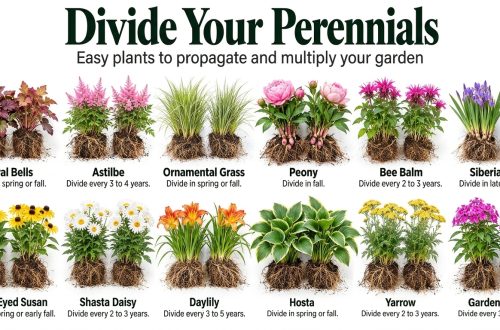
- Spring Dividers: Plants that bloom in mid-to-late summer or fall (e.g., Daylilies, Hostas, Astilbes, Liriope) are best divided in early spring, just as new growth emerges. This gives them the entire growing season to establish new roots before winter.
- Fall Dividers: Plants that bloom in spring or early summer (e.g., Peonies, Iris) are often better divided in late summer or early fall, after they’ve finished flowering. This allows them to settle in during the cooler weather before a winter dormancy, while avoiding the stress of summer heat.
Your Guide to Dividing Six Popular Perennials
While the basic steps are similar for most perennials—digging, separating, replanting—each plant has unique characteristics that influence the best division method. Here’s a practical guide for six garden favorites:
1. Hosta (Hosta spp.)
Hostas are resilient shade-loving plants, perfect for clump division. They tend to become overcrowded every 3-5 years, showing signs like smaller leaves or a sparse center.
- Hardiness: USDA Zones 3–9
- Plant type: Perennial
- Exposure: Partial to full shade (depending on cultivar)
- Height: 6 inches to 3 feet; Spread: 1–5 feet
- When to Divide: Early spring as ‘pips’ emerge.
- How to Divide:
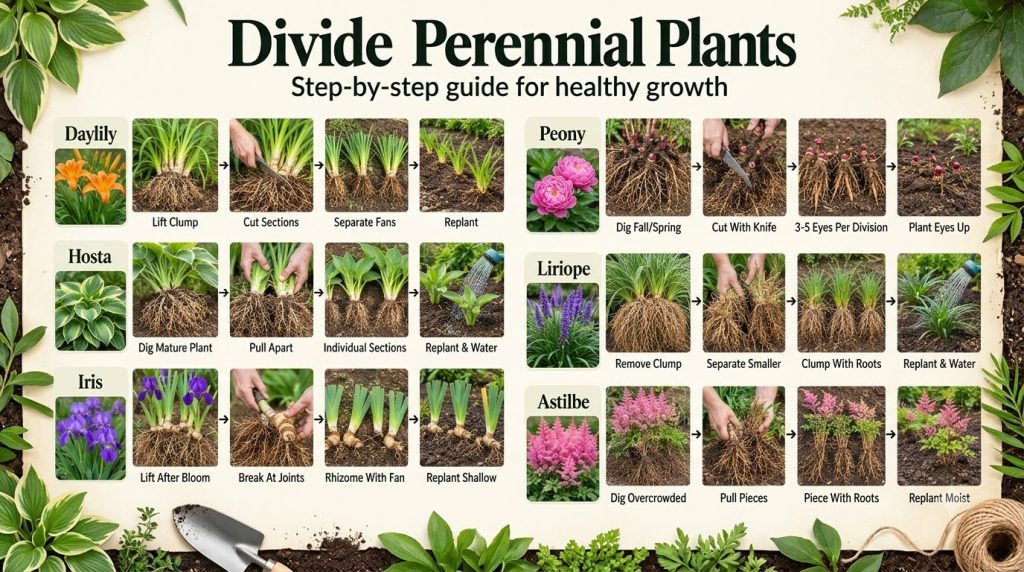
- Carefully dig around the entire clump, lifting it from the ground.
- Shake off loose soil to expose the roots.
- Using a sharp spade, garden knife, or even two pitchforks back-to-back, slice through the root ball, ensuring each section has several ‘eyes’ (growth points) and a healthy amount of roots.
- Replant divisions immediately at the same depth as the original plant.
- Practical Tip: Water thoroughly after replanting to settle the soil around the roots and prevent transplant shock.
2. Daylily (Hemerocallis spp.)
Daylilies are tough, sun-loving perennials that benefit from division every 3-4 years to maintain vigorous flowering.
- Hardiness: USDA Zones 3–9
- Plant type: Perennial
- Exposure: Full sun to partial shade
- Height: 1–4 feet; Spread: 1–3 feet
- When to Divide: Early spring as new shoots emerge, or late summer/early fall after flowering.
- How to Divide:
- Dig up the entire clump. Their dense, fibrous root systems can be substantial.
- Use a sharp knife, spade, or even your hands to pull apart sections, ensuring each piece has a fan of leaves and a good portion of roots. You may need to cut through thick rhizomes.
- Trim any excessively long roots to about 6-8 inches and remove dead or yellowing foliage.
- Replant divisions 12-18 inches apart, at the same depth they were previously growing.
- Practical Tip: Daylilies are forgiving; don’t be afraid to be firm when separating their clumps.
3. Peony (Paeonia spp.)
Unlike many other perennials, Peonies dislike frequent disturbance. Divide only when absolutely necessary (e.g., if flowering significantly declines) and with care.
- Hardiness: USDA Zones 3–8
- Plant type: Perennial
- Exposure: Full sun
- Height: 2–4 feet; Spread: 2–3 feet
- When to Divide: Late summer to early fall (August to September), after foliage has yellowed but before the first hard frost.
- How to Divide:
- Cut back the foliage.
- Carefully dig around the large, fleshy root system, being mindful not to damage the ‘eyes’ (pinkish-red buds) near the crown.
- Gently wash off the soil to clearly see the eyes.
- Using a sharp, sterile knife, cut the root ball into sections, making sure each division has at least 3-5 prominent eyes and a good portion of roots attached.
- Replant so the eyes are no more than 1-2 inches below the soil surface. Planting too deep is a common reason for poor flowering.
- Warning: Peonies can take a few years to re-establish and flower reliably after division.
4. Iris (Iris germanica, Bearded Iris)
Bearded irises thrive on division every 3-5 years, especially when their rhizomes become crowded and rise above the soil, leading to fewer blooms.
- Hardiness: USDA Zones 3–10
- Plant type: Perennial
- Exposure: Full sun
- Height: 1–4 feet; Spread: 1–2 feet
- When to Divide: Late summer (July to September), about 4-6 weeks after flowering.
- How to Divide:
- Dig up the entire clump of rhizomes.
- Wash off the soil to better see individual rhizomes.
- Using a sharp knife, cut healthy, firm sections of rhizome that are 3-5 inches long, ensuring each section has at least one fan of leaves and healthy roots. Discard old, woody, or soft sections.
- Trim the fan of leaves to about one-third its original height (6-8 inches) to reduce water loss.
- Replant the rhizome so that its top is just barely exposed above the soil surface, with roots spread out below.
- Practical Tip: Ensure good drainage, as irises are prone to rot if roots stay too wet.
5. Astilbe (Astilbe spp.)
Astilbes are elegant shade plants that benefit from division every 3-4 years, especially if they show signs of reduced flowering or a sparse center.
- Hardiness: USDA Zones 3–8
- Plant type: Perennial
- Exposure: Partial to full shade
- Height: 1–4 feet; Spread: 1–3 feet
- When to Divide: Early spring as new growth emerges, or late fall after the first frost.
- How to Divide:
- Carefully dig around the clump and lift it. Their fibrous, compact root balls are often quite dense.
- Using a sharp spade or sturdy garden knife, cut the root ball into several sections, ensuring each piece has a good number of healthy roots and at least 2-3 prominent growth buds.
- Replant divisions at the same depth as the original plant, spacing them 12-24 inches apart.
- Practical Tip: Astilbes prefer consistently moist soil, so ensure good hydration after dividing and replanting.
6. Liriope (Liriope muscari or spicata)
Liriope, or Lilyturf, is a tough, grass-like groundcover that benefits from division every few years to prevent it from becoming overly dense and to control its spread.
- Hardiness: USDA Zones 5–10
- Plant type: Perennial groundcover
- Exposure: Full sun to full shade
- Height: 10–18 inches; Spread: 1–2 feet (clumping) or indefinite (spreading)
- When to Divide: Early spring before new growth begins, or in the fall.
- How to Divide:
- Dig up the entire clump. Liriope can form a very dense, matted root ball.
- Using a sharp spade, an ax, or even a sturdy serrated knife, forcefully cut the root ball into smaller sections. Each section should have some healthy leaves and roots.
- Replant divisions 6-12 inches apart for quick coverage, or further for a more spaced look. Plant at the same depth as before.
- Warning: Liriope spicata can be aggressively spreading. Division is a good opportunity to control its boundaries; consider containing it.
Avoiding Common Division Mistakes
Successful perennial division relies on a few key practices:
- Using Clean, Sharp Tools: This minimizes damage to roots and reduces the risk of disease transmission. Disinfect tools with rubbing alcohol between plants.
- Not Watering Enough After Replanting: Divisions are under stress. Water deeply and consistently for several weeks to help them establish new roots.
- Planting Too Deep or Too Shallow: Most plants should be replanted at the same depth they were originally growing. Peonies and Irises are notable exceptions with specific depth requirements.
- Dividing at the Wrong Time: Dividing a plant when it’s actively flowering or in the peak of summer heat can severely stress or even kill it. Stick to spring or fall dormancy periods.
- Ignoring Root Health: When dividing, inspect roots for any signs of disease, pests, or rot. Only replant healthy, firm sections.
- Making Divisions Too Small: Each new plant needs enough roots and growth points (‘eyes’ or buds) to survive and thrive. Don’t be too stingy with your cuts.
Regional and Seasonal Considerations for U.S. Gardeners
While the general principles of division apply across the country, your local climate and USDA hardiness zone will influence precise timing.
- Zones 3–5 (Cold Climates): Prioritize early spring division for most plants to give them maximum time to establish before a harsh winter. Fall division can be risky unless done very early in the season, allowing at least 6-8 weeks for roots to grow before the ground freezes solid.
- Zones 6–8 (Temperate Climates): You have more flexibility. Both early spring and late summer/early fall are excellent times for division, offering cooler temperatures and often consistent moisture.
- Zones 9–11 (Warm Climates): Avoid summer division entirely. Late fall or even winter (during a cool, dry spell) might be more appropriate, as plants experience a less pronounced dormancy. Focus on avoiding the intense heat.
Always check your local frost dates. For spring division, wait until after the danger of a hard freeze has passed. For fall division, aim to finish at least 4-6 weeks before your average first frost date.
Embrace the Cycle of Growth
Dividing perennials is a truly satisfying gardening task. It’s an opportunity to get hands-on with your plants, understand their growth habits, and actively participate in their health and proliferation. By following these simple steps, you’ll not only rejuvenate your existing plants but also expand your garden’s beauty and biodiversity, all while connecting more deeply with the natural rhythms of the growing season. So grab your spade, choose a division-ready perennial, and get ready to transform your garden!