Chia Seeds: Your Tiny Powerhouse for Health
Chia seeds have become a staple in healthy eating, celebrated for their impressive nutritional profile and versatility. These tiny seeds are packed with fiber, omega-3 fatty acids, protein, and essential minerals, making them a fantastic addition to almost any diet. But with great power comes a common question: how much is enough? Understanding the right portion size can help you maximize their benefits without overdoing it.
The Magic of Hydration: Seeing the Expansion
One of the most fascinating aspects of chia seeds is their ability to absorb liquid and expand significantly, forming a gel-like texture. This unique property is what makes them so useful in creating satisfying puddings, thickening smoothies, and even acting as an egg substitute in baking. Visually, the difference between dry and hydrated chia seeds is quite remarkable, and seeing how they transform can help you gauge your portions better.
Portion Control: 1 Tablespoon vs. 2 Tablespoons
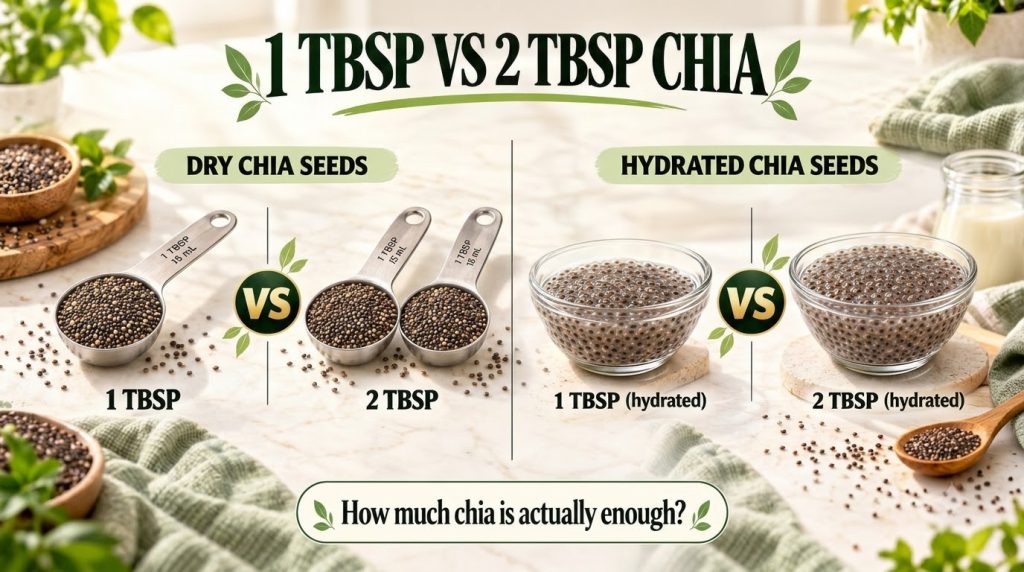
So, what’s the optimal amount for you? While individual needs vary, generally, 1 to 2 tablespoons of chia seeds per day is a good starting point for most adults. Here’s a look at what each amount offers:
- 1 Tablespoon of Chia Seeds: This amount provides a solid nutritional boost without being too overwhelming. It’s excellent for sprinkling over yogurt, oatmeal, or salads for a subtle increase in fiber and healthy fats. It’s also a great choice if you’re new to chia seeds or prefer a lighter texture in your dishes.
- 2 Tablespoons of Chia Seeds: Doubling your portion significantly increases the nutritional content and the thickening power. Two tablespoons are ideal for making a substantial chia pudding, thickening a smoothie to a creamy consistency, or adding a significant amount of fiber to your diet. Keep in mind that when hydrated, 2 tablespoons of dry chia seeds will yield a much larger volume of gel, perfect for a filling breakfast or snack.
The visual difference in volume between 1 and 2 tablespoons, both dry and hydrated, truly highlights how these tiny seeds can make a big impact on your meals and overall nutrient intake. Pay attention to how your body responds and adjust your intake accordingly.
Practical Ways to Incorporate Chia Seeds
No matter which amount you choose, chia seeds are incredibly easy to incorporate into your daily routine:
- Chia Pudding: Combine chia seeds with your favorite milk (dairy or plant-based) and let it sit in the fridge for a few hours or overnight. Add fruit, nuts, or sweeteners for a delicious and nutritious breakfast or dessert.
- Smoothie Booster: Blend 1-2 tablespoons into your morning smoothie for added fiber, protein, and omega-3s.
- Oatmeal Topping: Sprinkle them over your warm oatmeal for an extra crunch and nutrient boost.
- Baking: Use ground chia seeds mixed with water as an egg substitute (1 tbsp ground chia + 3 tbsp water per egg) or add them whole to breads, muffins, and cookies.
- Salad Enhancer: A tablespoon of chia seeds can add a healthy crunch to your greens.
Listen to Your Body
While chia seeds offer many benefits, it’s important to start with a smaller amount and gradually increase your intake, especially if you’re not used to a high-fiber diet. Always ensure you’re drinking plenty of water when consuming chia seeds, as their high fiber content requires adequate hydration to prevent digestive discomfort. Experiment with different amounts to find what works best for your body and your favorite recipes.
Ultimately, whether you opt for one tablespoon or two, incorporating chia seeds into your diet is a simple and effective way to boost your nutritional intake and support a healthy lifestyle. Enjoy the journey of discovering new ways to use these incredible superfoods!