When you’re nurturing your beloved plants, whether they’re vibrant flowers, lush indoor greenery, or bountiful vegetables, you want to give them the best possible start. A common piece of gardening advice often passed down is to put a layer of gravel at the bottom of your pots for better drainage. But what if we told you this seemingly helpful tip is actually a ‘gravel trap’ that could be harming your plants?
It’s a misconception many of us have believed, but today, we’re diving deep into why gravel at the bottom of your plant pots does more harm than good and what you should be doing instead to ensure your plant roots stay healthy and happy.
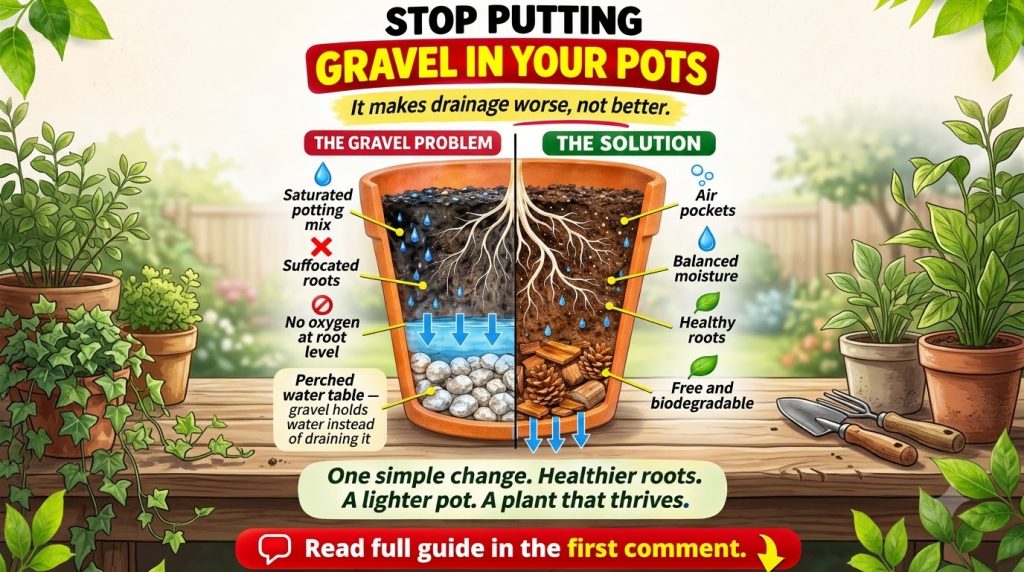
The Gravel Trap Explained: A Perched Water Table
The idea behind putting gravel at the bottom of a pot is simple: water will drain through the gravel, preventing the soil from becoming waterlogged. However, the reality is quite different due to a phenomenon called the ‘perched water table’.
What is a Perched Water Table?
When you water a plant in a pot, gravity pulls the water downwards. But soil has a certain capacity to hold water against gravity. When water reaches the interface between the potting mix and a coarser layer like gravel, it doesn’t immediately flow into the gravel. Instead, it accumulates in the soil above the gravel layer, creating a saturated zone known as a perched water table.
Imagine a sponge soaking up water. If you place that sponge on a solid surface, it holds onto water until it’s fully saturated. Only then will water start dripping from the bottom. The gravel acts like that solid surface, preventing water from easily moving out of the fine-textured potting soil above it.
Why This Harms Your Plant Roots
Roots need oxygen to thrive. When they sit in constantly waterlogged soil due to a perched water table, they are deprived of oxygen. This leads to:
- Root Suffocation: Lack of oxygen literally suffocates the roots, preventing them from absorbing water and nutrients.
- Root Rot: Saturated conditions are a breeding ground for harmful anaerobic bacteria and fungi, leading to root rot, which can quickly kill your plant.
- Nutrient Imbalance: Waterlogged soil can also wash away essential nutrients, further weakening your plant.
Essentially, by adding gravel, you’re not improving drainage; you’re just moving the soggy zone higher up into the pot, directly where your plant’s roots are trying to grow.
The Real Solution for Healthy Roots and Drainage
So, if gravel is out, what should you do? The answer is much simpler than you might think.
1. Use a Quality Potting Mix
The most important factor for good drainage is a well-draining potting mix. A good mix contains components like peat moss or coco coir for water retention, and perlite, vermiculite, or bark chips for aeration and drainage. These ingredients create a balance that holds enough moisture for roots while allowing excess water to flow through freely.
2. Ensure Adequate Drainage Holes
Your pot absolutely must have drainage holes at the bottom. These holes are crucial for allowing excess water to escape, preventing the creation of any water table, perched or otherwise. More drainage holes are always better than fewer.
3. No Filler Needed
For most plants, you don’t need any layer at the bottom of the pot other than your potting mix. Just fill the pot directly with your chosen soil. This allows the entire soil column to drain effectively.
4. What About Wood Chips?
While the infographic suggests wood chips as ‘The Solution’ over gravel, it’s important to clarify. Wood chips can break down over time, adding organic matter, and don’t create the same abrupt interface as gravel. However, for optimal drainage, a high-quality potting mix throughout the pot is still generally the best approach. If you are using very large pots and want to reduce the amount of potting mix needed, a layer of coarser, organic material like wood chips can be considered, but it should be understood as a way to fill space, not primarily as a drainage improver over a good potting mix.
Tips for Successful Container Gardening
- Choose the Right Pot Size: Don’t pot a tiny plant in a massive container; it holds too much moisture. Gradually increase pot size as your plant grows.
- Water Wisely: Water deeply until it drains from the bottom, then allow the top inch or two of soil to dry out before watering again. This prevents constant saturation.
- Monitor Your Plants: Yellowing leaves, wilting, or stunted growth can all be signs of poor drainage or overwatering. Pay attention to what your plants are telling you.
Conclusion
Dispelling gardening myths is part of becoming a more successful and confident gardener! By understanding the science behind drainage and opting for a high-quality potting mix in pots with adequate drainage holes, you can avoid the ‘gravel trap’ and ensure your plants develop strong, healthy roots. Your plants will thank you with vibrant growth and beautiful blooms.
What are your go-to tips for container gardening? Share your experiences and insights in the comments below!