Welcome, fellow garden enthusiasts! Dreaming of a thriving vegetable patch overflowing with fresh produce? One of the most critical, yet often overlooked, steps to achieving gardening success starts even before your seeds sprout: planting them at the correct depth. It might seem like a small detail, but getting seed depth right can make all the difference between a sparse garden and a bountiful harvest. Let’s dive into why this matters and how to master it!
Why Correct Seed Depth is a Game-Changer for Your Garden
Imagine a tiny seed, packed with the potential for life, waiting to burst forth. Its journey from dormancy to a healthy seedling is delicate, and planting depth plays a vital role in this process. Here’s why it’s so important:
- Germination Success: Seeds need the right balance of moisture, warmth, and light (or lack thereof, for some) to germinate. Plant them too shallow, and they might dry out or get eaten by birds. Plant them too deep, and they might not have enough energy to push through the soil to reach the light they need for photosynthesis.
- Root Development: The initial depth influences how well a seedling can establish its root system. Proper depth encourages strong, deep roots that can anchor the plant and access water and nutrients effectively.
- Protection from Elements: A suitable layer of soil protects tiny seeds from harsh sun, strong winds, and heavy rain, giving them a safer environment to begin their growth.
- Energy Reserves: Each seed has a limited amount of stored energy. If it’s planted too deep, it expends too much of this vital energy trying to reach the surface, leaving little left for developing true leaves and healthy growth.
General Rules of Thumb for Planting Depth
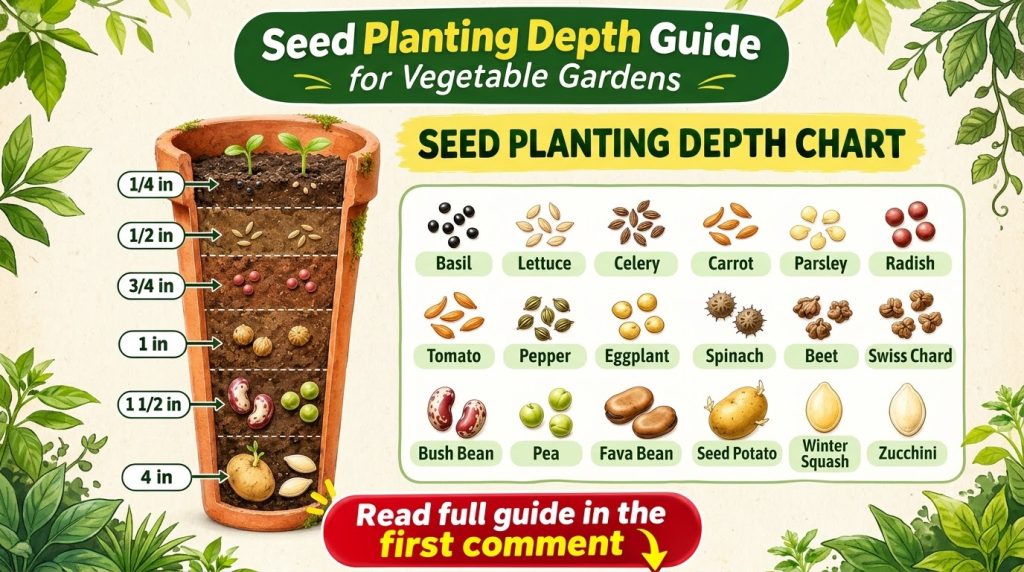
While specific depths vary by plant, there’s a simple rule of thumb that works for most seeds: plant them twice as deep as they are wide. For example, if a seed is 1/4 inch wide, plant it 1/2 inch deep. However, this is a general guideline, and always check your seed packets for precise instructions!
- Tiny Seeds (e.g., Lettuce, Carrots, Radishes): These often need very shallow planting, sometimes just pressed onto the surface or covered with a thin layer (1/8 – 1/4 inch) of fine soil or vermiculite. Some even require light to germinate!
- Medium Seeds (e.g., Beans, Peas, Corn): These typically go deeper, often around 1 inch. Their larger size means they have more energy reserves to push through more soil.
- Large Seeds (e.g., Squash, Pumpkins): These can handle being planted even deeper, sometimes up to 2 inches, especially in warmer climates where deeper soil retains moisture better.
Tips for Successful Seed Planting
- Read Your Seed Packets: This is your gardening bible! Every seed packet provides specific instructions for planting depth, spacing, and ideal conditions.
- Prepare Your Soil: Ensure your soil is loose, well-draining, and free of large clumps. Fine, friable soil makes it easier for tiny seedlings to emerge.
- Create Furrows or Holes: Use a ruler, stick, or dibbler to create furrows or holes at the correct, consistent depth. This ensures even germination.
- Gentle Covering: Lightly cover the seeds with soil, gently patting it down to ensure good seed-to-soil contact. Avoid compacting the soil too much.
- Water Carefully: After planting, water gently to settle the soil without dislodging the seeds. A fine spray nozzle or bottom watering can be helpful.
- Label Everything: Once planted, label your rows or pots immediately. It’s easy to forget what you’ve planted where, especially before germination!
Happy Planting!
Mastering seed planting depth is a fundamental skill that will significantly improve your gardening success. By paying attention to these small details, you’re setting your vegetable plants up for the best possible start, leading to healthier growth and a more abundant harvest. So grab those seeds, prepare your soil, and get ready to enjoy the fruits (and vegetables!) of your labor!