Imagine turning one precious plant into a whole family of green beauties, all from just a single leaf! It sounds like magic, but it’s a wonderfully simple and rewarding gardening technique known as leaf propagation. If you’ve ever admired a succulent and wished you had more, or if you’re looking for an incredibly cost-effective way to expand your plant collection, you’re in the right place. Let’s dive into the fascinating world of growing new plants from just a leaf!
Why Try Leaf Propagation?
Leaf propagation isn’t just a fun experiment; it’s a practical skill for any gardener. Here’s why you should give it a try:
- Cost-Effective: You can multiply your favorite plants without buying new ones.
- Rewarding: Watching a tiny plant emerge from a single leaf is incredibly satisfying.
- Easy for Beginners: Many plants, especially succulents, are surprisingly forgiving when propagated this way.
- Share the Green: Easily grow extra plants to share with friends and family.
Best Plants for Leaf Propagation
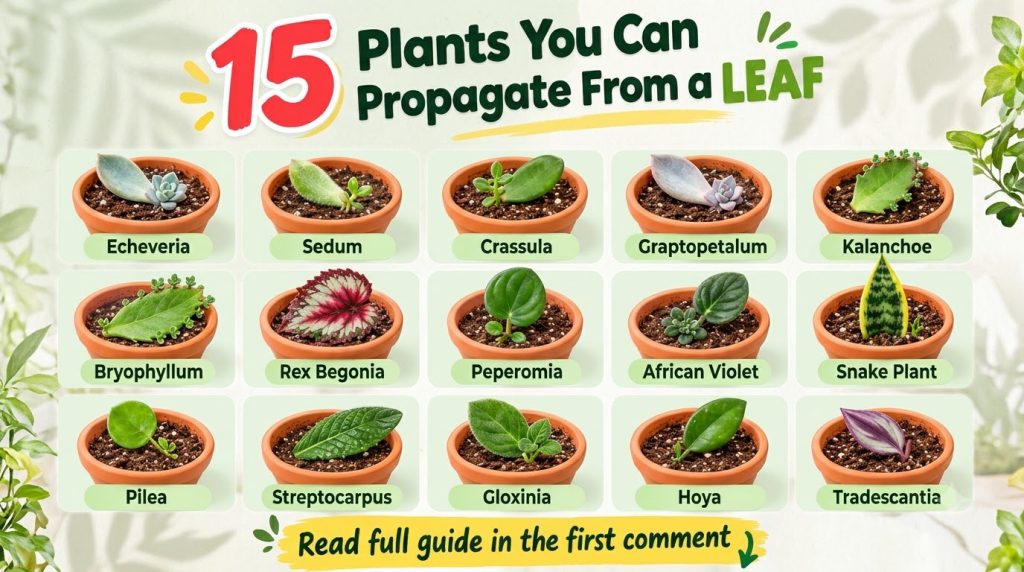
While many plants can be propagated from cuttings, leaf propagation works exceptionally well for certain types. Succulents are the stars of this method! Think Echeveria, Sedum, Kalanchoe, and Crassula (Jade Plant). Their fleshy leaves store water, giving them the resilience needed to root and grow new plants.
Your Step-by-Step Guide to Leaf Propagation
Ready to start your leaf propagation journey? Follow these simple steps:
1. Choose Your Leaf Wisely
- Healthy & Mature: Select a plump, healthy leaf from the mother plant. Avoid any that are yellowing, damaged, or mushy.
- Clean Break: Gently twist or snap the leaf off at its base, ensuring you get a clean break with no part of the leaf left on the stem. This entire ‘pad’ at the base is crucial for new growth.
2. Let it Callus
This is a critical step, especially for succulents! After removing the leaf, let it sit in a dry, shaded spot for a few days to a week. The break point will form a dry, hardened scab, known as a callus. This prevents rot when the leaf comes into contact with moisture.
3. Prepare Your Planting Medium
Fill a shallow tray or pot with well-draining soil, specifically a succulent or cactus mix. You can also use a mixture of perlite and peat moss for good drainage.
4. Lay the Leaves Down
Once calloused, simply lay your leaves flat on top of the soil. You don’t need to bury them, though some people lightly press the calloused end into the soil. Ensure the leaves are not overcrowded.
5. Water & Wait
- Light Misting: Lightly mist the soil and leaves every few days, or when the soil looks completely dry. The goal is to keep the soil slightly damp, but not soggy.
- Patience is Key: This is where the magic happens, but it takes time! Within a few weeks to a few months, you should start to see tiny roots emerging from the calloused end of the leaf, followed by a tiny rosette (the new plantlet).
6. Nurture Your New Plantlets
Once the new plantlet is a decent size and the original leaf has shriveled up and fallen off (don’t remove it prematurely!), you can gently pot the new plantlet into its own small container with fresh succulent soil. Continue with regular succulent care, ensuring plenty of light and infrequent, deep watering.
Troubleshooting Common Issues
- Leaves Rotting: This usually means too much water or not enough callusing time. Ensure proper drainage and let leaves callus completely.
- No Growth: Be patient! Some leaves take longer than others. Ensure adequate light and consistent (but not excessive) moisture.
- Mother Leaf Dying Before Plantlet Grows: This can happen if the mother leaf didn’t have enough energy stored, or if conditions weren’t ideal. It’s why propagating several leaves at once increases your chances of success.
Ready to Grow?
Leaf propagation is a delightful way to expand your plant family and connect more deeply with the natural world. It’s a testament to the resilience and beauty of plants, proving that even a single leaf holds the potential for new life. So grab a healthy leaf, get your soil ready, and prepare to be amazed as you grow your garden from a single leaf!
Have you tried leaf propagation before? Share your favorite plants to propagate or your best tips in the comments below! We love hearing from our fellow gardeners.