Are you looking for ways to feel more energetic and support your overall well-being? Vitamin B12 might be the nutrient you need to focus on! This essential vitamin plays a crucial role in many bodily functions, from energy production to nerve health. Understanding its importance and knowing which foods are rich in B12 can be a game-changer for your health.
In this article, we’ll dive into why Vitamin B12 is so vital, explore the best food sources to help you meet your daily needs, and offer practical tips to easily incorporate these foods into your diet. Get ready to unlock your B12 boost and take a step towards a healthier, more vibrant you!
The Amazing Benefits of Vitamin B12
Vitamin B12, also known as cobalamin, is a powerhouse nutrient that contributes to several critical bodily processes. Ensuring you get enough can significantly impact your health and how you feel daily.
Energy Production
One of B12’s most well-known benefits is its role in energy metabolism. It helps convert the food you eat into glucose, which your body uses for energy. Without enough B12, you might experience fatigue and low energy levels, even if you’re eating enough calories.
Nerve Health
B12 is crucial for maintaining a healthy nervous system. It plays a key role in the formation of myelin, a protective sheath that covers nerves and allows for efficient transmission of nerve impulses. Adequate B12 intake can support cognitive function, memory, and overall neurological well-being.
Red Blood Cell Formation
This vitamin is essential for producing healthy red blood cells. These cells carry oxygen from your lungs to all parts of your body. A deficiency can lead to a type of anemia called megaloblastic anemia, which can cause weakness and shortness of breath.
DNA Synthesis
Vitamin B12 works alongside folate to synthesize DNA, the genetic material in all cells. This process is vital for cell growth, repair, and overall body function.
Top Food Sources Rich in Vitamin B12
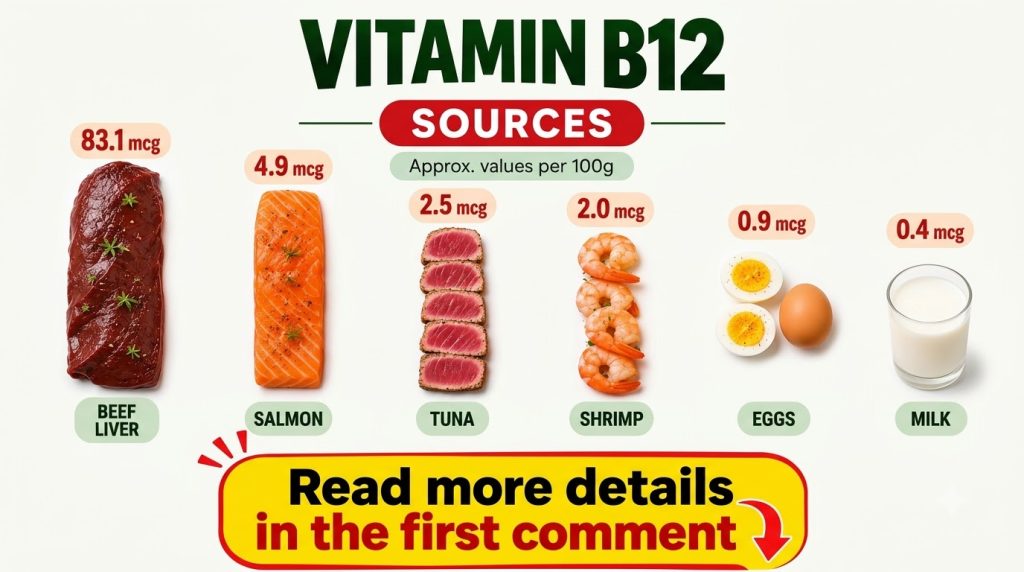
Since the human body cannot produce Vitamin B12 on its own, it’s essential to obtain it through diet or supplements. Fortunately, many delicious foods are packed with this vital nutrient.
- Meat and Poultry: Beef, especially beef liver, is an excellent source. Chicken and turkey also contain B12, though in lesser amounts.
- Fish and Seafood: Salmon, tuna, trout, and mackerel are particularly high in B12. Shellfish like clams and oysters are also fantastic sources.
- Eggs: A versatile and affordable option, eggs provide a good amount of B12, primarily in the yolk.
- Dairy Products: Milk, yogurt, and cheese are good sources of B12, especially for those who consume dairy.
- Fortified Foods: Many plant-based milks (soy, almond, oat), breakfast cereals, and nutritional yeast are fortified with B12, making them good options for vegetarians and vegans.

Understanding Vitamin B12 Deficiency
While many foods contain B12, some people may still struggle to get enough. Certain factors can increase the risk of deficiency:
- Age: As people age, their ability to absorb B12 from food can decrease.
- Dietary Choices: Vegetarians and vegans are at higher risk since B12 is primarily found in animal products.
- Digestive Issues: Conditions like Crohn’s disease, celiac disease, or weight loss surgery can impair B12 absorption.
- Medications: Some medications, such as proton pump inhibitors (PPIs) and metformin, can interfere with B12 absorption.
Symptoms of B12 deficiency can include fatigue, weakness, constipation, loss of appetite, weight loss, numbness and tingling in the hands and feet, memory problems, and depression. If you suspect a deficiency, it’s always best to consult a healthcare professional.
Best Ways to Eat Your B12 Boost
Making B12-rich foods a regular part of your meals is easier than you might think. Here are some practical tips:
- Start with Breakfast: Enjoy scrambled eggs, an omelet with cheese, or a bowl of fortified cereal with milk.
- Lunch & Dinner: Include lean beef, chicken, or fish like salmon and tuna in your main meals. Canned tuna or salmon can be a quick addition to salads or sandwiches.
- Snack Smart: Hard-boiled eggs or a small serving of Greek yogurt can make for convenient, B12-rich snacks.
- Explore Fortified Options: If you follow a plant-based diet, regularly include fortified plant milks, yogurts, and nutritional yeast in your meals.
- Meal Prep: Cook a batch of salmon or chicken at the beginning of the week to easily add to salads, wraps, or stir-fries for quick meals.

FAQs About Vitamin B12
What does Vitamin B12 do for your body?
Vitamin B12 is crucial for red blood cell formation, DNA synthesis, nerve function, and energy production. It helps convert food into energy and maintains a healthy nervous system.
Which foods have the most B12?
Excellent sources of B12 include beef liver, salmon, tuna, clams, eggs, milk, and fortified cereals. Animal products are generally the richest natural sources.
Can you get enough B12 from a vegan diet?
It can be challenging to get enough B12 from an exclusively vegan diet without fortified foods or supplements, as natural B12 is primarily found in animal products. Fortified plant milks, cereals, and nutritional yeast are good options, but supplementation is often recommended.
What are the symptoms of B12 deficiency?
Symptoms can include fatigue, weakness, pale skin, shortness of breath, numbness or tingling, memory problems, and changes in mood.
How much B12 do I need daily?
The recommended daily intake for adults is typically 2.4 micrograms (mcg), though this can vary based on age, lifestyle, and specific health conditions. Pregnant and breastfeeding women may require slightly more.
Is it possible to have too much B12?
Vitamin B12 is water-soluble, meaning your body excretes any excess through urine. High doses from food or supplements are generally considered safe and not associated with toxicity, although extremely high doses might interact with certain medications.
Conclusion
Vitamin B12 is an indispensable nutrient for your energy, nerve health, and overall vitality. By consciously including B12-rich foods like salmon, beef, eggs, and dairy in your diet, you can support these vital bodily functions and feel your best. For those following plant-based diets, fortified foods and supplements offer reliable alternatives.
Remember, a balanced and varied diet is key to good health. Prioritizing nutrients like B12 can help you maintain your active lifestyle and support long-term well-being. Keep exploring healthy food content to enrich your knowledge and culinary skills!
This content is for educational purposes only and should not be considered medical advice. Consult a qualified healthcare professional for personalized dietary recommendations.