Unlock Your Garden’s Potential: Matching the Right Soil for Thriving Vegetables
Every gardener dreams of a bountiful harvest, lush plants, and vibrant flowers. But what if we told you the secret to unlocking your garden’s true potential lies beneath your feet? Understanding your soil type and pairing it with the right vegetables is a game-changer for any home gardener. It’s not just about planting; it’s about providing the perfect foundation for growth!
Many gardening frustrations, from stunted growth to pest problems, can often be traced back to a mismatch between plants and their soil environment. Different vegetables have unique needs, and the soil is where they get their essential nutrients, water, and anchorage. Let’s dig in and discover how to make your garden thrive!
The Foundation of a Thriving Garden: Understanding Your Soil
Soil isn’t just dirt; it’s a complex ecosystem. Knowing the basic characteristics of the most common soil types will empower you to make informed decisions for your garden. While there are many variations, most garden soils can be broadly categorized into sandy, clay, silty, or the highly desired loam.
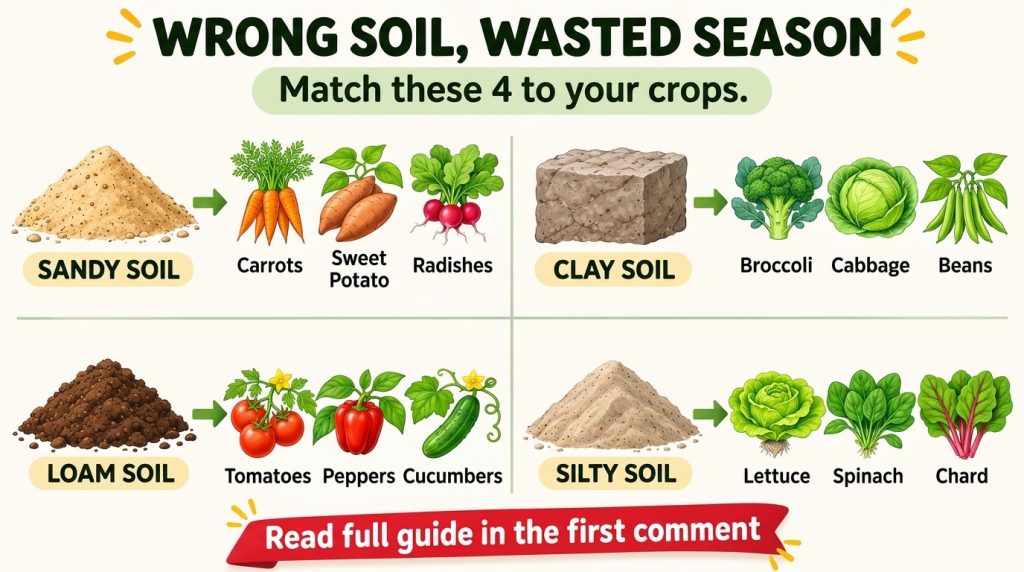
1. Sandy Soil: The Fast Drainer
Characteristics: Sandy soil feels gritty to the touch and drains water very quickly. It warms up rapidly in spring but doesn’t retain nutrients well because water washes them away. It’s often light in color and easy to work with.
Best for: Vegetables that prefer well-drained conditions and don’t like ‘wet feet’ or those that benefit from the soil’s quick warming.
- Root Vegetables: Carrots, Potatoes, Radishes, Turnips
- Heat-Loving Plants: Asparagus, Lettuce, Corn (with proper nutrient management)
- Herbs: Many herbs like rosemary and thyme thrive in sandy, well-drained conditions.
Tips for Improvement: To improve sandy soil, regularly incorporate organic matter like compost, aged manure, or peat moss. This will help it retain more water and nutrients.
2. Clay Soil: The Water Holder
Characteristics: Clay soil is heavy, dense, and feels sticky when wet. It retains water and nutrients exceptionally well, often making it very fertile, but it can become compacted and slow to drain. It also warms up slowly in spring.
Best for: Heavy feeders and plants that enjoy consistent moisture and nutrient-rich environments.
- Brassicas: Cabbage, Broccoli, Brussels Sprouts, Cauliflower
- Legumes: Peas, Beans
- Heavy-Feeding Fruits: Tomatoes, Peppers (when drainage is managed)
- Leafy Greens: Kale, Collard Greens
Tips for Improvement: Break up heavy clay by adding plenty of organic matter (compost, well-rotted leaves), gypsum, or raised beds to improve drainage and aeration.
3. Silty Soil: The Balanced Performer
Characteristics: Silty soil has a fine, powdery texture when dry and feels smooth and somewhat slippery when wet. It’s a happy medium, offering good water retention and drainage, making it quite fertile and easy to work with.
Best for: A wide variety of vegetables that appreciate a good balance of moisture and aeration.
- Leafy Greens: Spinach, Lettuce, Swiss Chard
- Alliums: Onions, Leeks
- Corn: Thrives in the moisture-retaining but well-draining nature of silty soil.
- Root Vegetables: Beets, Celery (as per the infographic)
Tips for Improvement: Silty soil is often already quite good. Maintain its health by regularly adding organic matter to keep its structure and fertility optimal.
4. Loam Soil: The Gardener’s Dream
Characteristics: Loam is considered the ideal garden soil, a perfect blend of sand, silt, and clay, along with ample organic matter. It’s fertile, drains well, retains moisture, and is easy to work. It feels soft and crumbly.
Best for: Almost all vegetables will thrive in loam due to its balanced properties.
- Fruiting Vegetables: Tomatoes, Bell Peppers, Zucchini, Cucumbers
- Leafy Greens: All types of lettuce, spinach, kale
- Legumes: Peas, Beans
- Berries: Strawberries, Raspberries
Tips for Improvement: If you’re lucky enough to have loam, your main goal is to maintain its excellent structure and fertility. Continue to add compost annually to replenish nutrients and organic matter.
General Tips for Soil Health, No Matter Your Type
Even if your soil isn’t naturally perfect, you can significantly improve it over time:
- Add Organic Matter: This is the golden rule! Compost, aged manure, and leaf mold improve soil structure, water retention, drainage, and nutrient availability for all soil types.
- Mulch: A layer of organic mulch helps regulate soil temperature, conserves moisture, suppresses weeds, and breaks down over time to enrich the soil.
- Avoid Compaction: Try not to walk on your garden beds, especially when the soil is wet. Compaction reduces air pockets essential for root growth and drainage.
- Test Your Soil: A soil test can tell you a lot about your soil’s pH and nutrient levels, guiding you on what amendments are truly needed.
Cultivating Success from the Ground Up
By taking the time to understand your garden’s soil and choosing plants that are naturally suited to its characteristics, you’re setting yourself up for incredible success. A little knowledge about what’s happening beneath the surface can transform a struggling garden into a thriving oasis. Happy gardening!