Sculpt Your Core: Flat Tummy Routine!
A strong core is much more than just a visible six-pack; it’s the powerhouse of your body, supporting almost every movement you make. Engaging your entire core, which includes your abdominal muscles, obliques, and lower back, is crucial for overall strength, balance, and posture. If you’re looking to enhance your core workouts and see real, lasting change, it’s time to move beyond simple crunches and embrace a holistic approach.
Consistent effort and proper form are the cornerstones of any effective fitness regimen. Even short, targeted core sessions can yield significant benefits over time, leading to improved stability, reduced risk of injury, and a stronger midsection. Let’s explore how you can build that robust core and integrate it into your daily wellness journey!
Why a Strong Core Matters Beyond Aesthetics
While many aspire to a ‘flat tummy’ for aesthetic reasons, the advantages of a powerful core extend far beyond appearance. Your core muscles act as a natural corset, providing stability for your spine and pelvis. This stability is vital for:
- Improved Posture: A strong core helps you stand taller and sit straighter, counteracting the effects of prolonged sitting.
- Reduced Back Pain: By providing better support for your spine, core strength can alleviate and prevent lower back pain.
- Enhanced Balance and Stability: Daily activities, from walking to lifting objects, rely on a stable core to maintain balance and prevent falls.
- Better Athletic Performance: Nearly every sport and physical activity benefits from a strong core, as it allows for more efficient power transfer and movement control.
- Injury Prevention: A well-supported spine and pelvis are less susceptible to injury during physical exertion.
Understanding Your Core Muscles
When we talk about the ‘core,’ we’re referring to a group of muscles that surround your trunk, not just the front. These include:
- Rectus Abdominis: The ‘six-pack’ muscles, responsible for flexing your spine.
- Obliques (Internal and External): Located on the sides of your abdomen, they help with twisting and bending movements.
- Transverse Abdominis: The deepest abdominal muscle, acting like a natural belt to compress your organs and stabilize your spine.
- Erector Spinae: Muscles along your spine that help with extension and posture.
- Pelvic Floor Muscles: Support for the pelvic organs and contribute to core stability.
A comprehensive core routine targets all these muscle groups for balanced strength.
Your Core-Sculpting Routine: Six Essential Exercises
Ready to strengthen your core? Here’s a routine featuring six highly effective exercises that target various core muscles. Remember to focus on controlled movements and proper breathing.
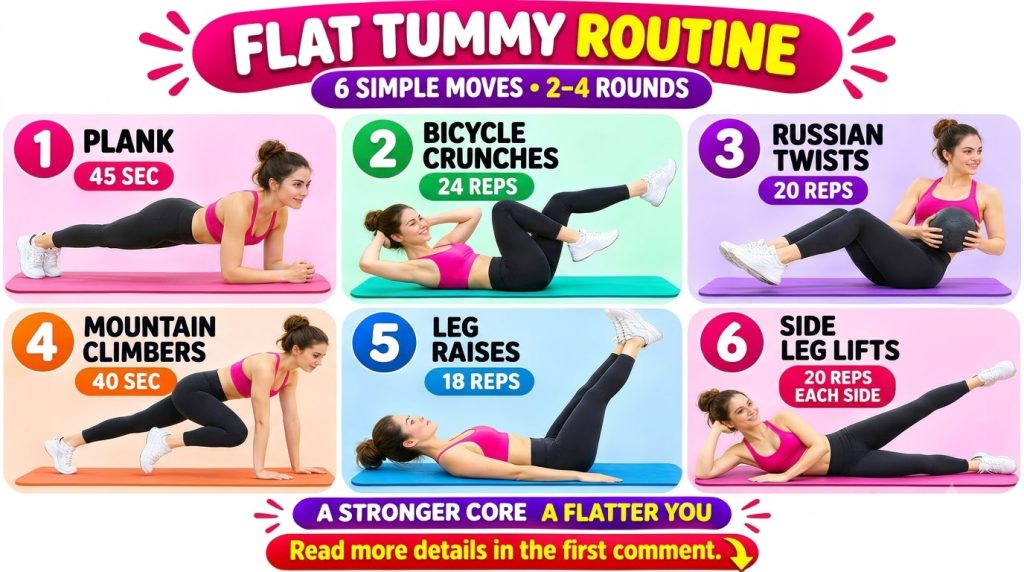
1. Plank
- How to: Start in a push-up position, then lower onto your forearms, keeping your body in a straight line from head to heels. Engage your abs, glutes, and quads.
- Focus: Hold for 30-60 seconds, or as long as you can maintain good form.
- Benefits: Strengthens the entire core, including transverse abdominis, obliques, and lower back.
2. Bicycle Crunches
- How to: Lie on your back with hands behind your head, knees bent, and feet flat. Lift your head and shoulders, bringing your right elbow towards your left knee while extending your right leg. Alternate sides in a cycling motion.
- Focus: Perform 15-20 repetitions per side, maintaining a steady pace.
- Benefits: Excellent for engaging the rectus abdominis and obliques.
3. Russian Twists
- How to: Sit on the floor with knees bent and feet lifted slightly off the ground (or kept on the ground for modification). Lean back slightly, engaging your core. Clasp your hands together or hold a light weight, then twist your torso from side to side.
- Focus: Complete 20-30 twists (10-15 per side).
- Benefits: Primarily targets the obliques and improves rotational core strength.
4. Mountain Climbers
- How to: Start in a high plank position with your hands directly under your shoulders. Bring one knee towards your chest, then quickly switch to the other leg as if running in place.
- Focus: Maintain a plank position while bringing knees to chest for 30-60 seconds.
- Benefits: A dynamic exercise that strengthens the core while also providing a cardiovascular benefit.
5. Leg Raises
- How to: Lie on your back with your legs straight and hands under your glutes for support (optional). Keeping your legs straight, slowly lift them towards the ceiling until your hips begin to lift, then slowly lower them without touching the floor.
- Focus: Aim for 10-15 controlled repetitions.
- Benefits: Highly effective for targeting the lower rectus abdominis.
6. Side Leg Lifts (Side Plank with Leg Lift)
- How to: Start in a side plank position, supported by one forearm and the side of your foot, body in a straight line. Slowly lift your top leg towards the ceiling, then lower it with control.
- Focus: Perform 10-15 lifts per side.
- Benefits: Strengthens the obliques, hip abductors, and stabilizers.
Key Principles for Success
To maximize your results and avoid injury, keep these principles in mind:
- Consistency is Key: Aim for 3-4 core workouts per week. Even 10-15 minutes can make a difference.
- Prioritize Form: Always choose proper form over the number of reps. If your form suffers, rest or modify the exercise.
- Engage Your Core: Consciously draw your belly button towards your spine throughout each exercise.
- Breathe Deeply: Don’t hold your breath. Exhale during the most challenging part of the movement.
- Listen to Your Body: If you feel pain, stop. Modify exercises as needed.
Integrating Core Work into Your Life
Making core strength a habit doesn’t have to be daunting. Try incorporating a few core exercises into your warm-up or cool-down for other workouts, or dedicate specific short sessions to core training. Remember that overall wellness, including a balanced diet and adequate hydration, also plays a significant role in achieving your fitness goals.
Important Considerations
Please remember that this information is for educational purposes only and is not a substitute for professional medical advice, diagnosis, or treatment. Always consult with a qualified healthcare provider or fitness professional before starting any new exercise program, especially if you have any pre-existing health conditions or concerns.
Building a strong core is a rewarding journey that offers numerous health benefits, both inside and out. Stay consistent, focus on your form, and celebrate your progress!