Boost Your Energy: Top Protein Sources for Active Lifestyles
Feeling a little sluggish? Need a natural pick-me-up that lasts longer than a quick sugar rush? The secret might be in your protein intake! Protein isn’t just for building muscles; it’s a vital nutrient that fuels your body, helps you stay full, and provides sustained energy throughout your day.
In this guide, we’ll explore some of the best protein sources available. Whether you’re an athlete, a busy parent, or simply looking to improve your overall wellness, incorporating more protein into your diet can make a significant difference. Get ready to discover delicious foods that will help you feel more energized and balanced!
Why Protein is Your Energy MVP
Protein plays many crucial roles in your body. It helps build and repair tissues, makes enzymes and hormones, and supports a healthy immune system. Crucially, protein helps stabilize blood sugar levels, preventing the energy crashes often associated with high-carb or sugary foods. When you consume protein, your body digests it slowly, leading to a gradual release of energy that keeps you feeling satisfied and focused.

Top Protein Sources for Sustained Energy
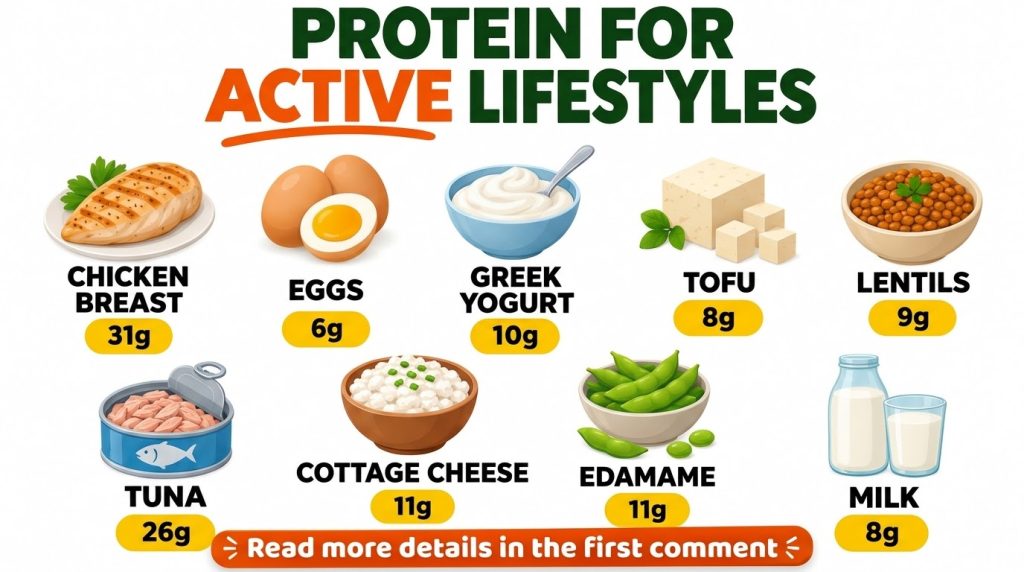
Here’s a look at some excellent protein sources, along with their key nutritional benefits and why they’re great for boosting your energy and overall health.
| Food | Calories (approx.) | Protein (g) | Carbs (g) | Fat (g) | Fiber (g) | Main Nutrients | Best Benefit |
|---|---|---|---|---|---|---|---|
| Grilled Chicken Breast (3 oz) | 140 | 26 | 0 | 3 | 0 | Niacin, B6, Selenium | Lean muscle support |
| Greek Yogurt (6 oz, plain, non-fat) | 100 | 17 | 6 | 0 | 0 | Calcium, Probiotics | Gut health, satiety |
| Eggs (2 large) | 140 | 12 | 1 | 10 | 0 | Choline, B12, Vitamin D | Brain health, satiety |
| Lentils (1/2 cup cooked) | 115 | 9 | 20 | 0.5 | 8 | Folate, Iron, Manganese | Digestive health, sustained energy |
| Salmon (3 oz) | 175 | 19 | 0 | 10 | 0 | Omega-3, Vitamin D, B12 | Heart health, anti-inflammatory |
| Tofu (3 oz, firm) | 80 | 8 | 2 | 4 | 1 | Calcium, Iron, Manganese | Plant-based protein, bone health |
| Cottage Cheese (1/2 cup, low-fat) | 80 | 12 | 3 | 2 | 0 | Calcium, Phosphorus | Slow-release protein, satiety |
| Quinoa (1/2 cup cooked) | 110 | 4 | 20 | 2 | 3 | Magnesium, Phosphorus, Folate | Complete plant protein, gluten-free |
| Almonds (1 oz / 23 nuts) | 160 | 6 | 6 | 14 | 3.5 | Vitamin E, Magnesium, Manganese | Healthy fats, antioxidants |
Serving Suggestions for Your Day
- Breakfast: Start strong with Greek yogurt and berries, scrambled eggs with veggies, or a smoothie with protein powder.
- Lunch: Add grilled chicken or salmon to your salad, make a lentil soup, or enjoy a quinoa bowl with tofu.
- Snacks: A handful of almonds, a serving of cottage cheese, or a hard-boiled egg can keep hunger at bay.
- Dinner: Incorporate lean meats, fish, or plant-based proteins into your favorite recipes.
Who Can Benefit Most from Increased Protein?
While everyone needs protein, certain groups may find extra benefits from prioritizing protein-rich foods:
- Active Individuals & Athletes: Protein is essential for muscle repair and growth after exercise, aiding in recovery and performance.
- Those Managing Weight: Protein promotes satiety, helping reduce overall calorie intake and supporting a healthy metabolism.
- Older Adults: Adequate protein intake helps prevent muscle loss (sarcopenia) and supports bone health as we age.
- Vegetarians & Vegans: Consciously seeking diverse plant-based protein sources like lentils, tofu, quinoa, and nuts is crucial for meeting nutritional needs.
- Anyone Seeking Sustained Energy: If you experience mid-day slumps, balancing your meals with protein can make a big difference.

Practical Tips for Boosting Your Protein Intake
Making small changes can lead to significant improvements in your protein intake:
- Prioritize Protein at Breakfast: A high-protein breakfast sets the tone for your day, helping you feel fuller longer and avoiding mid-morning cravings.
- Add Protein to Every Meal: Aim to include a protein source in each meal and snack.
- Choose Lean Sources: Opt for lean meats, poultry, fish, eggs, dairy, and plant-based options to minimize saturated fat.
- Plan Ahead: Meal prepping can ensure you always have healthy protein-rich options on hand.
- Snack Smart: Instead of sugary snacks, reach for Greek yogurt, nuts, or cheese sticks.
- Experiment with Plant Proteins: Explore legumes, beans, nuts, seeds, and whole grains for diverse protein sources.
FAQs About Protein and Energy
Q: How much protein do I need each day?
A: The recommended dietary allowance (RDA) for protein is 0.8 grams per kilogram of body weight. However, active individuals, older adults, and those trying to manage their weight may benefit from higher amounts, often between 1.2 to 1.6 grams per kilogram.
Q: Can eating too much protein be harmful?
A: For most healthy individuals, a high-protein diet is safe. However, individuals with kidney disease should consult a doctor before significantly increasing protein intake. Always prioritize whole food sources over excessive protein supplements.
Q: Are plant-based proteins as good as animal proteins?
A: Many plant-based proteins are excellent sources of amino acids, especially when combined. Foods like quinoa, soy products (tofu, tempeh), and certain legumes provide complete proteins. A varied plant-based diet can easily meet protein needs.
Q: When is the best time to eat protein?
A: Spreading protein intake throughout the day is generally beneficial for muscle synthesis and satiety. Consuming protein within an hour or two after exercise is often recommended for muscle repair.
Q: Can protein help with weight loss?
A: Yes, protein can be very helpful for weight loss. It increases satiety, which can lead to reduced calorie intake. It also has a higher thermic effect than fats or carbohydrates, meaning your body burns more calories digesting it.
Q: What are some quick, easy protein snacks?
A: Great options include hard-boiled eggs, a handful of nuts or seeds, Greek yogurt, cottage cheese, a small can of tuna, or a protein bar with minimal added sugar.
Conclusion
Incorporating a variety of top protein sources into your daily meals is a powerful way to boost your energy, support your overall health, and help you feel your best. From lean meats and fish to nutrient-packed plant-based options like lentils and tofu, there are countless delicious ways to meet your protein goals.
By making conscious choices and planning your meals, you can enjoy sustained energy, improved satiety, and better physical performance. Start exploring these fantastic protein-rich foods today and discover how good healthy eating can feel!
This content is for educational purposes only and should not be considered medical advice. Consult a qualified healthcare professional for personalized dietary recommendations.
Related Articles You Might Enjoy:
- High Protein Breakfast Ideas
- Healthy Smoothie Recipes
- Best Foods for Gut Health
- Plant-Based Protein Power: A Comprehensive Guide