Mattress stains are an unfortunate reality, but they don’t have to be permanent! Whether it’s an old spill or a mysterious mark, tackling mattress stains can seem daunting, especially if you want to avoid harsh chemicals.
This simple, homemade cleaning mix offers a practical solution using common household items you likely already have. It’s designed to help lift stubborn marks and refresh your mattress, all without resorting to expensive or aggressive cleaners. Give your mattress a new lease on life with this easy-to-make remedy!
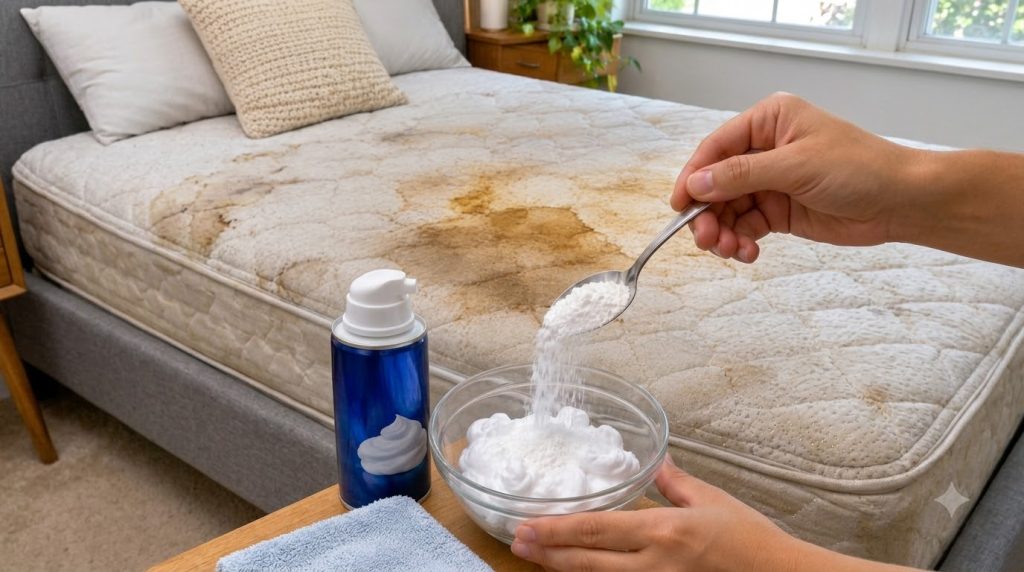
What You’ll Need
- 1/4 cup shaving cream (foaming type)
- 1 tablespoon baking soda
- Small glass bowl
- Spoon for mixing
- Clean, light-colored towel or cloth
- Vacuum cleaner (optional, for after-cleaning)
Why This DIY Can Be Useful
This DIY combines two powerful, yet gentle, household items for effective stain removal. Shaving cream, particularly the foaming variety, can help lift dirt and stains from fabric thanks to its detergent-like properties and ability to penetrate fibers. When mixed with baking soda, you add an extra layer of cleaning power.
Baking soda is renowned for its deodorizing and mild abrasive qualities, which can help break down stains and absorb odors without damaging the mattress fabric. Together, they create a paste that works to loosen and pull stains from the mattress surface.
How to Make It
- Take your small glass bowl and add approximately 1/4 cup of foaming shaving cream. You don’t need to be exact, just enough to form a good base.
- Carefully add 1 tablespoon of baking soda to the shaving cream in the bowl.
- Using your spoon, gently mix the baking soda and shaving cream until they form a smooth, uniform paste. The mixture should be somewhat thick but still spreadable.
How to Use It
- Test First: Before applying to a visible stain, always test a small, inconspicuous area of your mattress first to ensure there’s no discoloration or damage.
- Apply the Paste: Scoop a small amount of the paste onto your spoon or a clean cloth. Gently spread a thin layer directly over the mattress stain, ensuring the entire stained area is covered.
- Let It Work: Allow the paste to sit on the stain for at least 30 minutes. For older or more stubborn stains, you might extend this to an hour or even longer.
- Blot and Remove: After the waiting period, take your clean, light-colored towel. Dampen it slightly with water (do not oversaturate). Gently blot the treated area, working from the outside of the stain inwards. Avoid rubbing vigorously, as this can spread the stain. Continue blotting until the paste and the stain appear to be lifting.
- Air Dry: Allow the treated area to air dry completely. You can open windows for ventilation or use a fan to speed up the drying process.
- Vacuum (Optional): Once fully dry, if any residue from the paste remains, you can gently vacuum the area to remove it.
What to Expect
You can expect a noticeable improvement in the appearance of most mattress stains, particularly fresh ones. The solution works to lighten and often completely remove many common marks, leaving your mattress looking and smelling fresher. Keep in mind that very old, deeply set, or specific types of stains (like ink or blood) might require multiple applications or may not disappear completely. The key is realistic expectations and consistent effort.
Helpful Tips
- Act Quickly: The sooner you treat a fresh stain, the better your chances of complete removal.
- Don’t Oversaturate: Avoid applying too much moisture to your mattress, as it can lead to mold or mildew. Always use a slightly damp cloth for blotting, not a soaking wet one.
- Repeat if Necessary: For stubborn stains, you might need to repeat the application process a second or third time.
- Ventilate Well: Ensure good air circulation when drying your mattress to prevent moisture buildup and odors.
Important Notes / Safety
- Always perform a patch test on an unseen part of your mattress first to prevent potential damage or discoloration.
- Avoid using colored towels for blotting, as dye transfer can create a new stain.
- Do not apply this mixture to memory foam mattresses without first checking the manufacturer’s cleaning recommendations, as some materials may react differently to moisture.
- Ensure the mattress is completely dry before covering it with bedding to prevent mildew growth.