Imagine a garden where your favorite flowers and foliage multiply, creating new vibrant displays year after year, all without costing you a dime. Sounds like a dream, right? Well, it’s not! With the simple technique of perennial plant division, you can unlock endless blooms, invigorate your existing plants, and even share your garden’s beauty with friends and family. It’s a fundamental skill for any gardener, from beginner to seasoned expert, and a fantastic way to keep your garden healthy and thriving.
Perennials, by definition, live for more than two years, often returning bigger and better each season. However, over time, many perennials can become overcrowded, leading to reduced flowering, slower growth, or even dead centers. This is where division comes in – a little bit of strategic splitting can work wonders for their health and your garden’s aesthetic!
Why Divide Your Perennials? The Benefits Are Endless!
Dividing perennials isn’t just about getting more plants for free; it’s a vital part of good garden maintenance. Here’s why it’s a practice worth adopting:
- Rejuvenation and Health: Overcrowded clumps can lead to less air circulation, increased disease susceptibility, and fewer blooms. Division revitalizes the plant, encouraging new, healthy growth.
- Increased Blooms: By thinning out the plant, you give each section more space, nutrients, and light, often resulting in more vigorous flowering.
- Propagation: This is the magic part! You turn one plant into many, perfect for filling bare spots, expanding your garden, or creating stunning borders.
- Size Control: Some perennials can become quite large, encroaching on other plants or paths. Division helps manage their size and maintain your garden design.
- Pest and Disease Prevention: Healthy, less crowded plants are more resistant to pests and diseases. Dividing can also help you inspect and remove any problematic sections.
When is the Best Time to Divide Perennials?
Timing is crucial for successful division. Generally, the best times are:
- Spring: As new growth emerges but before the plant puts too much energy into flowering. This is ideal for summer- and fall-blooming perennials like Hostas, Daylilies, and Sedum.
- Fall: After the plant has finished blooming and before the first hard frost. This is great for spring- and early summer-blooming perennials such as Irises and Peonies (though peonies often prefer minimal disturbance).
Avoid dividing during the hottest parts of summer or when plants are actively flowering, as this can cause unnecessary stress.
Essential Tools for Easy Division
You don’t need a lot of fancy equipment to divide perennials. Here are the basics:
- Sharp Spade or Garden Fork: For digging up larger clumps.
- Sharp Knife or Pruning Shears: For cutting through roots and crowns. A serrated knife can be particularly effective.
- Gloves: To protect your hands.
- Wheelbarrow or Tarp: To move the plant and contain soil.
- Watering Can or Hose: For hydrating plants before and after.
Step-by-Step Guide to Dividing Your Perennials
Step 1: Prepare Your Plant and Area
Water the perennial thoroughly a day or two before you plan to divide it. This makes the plant easier to dig up and helps reduce transplant shock. Have your new planting spots ready, with well-amended soil.
Step 2: Dig Up the Plant
Using your spade or garden fork, carefully dig around the perimeter of the plant’s root ball, at least 6-12 inches away from the crown, depending on the plant’s size. Gently pry the entire clump out of the ground.
Step 3: Assess and Divide
Knock off excess soil to expose the roots and crown. Look for natural divisions or individual growth points. For plants with fibrous roots (like Hostas), you can often pull them apart by hand or use two garden forks back-to-back to gently pry them apart. For tougher, more woody roots (like Irises), a sharp knife or spade might be needed to cut through the crown. Aim for divisions with several healthy shoots and a good root system.
Step 4: Replant the Divisions
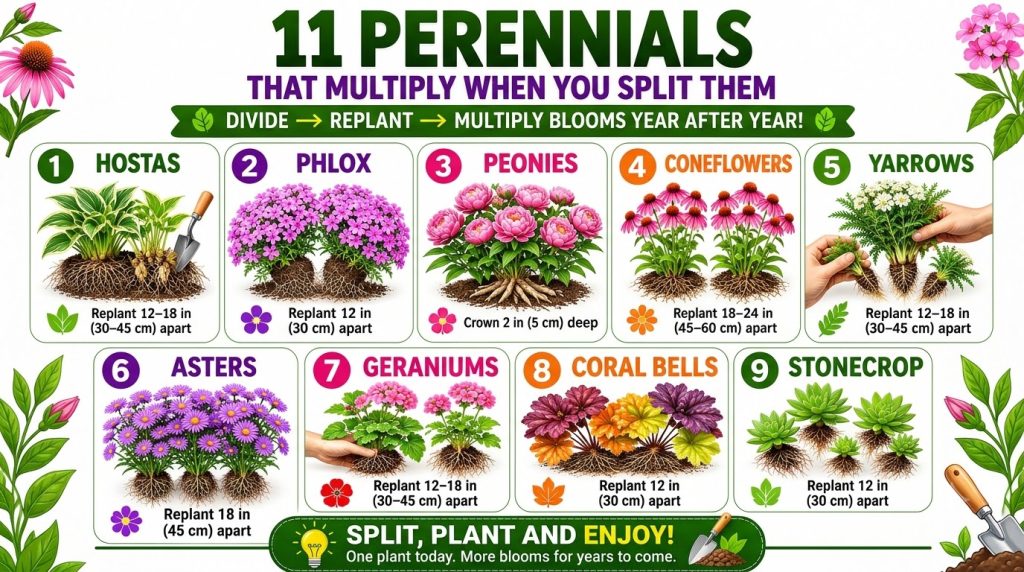
Plant your new divisions at the same depth they were originally growing. Ensure the crown is at soil level. Space them appropriately according to their mature size, giving them room to grow.
Step 5: Water and Care
Water the newly planted divisions immediately and thoroughly. Keep the soil consistently moist for the next few weeks to help them establish. Provide some temporary shade if the weather is particularly hot or sunny to reduce stress.
Popular Perennials That Love to Be Divided
Many common garden favorites benefit greatly from division. Here are a few examples:
- Hostas: These shade-loving plants are incredibly easy to divide in spring or fall.
- Daylilies (Hemerocallis): Divide these vigorous growers in spring or fall to maintain bloom production.
- Irises: Bearded irises should be divided every 3-5 years, typically in late summer after they finish blooming.
- Sedum (Stonecrop): Many varieties of Sedum are excellent candidates for spring division.
- Coneflower (Echinacea): Divide in spring or fall to keep them healthy and blooming.
There are many more! Keep an eye on your plants; if they’re looking crowded or have a dead center, it’s probably time to give them some space.
Ready to Grow Your Garden (and Your Skills)?
Dividing perennials is a rewarding gardening task that yields beautiful results and helps you create a more resilient, thriving garden. Not only will you save money on new plants, but you’ll also gain a deeper understanding of your garden’s needs. So grab your tools, get outside, and start unlocking endless blooms!
What are your favorite perennials to divide? Share your tips and success stories in the comments below – we’d love to hear them!