Welcome, fellow garden enthusiasts! Are you dreaming of a vibrant, thriving garden filled with lush, healthy plants? Many of us aspire to have bountiful blooms and fruitful harvests, but sometimes our plants need a little extra help to reach their full potential. That’s where natural pruning comes in! It’s an art and a science that, when done correctly, can transform your garden into a picture of health and beauty.
Pruning might seem intimidating, but with natural techniques, it’s all about working with your plants, not against them. Instead of aggressive cuts, we focus on thoughtful removal to encourage stronger growth, better airflow, and improved resistance to pests and diseases. Let’s dive into the world of natural pruning and discover how you can unlock healthier, happier plants!
Why Natural Pruning is a Game-Changer for Your Garden
Natural pruning isn’t just about making your plants look tidy; it’s about fostering their intrinsic health and vigor. Here are some incredible benefits you’ll see in your garden:
- Promotes Stronger Growth: By removing weak or congested branches, you redirect the plant’s energy to healthier parts, encouraging robust new growth.
- Enhances Air Circulation: Thinning out dense foliage allows air to flow freely through the plant, significantly reducing the risk of fungal diseases like powdery mildew.
- Boosts Flowering and Fruiting: Strategic pruning can stimulate the production of more flowers and, consequently, more fruits or vegetables.
- Improves Plant Shape and Aesthetics: Guide your plants to develop a stronger, more attractive structure that complements your garden design.
- Increases Disease and Pest Resistance: Removing dead, diseased, or damaged parts eliminates potential entry points for pests and pathogens, keeping your plant resilient.
Getting Started: Your Essential Pruning Toolkit
Before you begin, make sure you have the right tools, and they are clean and sharp! This is crucial for making clean cuts that heal quickly and prevent the spread of disease.
- Hand Pruners (Bypass Shears): Perfect for small stems and branches up to 3/4 inch thick.
- Loppers: Ideal for thicker branches (up to 1.5-2 inches), offering more leverage.
- Pruning Saw: For branches larger than 2 inches in diameter.
- Gloves: Protect your hands from thorns and sap.
- Rubbing Alcohol or Bleach Solution: For sterilizing your tools between cuts, especially when dealing with diseased plants.
The 5 Easy Steps to Natural Pruning
Let’s break down the natural pruning process into simple, actionable steps that anyone can follow.
Step 1: Assess Your Plant (Observe Before You Cut)
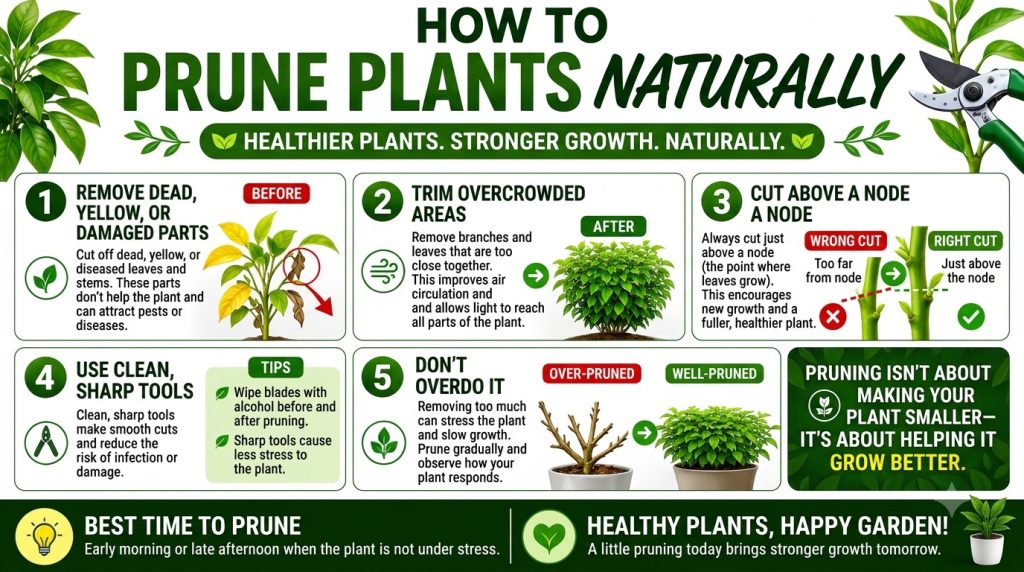
Before you make any cuts, take a moment to observe your plant. Walk around it, look closely at its overall shape, density, and health. Identify any dead, damaged, or diseased branches. Notice areas that look too crowded or where branches are rubbing against each other.
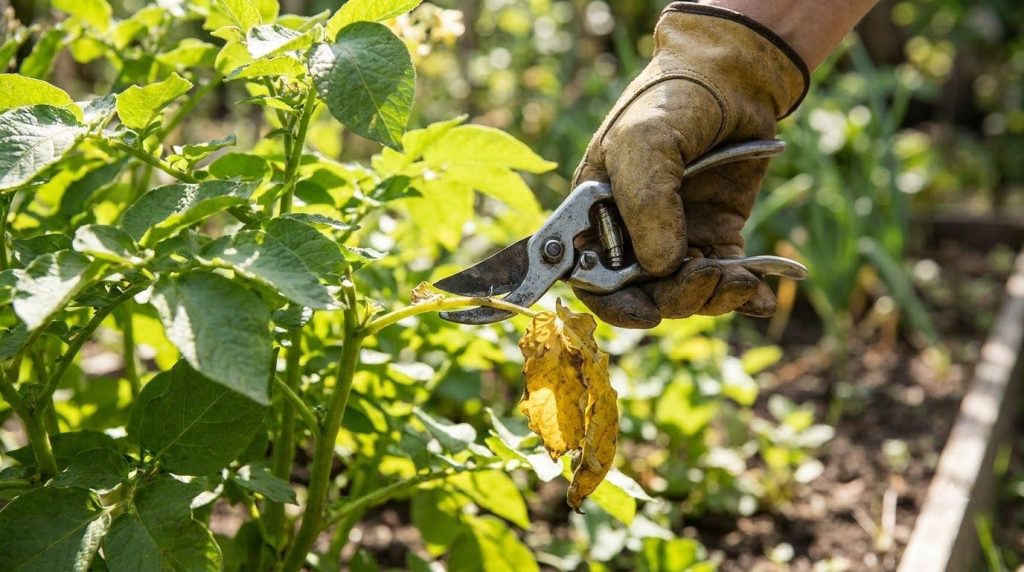
Step 2: Remove Dead, Damaged, or Diseased Growth (The ‘3 Ds’)
This is often the first and most crucial step in natural pruning. These parts are not contributing to the plant’s health and can even harbor pests or diseases. Cut them back to healthy wood, making sure your cut is just above a healthy bud or branch.
Step 3: Improve Air Circulation (Thinning Out)
Overly dense foliage can create a humid environment, perfect for fungal diseases. Thin out crowded areas by removing branches that grow inward, cross over others, or are too close together. The goal is to allow light and air to penetrate the plant’s interior.
Step 4: Shape for Health and Aesthetics
Once you’ve removed the ‘3 Ds’ and improved air circulation, you can start to shape your plant. This involves making cuts to encourage a strong, open structure. Aim for a balanced shape that allows sunlight to reach all parts of the plant. Avoid excessive topping, which can weaken the plant.
Step 5: Prune at the Right Time
Timing is everything in pruning! Most plants benefit from pruning in late winter or early spring, just before new growth begins. However, some plants, especially spring-flowering varieties, should be pruned immediately after they finish blooming. Research the specific needs of each plant in your garden to ensure optimal results.
Common Pruning Mistakes to Avoid
Even with good intentions, it’s easy to make mistakes. Here are a few to watch out for:
- Over-pruning: Removing too much foliage can stress the plant and reduce its ability to photosynthesize.
- Using Dull Tools: Dull tools tear stems, creating jagged wounds that are slow to heal and invite disease.
- Ignoring Plant-Specific Needs: Not all plants are pruned the same way or at the same time. Always check what your particular plant prefers.
- Leaving Stubs: Cutting too far from a bud or main stem leaves a stub that can rot and become a pathway for disease. Make clean cuts close to a node or collar.

Embrace the Art of Natural Pruning
Natural pruning is a journey of learning and observation. With these easy techniques, you’re well on your way to cultivating a garden that’s not only visually stunning but also incredibly healthy and resilient. Remember, every cut is an opportunity to guide your plant towards its best self. Happy pruning, and enjoy the beauty of your naturally thriving garden!