Rosemary is one of the most useful herbs to have on hand. Its fragrant needle-like leaves add flavor to roasted vegetables, potatoes, bread, and grilled meats, and the plant itself stays green and attractive in the garden for many months. The good news is that you do not have to keep buying new plants. With a few stem cuttings, a clean container, and a little patience, you can grow new rosemary plants from the ones you already have.
Why Propagate Rosemary from Cuttings?
Propagation means growing a new plant from a part of an existing one. Rosemary is well suited to this method because stem cuttings often root readily when given the right conditions. Growing from cuttings also gives you a clone of the parent plant, so the new herb will generally share the same flavor and growth habit. This makes it a practical choice for gardeners who want reliable plants for cooking and for garden design.
When to Take Rosemary Cuttings
Spring and early summer are generally good times to take cuttings, when the plant is actively putting out new growth. Choose healthy stems that are firm, green, and free of pests or disease. Avoid very woody, old stems for this purpose, as they tend to root more slowly. Taking cuttings in the morning, when the plant is well hydrated, can also help the stems stay in good condition.
What You Need
- Sharp, clean scissors or pruning shears
- A small pot or tray with drainage holes
- A light, well-draining potting mix, such as a blend of potting soil and perlite or coarse sand
- A clear glass or jar of water, if you prefer the water method
- A plastic bag or humidity dome, optional, to help keep moisture steady
Step-by-Step: Propagating Rosemary in Soil
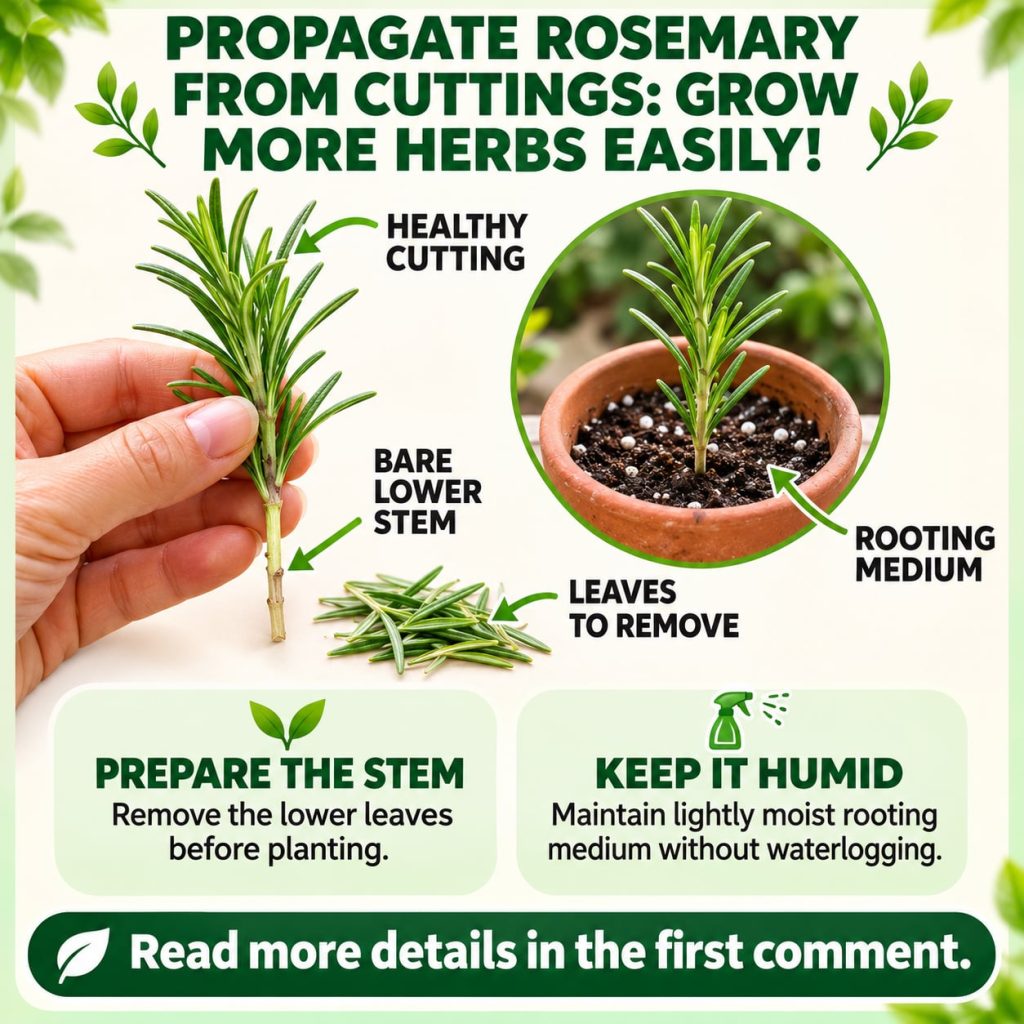
- Select the stems. Look for non-flowering shoots about 10 to 15 cm long. Semi-ripe stems that are slightly firm but not fully woody usually work well.
- Make the cut. Cut just below a leaf node, which is the point where leaves attach to the stem. Use a clean, sharp tool to avoid crushing the tissue.
- Remove the lower leaves. Strip the leaves from the bottom third to half of the stem so that the bare section can be placed in the growing medium without rotting.
- Optional: use rooting hormone. A rooting powder or gel can support root development, though rosemary cuttings often root without it. Follow the product instructions if you use one.
- Plant the cutting. Insert the bare end into moist, well-draining mix, firming it gently around the stem so it stands upright.
- Keep the conditions steady. Place the pot in bright, indirect light. Keep the mix lightly moist but never soggy. A loose plastic bag over the pot can help hold humidity, but remove it occasionally to allow fresh air in.
- Wait for roots. Rooting can take several weeks. A gentle tug that meets resistance is a sign that roots are forming, but avoid pulling too often because this can damage the new roots.
Rooting Rosemary in Water
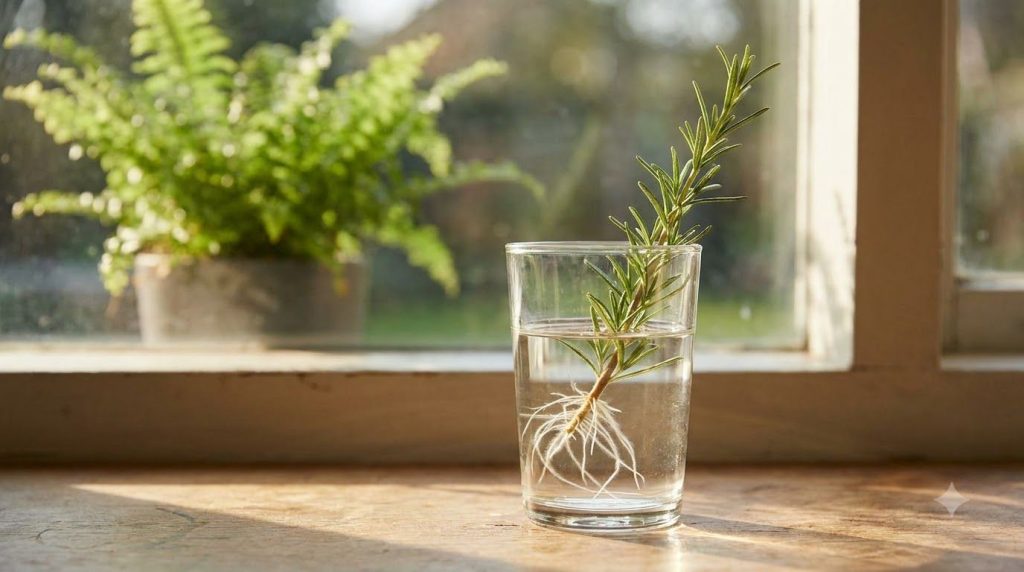
Some gardeners prefer to root rosemary cuttings in water. Place the trimmed stem in a glass with a few centimeters of fresh water, making sure the leaves stay above the waterline. Change the water every few days to keep it clean and oxygenated. Once roots are about a few centimeters long, you can transfer the cutting carefully into a pot of well-draining potting mix. Handle the young roots gently during this step.
Caring for Young Rosemary Plants
Once your cutting has rooted and is growing in its own pot, treat it gently. Give it bright light, such as a sunny windowsill or a spot outdoors with good light. Rosemary generally prefers good drainage and does not like sitting in wet soil, so water when the top layer of the mix feels dry. Gradually introduce the young plant to more sun and outdoor air over one to two weeks before planting it permanently, which helps reduce stress.
Common Mistakes to Avoid
- Overwatering: Soggy soil is one of the most common causes of cutting failure, as it can lead to rot.
- Using stems that are too woody or too soft: Very old or very limp stems are less likely to root well.
- Skipping drainage: Pots without drainage holes can trap water around the roots.
- Too little light: Dim conditions can slow growth and weaken new roots.
- Expecting instant results: Rooting takes time, and not every cutting will succeed, so it is wise to take several at once.
Building a Year-Round Herb Garden
Propagating rosemary is a rewarding way to expand your herb collection without spending money on new nursery plants each season. You can use your new plants in containers on a balcony, in a kitchen window, or in a sunny spot in the garden. Pair rosemary with other herbs that enjoy similar conditions, such as thyme and sage, to create a practical and attractive planting group. With a steady routine of pruning and propagating, you can keep a healthy supply of fresh herbs throughout the year.
Final Thoughts
Growing rosemary from cuttings is an accessible project for beginners and experienced gardeners alike. With clean tools, a well-draining mix, bright light, and careful watering, you can turn a single healthy stem into a new plant. Start with a few cuttings, take notes on what works in your space, and enjoy the satisfaction of harvesting herbs you grew yourself.