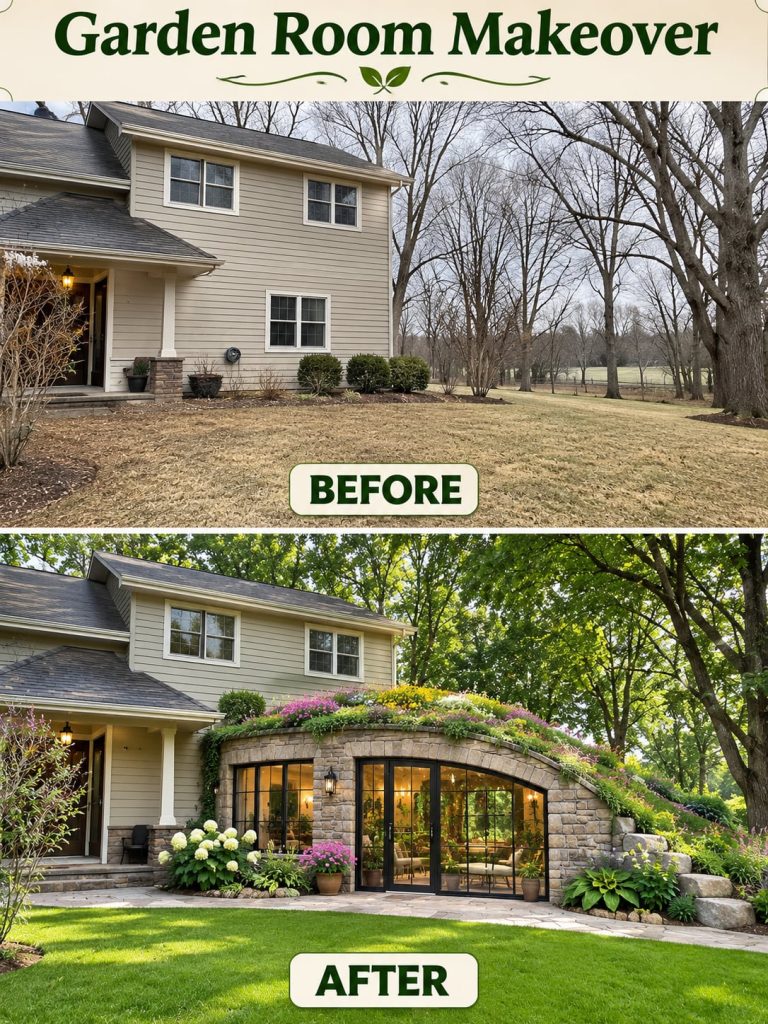
Picture a small garden room that stays comfortable through the hottest afternoons of July and the coldest nights of January without roaring air conditioning or a blazing space heater. The secret is not new technology. It is the earth itself, and a roof planted with flowers that turns a practical structure into a green retreat you actually want to sit in.
Earth-sheltered buildings have been used for centuries, from root cellars to rural homes built into hillsides. Today, homeowners and small growers are adapting the idea to backyard garden rooms, potting sheds, and studios. If you are considering one, or simply want to plant a living roof on a shed or carport, this guide walks through the principles, the plant choices, and the mistakes that cause the most trouble.
The Core Principle: Soil as a Thermal Buffer
Air temperature swings quickly, but soil temperature changes slowly. A few feet below the surface, ground temperature stays relatively steady through the year, which is why root cellars stay cool in summer and why buried walls moderate indoor extremes. When soil and a planted roof surround a room, they slow heat gain in summer and heat loss in winter. The soil also adds mass, so the interior warms and cools gradually instead of swinging with every front that moves through.
The benefit is real, but it depends on design. Thickness of soil, insulation placed correctly, drainage, and the moisture content of the soil all shape how well the room performs. A thin, dry planting on a poorly insulated roof will not produce the same comfort as a well-drained, properly layered system.
Building the Living Roof Correctly
Waterproofing and Structure
Before any plant goes in, the roof must keep water out of the building. Most living roofs use a waterproof membrane, a root barrier where roots could reach the structure, a drainage layer, a filter fabric, and then the growing medium. Skipping any layer is the fastest route to leaks and rot. The structure must also carry the weight of saturated soil, which can be substantial. Have a structural engineer confirm load capacity before you build, especially on a lightweight shed or prefabricated room.
Choosing Plants for Shallow Soil
Soil depth decides what can grow on top. Shallow systems of about 3 to 6 inches suit sedums, creeping thyme, and other low, drought-tolerant plants. Deeper systems of 8 to 12 inches or more can support small flowering perennials and some native wildflowers, though they weigh more and need more irrigation. Cultivar matters too. Many sedums are sold as tough, shallow-rooted groundcovers, but some taller types need more soil and water than the thin trays sold for green roofs.
Sedums (Sedum species) are the classic choice. Many are hardy in USDA zones 3 to 9, depending on the species, and they store water in their leaves. Creeping thyme (Thymus serpyllum) adds fragrance and small pink or lavender flowers and generally performs in zones 5 to 9. Low perennials such as dianthus or other compact flowering plants can work in deeper beds. Check the hardiness rating of each plant on the label, because a species that thrives in zone 8 may struggle through a zone 5 winter.
Step-by-Step Planting Plan
- Confirm the roof’s load limit and waterproofing with a professional before buying soil.
- Install the root barrier, drainage layer, and filter fabric, overlapping seams so water runs toward the edges.
- Fill with a lightweight growing medium, usually a mix of mineral material and organic matter. Heavy garden soil compacts and holds too much water.
- Plant sedums or thyme at roughly 6 to 8 inches apart so they knit together within one or two seasons.
- Water deeply once after planting, then check moisture by pressing a finger into the medium. Keep it lightly moist, not soggy, during the first season.
- Install edging or a lip at the perimeter to hold the medium in place during heavy rain.
Caring for Flowers on a Roof
Roof plantings face stronger wind, faster drying, and more sun than ground-level beds. Expect to water more often during the first year, especially in hot weather. Once plants establish, many shallow roofs need watering only during extended dry spells. Watch the leaves. Plump, firm foliage means adequate moisture, while wrinkled, curled, or grayish leaves signal drought stress. Soggy medium with yellowing lower leaves signals overwatering, which is common when drainage layers clog.
Weed control is easiest in the first season. Pull weeds by hand while they are small, since their roots can disturb the drainage layer if you dig deeply. Remove spent flowers from perennials to encourage a longer bloom period, and trim leggy growth in early spring, before new shoots emerge. Avoid fertilizing heavily, because rich feeding produces weak growth that flops in wind and rain.
How Climate and USDA Zones Change the Results
USDA hardiness zones measure winter cold tolerance, not summer heat, humidity, or rainfall. In colder zones, roughly 3 to 5, the soil layer insulates plants and the roof helps stabilize the room, but plant choice must focus on species that survive frozen medium. In zones 6 to 8, the thermal benefit is often most noticeable in both summer and winter, and many flowering perennials thrive. In zones 9 to 11, the challenge shifts toward heat and drought, so choose heat-tolerant species and plan irrigation carefully.
Local conditions matter as much as zone. A shaded north slope, a windy ridge, and a sunny south-facing roof can produce very different results in the same town. Your county extension office can recommend plants native or well adapted to your area and share local rainfall and frost information.
Common Mistakes and How to Avoid Them
- Underestimating weight. Saturated soil is heavy, so confirm structural capacity first.
- Skipping the root barrier. Roots can find and damage waterproofing within a few seasons.
- Using rich garden soil. It compacts, holds water, and can drown plants.
- Planting tall perennials in shallow trays. They will dry out quickly and may topple in wind.
- Ignoring drainage. Clogged outlets cause standing water and rot. Clean them each spring and after heavy storms.
Bringing the Idea Into Your Own Yard
An earth-sheltered garden room is a significant project, but many of its principles scale down. A planted shed roof, a green-roofed carport, or a raised bed with insulated edges can all benefit from the same thinking about soil depth, drainage, and plant selection. Start small, observe how your roof performs through a full year, and expand from there.
Your next step is simple. Measure the structure, check its load capacity, and make a list of low, drought-tolerant flowering plants that match your USDA zone. Once you have those details, you can build a roof that looks beautiful and quietly works to keep your space comfortable in every season.