Struggling with portion sizes? You are not alone. Measuring cups and food scales can feel tedious, especially at home or when you are eating out. The good news is that your hand is always with you, and it can be a surprisingly useful guide.
In this guide, you will learn a simple hand-based method for estimating portions of protein, carbs, fats, and snacks. You will also find practical tips to use it at every meal.
Why Hand-Based Portions Work
Your hand size is loosely linked to your body size, so it naturally scales with you. It gives you a quick estimate that you can use anywhere. It is not an exact measurement, but it is a helpful starting point.
Research on portion awareness suggests that simple visual cues can help people become more mindful about how much they eat.
The Hand Portion Method
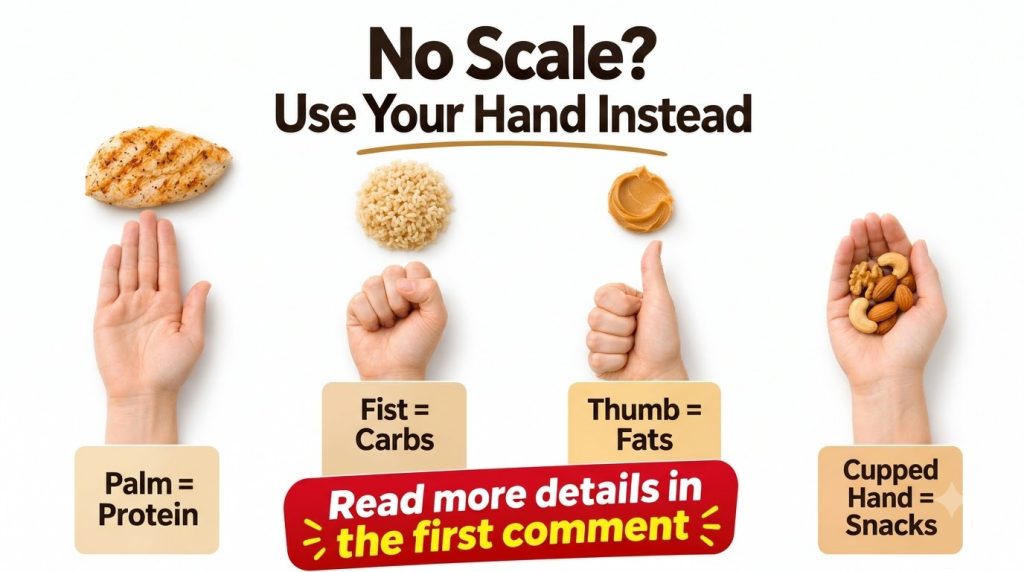
Palm for Protein
A palm-sized portion of cooked lean protein is a good starting point for most meals. Think chicken, fish, tofu, eggs, or beans. Protein helps you feel full and supports muscle maintenance.
Fist for Carbohydrates
One fist of cooked grains, such as brown rice, quinoa, or oats, is a practical estimate. Starchy vegetables like potatoes or sweet potatoes also fit well here.
Thumb for Healthy Fats
A thumb-sized amount of fats, such as nut butter, olive oil, avocado, or cheese, is a helpful guide. Fats are energy dense, so a small amount goes a long way.
Cupped Hand for Snacks
A cupped handful of nuts, seeds, or dried fruit makes a satisfying snack. Keeping snacks in a small bowl can help you stop at a reasonable amount.
Hand Portion Quick Reference
| Hand | Food Group | Examples | Approximate Portion |
|---|---|---|---|
| Palm | Protein | Chicken, fish, tofu, beans | One palm-sized serving |
| Fist | Carbohydrates | Brown rice, quinoa, oats, potatoes | One fist-sized serving |
| Thumb | Healthy fats | Nut butter, olive oil, avocado | One thumb-sized serving |
| Cupped hand | Snacks | Nuts, seeds, dried fruit | One cupped handful |
How to Build a Balanced Plate
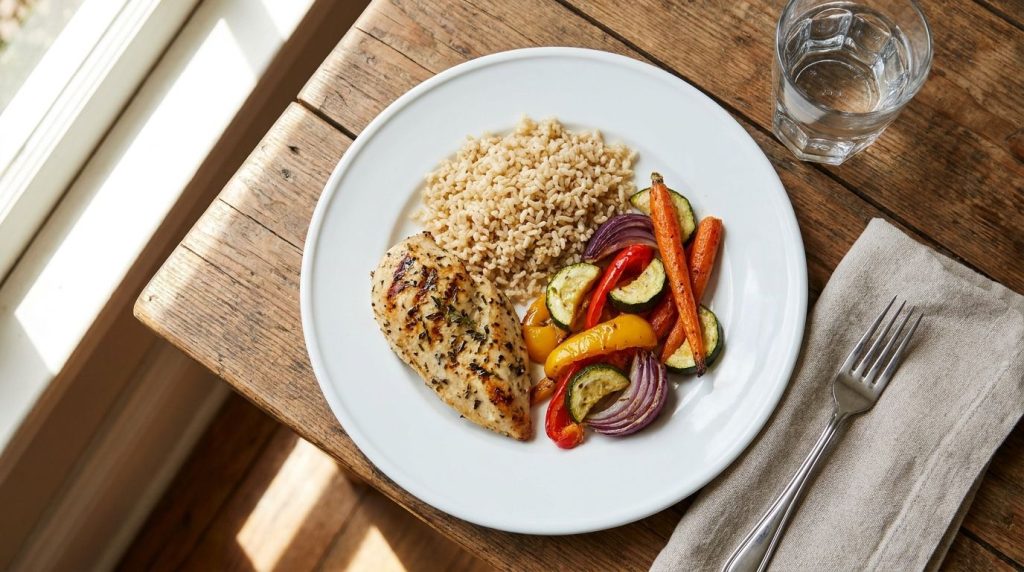
- Start with a palm of protein.
- Add one fist of carbohydrates or starchy vegetables.
- Include a thumb of healthy fat for flavor and fullness.
- Fill the rest of your plate with non-starchy vegetables, such as leafy greens, peppers, or broccoli.
Common Mistakes to Avoid
- Using the same hand size for every meal, when your needs may vary.
- Forgetting to count oils, dressings, and sauces.
- Eating snacks straight from the bag or container.
- Expecting an exact result from a rough estimate.
Practical Tips
- Use your hand as a guide when you cannot measure, such as at restaurants or potlucks.
- Prep your protein and grains in advance so portions are already sized.
- Use a smaller plate to make portions look generous without overfilling.
- Pause halfway through your meal to check how hungry you still feel.
Who Can Benefit From Hand Portions
This method is useful for busy adults, families, and anyone learning to eat more intuitively. It is also a handy tool for people who enjoy cooking and want more control over their meals. Needs vary by age, activity level, and health goals, so it helps to adjust portions to fit your own situation.
Frequently Asked Questions
Is hand portion control accurate?
It is an estimate, not a precise measurement. It works well for everyday meals and is a good starting point for building awareness.
Does my hand size matter?
Yes, it can. Larger hands often suit larger bodies, so the method scales with you. Some people also adjust portions based on their goals.
Can I use this method for weight management?
Many people find it helpful as part of a balanced routine. Results depend on overall eating patterns, activity, and sleep, so consistency matters more than any single tool.
What if I am cooking for my family?
Use your own hand for your portion and adjust for children or others. Smaller hands can serve as a guide for kids, and portions can be adapted to age and appetite.
Should I measure food with a scale too?
A scale can be useful when you are learning or following a specific plan. Many people use both tools, switching to hands when measuring is not practical.
Do I need to count calories with this method?
No, the hand method does not require counting. It focuses on balance and visual portions, which can make eating feel more intuitive.
Conclusion
Your hand is a simple, always-available tool for building balanced meals. Use your palm for protein, your fist for carbs, your thumb for healthy fats, and a cupped hand for snacks. Explore more healthy eating ideas on our blog, including Balanced Lunch Ideas, Easy High Protein Meals, and Healthy Snack Ideas for Busy Days.
This content is for educational purposes only and should not be considered medical advice. Consult a qualified healthcare professional for personalized dietary recommendations.