Think you need a big backyard to grow your own food? Not at all. With the right container and a little planning, balconies, patios, and even sunny windowsills can become productive little gardens. This guide walks you through how to choose pot sizes, which vegetables and fruits adapt well to containers, and simple habits that help your plants thrive.
Why Container Gardening Works for Small Spaces
Container gardening gives you control. You can move pots to catch more sunlight, adjust watering for each plant, and use fresh potting mix instead of struggling with poor native soil. It also makes gardening accessible to renters, apartment dwellers, and anyone with limited outdoor room.
How to Choose the Right Container Size
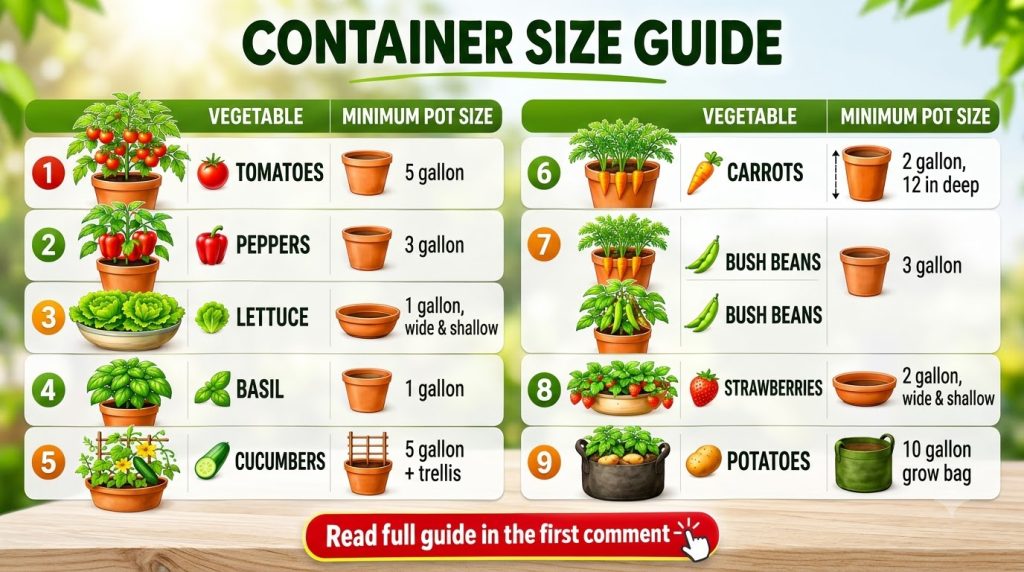
Pot size matters because roots need room to spread and hold moisture. As a general starting point, use the following guidelines and adjust for the specific variety you are growing:
- Small pots (6 to 8 inches): herbs, lettuce, radishes, and compact strawberries.
- Medium pots (10 to 14 inches): peppers, bush beans, kale, and chard.
- Large containers (15 to 20 inches or more): tomatoes, eggplant, dwarf fruit trees, and cucumbers on a trellis.
Always choose containers with drainage holes. Waterlogged roots are one of the most common reasons container plants struggle.
Vegetables and Fruits That Adapt Well to Pots
Leafy Greens and Herbs
Lettuce, spinach, basil, parsley, and mint are reliable choices for beginners. They grow quickly, need shallow pots, and can be harvested by picking outer leaves so the plant keeps producing.
Fruiting Vegetables
Peppers and compact tomato varieties perform well in containers when they receive plenty of sun, usually at least six hours a day. Pair them with a sturdy stake or cage to support heavy fruit.
Berries and Dwarf Fruit
Strawberries thrive in hanging baskets or wide planters. Dwarf citrus and fig trees can also grow in large pots, which makes it easier to move them indoors when temperatures drop.
Simple Habits for Healthier Container Plants
- Use quality potting mix rather than garden soil, which compacts in pots.
- Check moisture by pressing a finger about an inch into the soil before watering.
- Feed plants regularly with a balanced organic fertilizer during the growing season.
- Rotate pots so every side gets light, especially on balconies with uneven sun exposure.
- Inspect leaves weekly for pests and remove them early by hand when possible.
Final Thoughts
You do not need a large yard to enjoy fresh vegetables, fragrant herbs, and colorful blooms. Start with a few well-sized containers, choose crops that suit your light, and build your garden one pot at a time. Every harvest is a reward for your care and patience.